
Products
-


10 Black False Hellebore Seeds
Veratrum Nigrum | Black False Hellebore Seeds Veratrum Nigrum comes from the Melanthiaceae family. It is commonly known as Black Hellebore and is a perennial growing to 5 feet by 2 feet. It is native in S. Europe to E. Asia. It is in flower from August to September and is pollinated by Bees, Flies, Moths & Butterflies. It can grow in semi-shade or no shade and It prefers moist soil. Zones 5-9GerminationMix seeds and soil together in a ziplock bag. Write the name of the seed on the bag. Place in the refrigerator for 60 days. Seeds should be sown into well-drained, sandy compost and covered to their own depth with sand or grit. Place the seed tray in filtered light and keep moist. Seeds germinate very slowly and may take more than a year to germinate.
$19.99
-


10 Black Velvet Bean Seeds (Mucuna pruriens) – Ornamental Climbing Vine
Black Velvet Bean (Mucuna pruriens) is a fast, vigorous tropical climber prized for its dramatic look. Long hanging pods develop a soft, dark “velvet” surface that stands out against glossy green foliage, creating a striking focal point on trellises, arches, and fences. Grown mainly as an ornamental vine in warm climates; in cooler regions it can be grown as a long-season annual with support. Why Choose Black Velvet Bean (Mucuna pruriens)? Bold ornamental appeal – cascades of velvety, dark pods on lush vines Vigorous climbing habit – quickly covers arbors, pergolas, and fences Warm-season grower – performs best with sustained heat and sun Container-friendly (with support) – suitable for large pots on patios Low maintenance once established – appreciates regular watering and well-drained soil Growing Zone: USDA 10–12 as a perennial; can be grown as a warm-season annual in zones with long, hot summers. What’s in the Pack? Sealed pack of 10 Black Velvet Bean seeds, suitable for starting in trays or direct sowing once soils are warm. Sold for planting and ornamental use only. Planting Instructions Timing: Late spring to midsummer, after nights stay consistently warm (70–85°F / 21–29°C) Pre-soak / Scarify: Nick the seed coat lightly and soak 12–24 hours to speed germination Depth: 1–1.5 in (2.5–4 cm) Light: Full sun (can tolerate very light afternoon shade in hot areas) Soil: Well-draining, moderately fertile; keep evenly moist, not waterlogged Support: Provide a sturdy trellis or fence; vines can reach 10–15 ft (3–4.5 m) or more in warm conditions Germination: Typically 10–21 days in warm soil Note: Mature pods may carry fine hairs that can irritate skin; handle with care and wear gloves when pruning or cleaning plants. FAQs Is Black Velvet Bean grown for ornamental purposes? Yes. On this page it is offered strictly for planting as an ornamental climbing vine that provides dramatic foliage and pods. Do I need to scarify or soak the seeds? It helps. Lightly nick the seed coat and soak for 12–24 hours before sowing to encourage even germination in warm soil. Will it grow in containers? Yes—use a large (20–30 L) container with a sturdy trellis. Keep soil evenly moist and place in full sun. How fast does it grow and how tall does it get? In warm conditions the vine grows quickly and can reach 10–15 ft (3–4.5 m) or more within a season. Provide strong support. Is Black Velvet Bean invasive? Growth is vigorous in frost-free climates. Plant responsibly, harvest pods before they drop, and avoid letting seeds self-sow where unwanted. Where to buy Black Velvet Bean seeds for sale? At Seeds World, we offer fresh Black Velvet Bean (Mucuna pruriens) seeds with clear planting instructions and fast U.S. shipping. Orders are packed securely so the seeds arrive ready to sow. Is this product sold for food or medicinal use? No. These seeds are sold for planting and ornamental horticulture only.
$17.99
-
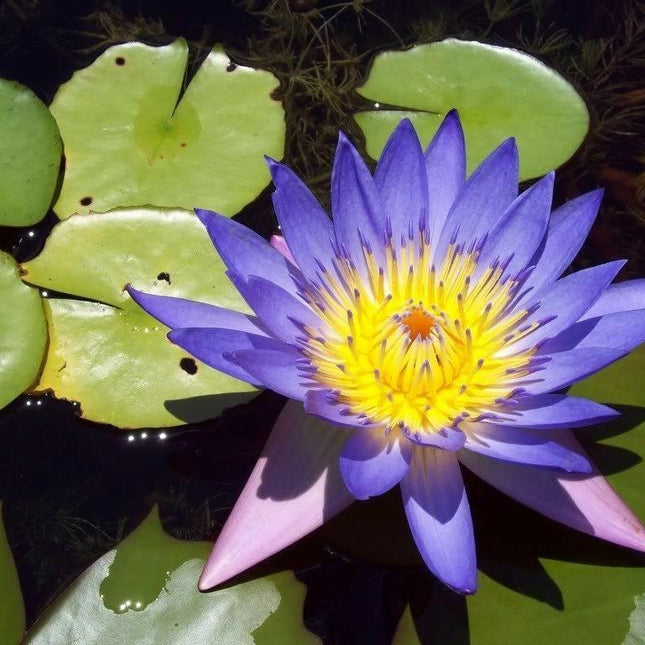

Shipped from Massillon, Ohio, USA 10 Blue Lotus Seeds – Sacred Blue Water Lily (Nymphaea caerulea)
10 Blue Lotus Flower Seeds – Sacred Water Lily (Nymphaea caerulea) Looking for blue lotus flower seeds for sale? You'vבe found them. These sacred aquatic flowers (Nymphaea caerulea) are admired for their deep blue blooms and ancient symbolism. Perfect for water gardens, ponds, or large containers, they bring serenity and beauty to any outdoor space. Blue Lotus flowers are also edible and have been used in teas and herbal traditions for centuries. Why Choose Blue Lotus? 🌸 Sacred and symbolic flower – prized since ancient times 💧 Perfect for ponds or containers – versatile aquatic perennial ☀️ Grows well in full sun to partial shade 🌿 Large blue blooms (8–12") – a true centerpiece 📦 10 seeds per pack – fresh and carefully selected What’s in the Pack? Each pack contains 10 high-quality Blue Lotus seeds (Nymphaea caerulea), sealed for freshness. Perfect for starting your own water feature or spiritual garden at home. Planting Instructions Best Time to Plant: Late spring to early summer Soil: Rich aquatic soil or heavy clay in containers Light: Full sun to partial shade Depth: 3–8 inches of water above the soil Watering: Keep water warm and level consistent Germination: 2–4 weeks in warm water (change water daily) FAQs Do I need a pond to grow Blue Lotus? No. Blue Lotus can be grown in large tubs, containers, or barrels filled with warm water, as long as there’s enough sunlight and warmth. Is Blue Lotus edible or medicinal? Yes. The petals are edible and can be used in teas or as garnish. Blue Lotus has a long history of use in herbal and spiritual traditions. How do I germinate Blue Lotus seeds? Lightly scarify the seeds and soak them in warm water, changing the water daily. After sprouting, transplant seedlings to aquatic soil in a sunny location. Where to buy Blue Lotus seeds? You can buy premium Blue Lotus seeds right here at Seeds World. Fast U.S. shipping so you can start your aquatic garden with ease.
$18.99
-


10 Blue Noble Fir (Abies Procera Glauca) Tree Seeds
Blue Noble fir, Abies Procera Glauca, (Abies Nobilis), Tree Seeds Noble Fir is a Western North American Fir, native to the Cascade Range and Coast Range mountains of extreme northwest California, Oregon, and Washington in the United States. It is a high-altitude tree, typically occurring at 980 to 4,900 feet. It is a tall needled evergreen reaching 270 feet in native stands, generally 50 to 100 feet in cultivation. It has a symmetrical, narrow growth habit with blue-green conifer needles.The bark on young trees is smooth, and grey with resin blisters, becoming red-brown, rough, and fissured on old trees. The cones are erect 4 to 10 inches long, and 3 inches wide with purple scales ripening to brown and disintegrating to release the winged seeds in the fall. It is a medium to slow grower, reaching 75 feet in 30 to 60 years. It likes moist well drained conditions with sun or partial shade and can do well in rocky soils if there is enough moisture.Noble Fir is a popular Christmas tree. Wood is used for general structural purposes and paper manufacture.This species is aptly named, for it is probably the largest of all Abies in terms of diameter, height, and wood volume. It was first found by fabled botanist-explorer David Douglas, growing in mountains on the north side of the Columbia River Gorge, where exceptional stands can still be found. It loves windy sites because it is one of the most windfarm trees, swaying grandly in even the most howling gales of winter. Zone: 5 to 7Growth Rate: Slow to ModeratePlant Type: Needled Evergreen ConiferFamily: PinaceaeNative Range: Northwestern United StatesHeight: 50 to 100 feet, Can reach over 250 feet in the wild.Shape: Slightly tapered cylindrical.Sun: Full SunFall Color: EvergreenDrought Tolerance: Low to ModerateWater: ModerateMaintenance: LowSite Requirements /Soil Tolerances: Prefers moist, cool, well-drained, acidic soil.Uses: Specimen, Parks, Lawns, Christmas Tree, Bonsai
$15.99
-


Shipped from Massillon, Ohio, USA 10 Blue Shrimp Plant Seeds
Blue Shrimp Plant - Honeywort Cerinthe Major Flower Seeds Honeywort is very easy to grow from seed. It attracts bees, butterflies, and birds including hummingbirds! On top of that, it is deer resistant. It has stunning blue-purple flowers that you just have to see in person to believe, and it has blue leaves. It is a very unique and outstanding plant! Name: Blue Shrimp PlantOther Common Names: Honeywort / Blue Wax FlowerScientific Name: Cerinthe MajorColor: Blue Leaves With Blue-purple FlowersPlant Seeds: Outdoors After Frost / Indoors Weeks Before Last FrostBloom Time: Mid Spring - Mid SummerHardiness Zone: N/a (but It Reseeds Itself Easily So It Acts Like a Perennial in All Zones)Plant Height: 18 - 24”Plant Spacing: 9 - 12”Light Requirements: Sun - Part ShadeSoil & Water Preferences: Average
$17.99
-


Shipped from from Russell, Iowa, USA 10 Bonsai Juniper Tree Seeds
Bonsai Juniper Tree Seeds for Planting Highly Prized for Bonsai Juniperus Chinensis (Chinese Juniper) is a juniper that grows as a shrub or tree with a very variable shape, reaching 1–20 m tall. This native of northeast Asia grows in China, Mongolia, Japan, Korea, and southeast Russia. Botanical Nomenclature: Juniperus ChinensisCommon Name: Chinese JuniperFamily: CupressaceaeIt is a coniferous evergreen shrub. The leaves grow in two forms, juvenile needle-like leaves 5–10 mm long, and adult scale leaves 1.5–3 mm long. Mature trees usually continue to bear some juvenile foliage as well as adult, particularly on shaded shoots low in the crown. The blue-black berry-like cones grow to 7–12 mm in diameter, have a whitish waxy bloom, and contain 2–4 seeds; they mature in about 18 months. The male cones, 2–4 mm long, shed their pollen in early spring.
$24.95 $19.99
-


Shipped from Edison, New Jersey, USA 10 Bowl Lotus Seeds - Mix Colors
Add elegance and tranquility to your water garden with Bowl Lotus Seeds – Mix, a selection of compact lotus varieties perfect for containers, bowls, and small ponds. These dwarf lotus plants produce breathtaking pink, white, and yellow blooms above lush round leaves, bringing both beauty and serenity to any outdoor or indoor water feature. Unlike full-sized lotus, Bowl Lotus stays compact, making it ideal for patios, balconies, and small garden spaces. Each bloom symbolizes purity and renewal, making it not only a stunning ornamental but also a meaningful plant for meditation spaces, feng shui gardens, or decorative displays. 🌱 Why Grow Bowl Lotus Seeds? ✅ Compact & versatile – perfect for bowls, containers, and small ponds ✅ Produces vibrant pink, white & yellow lotus flowers ✅ Brings peace, beauty, and symbolism to your home & garden ✅ Easy to grow with proper care and sunlight ✅ Great for water gardens, patios, balconies, or meditation spaces 🌿 Growing Tips for Bowl Lotus Seeds Scarify seeds by gently filing or nicking the hard shell before soaking. Soak seeds in warm water until they sprout (change water daily). Once sprouted, plant in rich clay soil or aquatic planting medium in a bowl or container without drainage holes. Cover seeds lightly with soil and add water until just above the surface. Place in full sun (6+ hours daily) for strong growth and flowering. Keep water levels consistent as plants grow, adding more as needed. ❓ Frequently Asked Questions (FAQ) Do I need a pond to grow Bowl Lotus?No! These are compact lotus that thrive in bowls, tubs, and small containers—perfect for patios and balconies. How long does it take for Bowl Lotus seeds to bloom?With proper care, Bowl Lotus plants typically flower within first to second growing season. Do Bowl Lotus seeds need scarification?Yes. Gently file or nick the hard shell before soaking in warm water to encourage germination. How much sunlight do they need?Lotus plants require 6–8 hours of full sun daily to bloom properly. Are Bowl Lotus perennial?Yes! They return each year when cared for, going dormant in winter and regrowing in spring. Where to Buy Bowl Lotus Seeds for Sale?At Seeds World, we offer fresh Bowl Lotus Seeds – Mixed Colors with fast U.S. shipping. Order today and enjoy compact, colorful lotus blooms in your very own container or pond!
$16.99
-


10 Bromeliad Sapphire Tower | Bromeliad Peacock Flower Seeds
Puya Berteroniana Alpestris Sapphire Tower Puya Alpestris Bromeliads are colorful, easy to grow, beautiful plants that are resistant indoors and require very little water or attention. Bromeliads are excellent houseplants that bear more neglect than almost any other plant. In the landscape, the bromeliad grows happily in a pot or when planted directly on the ground. They add a colorful touch to any outdoor space, garden, or balcony. In cooler areas, a containerized Bromeliaceae can be reallocated for the winter months. Botanical nomenclature: puya alpestrisCommon name: bromeliad alpestris, bromeliad sapphire tower, bromeliad peacock flowerFamily: BromeliaceaeSource: chileHeight: 0.60 - 2.80 meterBrightness: full sun or half shadeThere are more than 3,000 species of bromeliads, puya alpestris is the blue queen, the bromeliad peacock flower, and the sapphire tower.An absolutely spectacular bromeliácea comes from dry pastures, rocky and mountainous in the center and south of Chile.This species forms a compact rosette of narrow leaves that are green above and silvery-white below.The large, club-shaped inflorescence has a cone of large, beautiful peacock-blue flowers.Resistant to drought, cold, and heat; this species would probably be highly successful in dry, Mediterranean temperate climates, among many others.This species is extremely resistant and tolerant of the diversity of climates.A tower of blue-oil flowers, an unbelievable explosion and very rare in bloom ... a real gift in the splendor of nature. The bloom of this bromeliad is absolutely incredible and very difficult to believe, much less to describe.Local hummingbirds are sure to be frequent visitors. An extremely ornamental bromeliad and a prize in an acquisition.
$18.99
-


Shipped from Allentown, Pennsylvania, USA 10 Butterfly Orchid Tree | Bauhinia Purpurea Seeds
Butterfly Orchid Tree | Bauhinia Purpurea Extraordinary orchid-like blossoms make this tropical tree one of the most beautiful available. The orchid tree is native to Southeast Asia and is well adapted to hot tropical climates as well as more mild ones. It grows to a medium height and has an open canopy. This semi-evergreen tree loses its leaves in early spring just before it blooms, which really helps the showy flowers stand out. The exotic blossoms are spidery and rich magenta to pink in color. They literally cloak the entire tree creating a spectacular show. These self-sow prodigiously in sandy soils and may become invasive where conditions are right. The soft green, distinctly two-lobed leaves reappear shortly after flowering begins. This tough tree requires perfectly drained soil and full sun. It is very drought tolerant once established but if conditions are too dry it may become stunted but will not withhold bloom. This is a perfect problem solver for warm drought-stressed areas in need of colorful accent trees. Genus - BauhiniaSpecies - PurpureaCommon name - Butterfly Orchid TreeOther names - Purple Bauhinia, Bauhinia triandraPre-Treatment - Not-requiredHardiness zones - 9 - 13Height - 15'-25' / 5 - 8 mSpread - 15'-20' / 5 - 6 mPlant type - TreeVegetation type - Semi-evergreenExposure - Full Sun, Partial SunGrowth rate - FastSoil PH - Acidic, NeutralSoil type - Clay, Loam, SandWater requirements - Drought Tolerant, Average WaterLandscape uses - Feature Plant, Shade Trees, Street Trees, TropicalLeaf / Flower color - Green, gray-green / Light Pink, Magenta, VioletPlant growth rate - Fast
$17.99
-


10 Calla Lily Flowers Zantedeschia Aethiopica Seeds
Calla Lily (Zantedeschia aethiopica) – Timeless Elegance from Seed Few flowers command attention like the Calla Lily. With its sweeping, trumpet-shaped blooms and deep emerald foliage, Zantedeschia aethiopica has graced wedding bouquets, garden borders, and fine art for centuries. Growing Calla Lilies from seed is a rewarding journey — and with the right conditions, you'll be rewarded with stunning blooms in late spring through midsummer, available in classic white or rich purple. These are vigorous, open-pollinated seeds suited for containers, garden beds, and indoor growing. Choose your color: the iconic White Calla Lily for timeless purity, or the dramatic Purple Calla Lily for bold, modern impact. Quick Reference Type: Annual (grown as annual in most zones) USDA Zones: 4–8 Mature Height: ~8 inches Bloom Season: Late spring to midsummer Light: Full sun to partial shade (filtered light preferred) Soil: Well-drained, pH 5.5–6.5 Germination Temp: 68–72°F (20–22°C) Germination Time: 10–14 days Sowing Depth: No more than 1/16 inch Plant Spacing: 12 inches Why Grow Calla Lily from Seed? 🏳️ Iconic beauty — elegant trumpet blooms in white or deep purple 🌱 Versatile — stunning in garden beds, containers, and as cut flowers ☀️ Adaptable — thrives in full sun to partial shade 🌿 Lush foliage — deep green arrow-shaped leaves add texture even before blooming 🌸 Long bloom season — weeks of flowers from late spring through summer Step-by-Step Growing Guide 1. Choose your container Use any container at least 2–3 inches deep with drainage holes. Yogurt cups, milk cartons, or seed trays all work well for starting indoors. 2. Use the right soil Always use fresh, sterile seed-starting mix — never garden soil or reused potting mix, which can harbor disease and compact around delicate roots. 3. Sow seeds Sprinkle seeds on the soil surface and cover with no more than 1/16 inch of mix. Moisten gently. Cover with a plastic dome or damp paper to retain humidity until germination. Remove cover at first signs of green. 4. Water & feed Keep soil consistently moist but never soggy. Allow slight drying between waterings. Feed seedlings with liquid fertilizer every 1–2 weeks once established. 5. Provide light Filtered bright light is ideal — avoid harsh direct sun during germination. Once sprouted, provide 15 hours of light daily (grow lights or south-facing window). Rotate pots regularly for even growth. 6. Harden off before transplanting About 1 week before moving outdoors, gradually expose seedlings to outdoor conditions — start with a few hours of sheltered shade, increasing sun and wind exposure daily over 7–10 days. Frequently Asked Questions How long do Calla Lily seeds take to germinate? Expect germination in 10–14 days at 68–72°F (20–22°C). Keeping the soil consistently moist and covering with a humidity dome will speed up the process. Can I grow Calla Lilies indoors? Yes — Calla Lilies make excellent indoor plants in bright, filtered light. Use a well-draining pot and avoid overwatering. They'll bloom beautifully on a bright windowsill. What is the difference between White and Purple Calla Lily seeds? Both are the same species (Zantedeschia aethiopica) with identical growing requirements. The difference is purely aesthetic — white for classic elegance, purple for bold, dramatic color. Do Calla Lilies come back every year? In USDA Zones 8–10, Calla Lilies can overwinter in the ground. In colder zones (4–7), dig up the rhizomes after the first frost and store indoors over winter, or grow as annuals. Are Calla Lilies toxic to pets? Yes — Calla Lilies contain calcium oxalate crystals and are toxic to cats, dogs, and horses if ingested. Plant in areas inaccessible to pets and handle with care.
$18.19 - $19.99
-


Shipped from Venice, Deltona, Florida, USA 10 Calotropis Gigantea - Giant Milkweed Seeds
Calotropis Gigantea Also known as Giant Milkweed, Crown Flower This is possibly the largest of all Milkweeds and is native to Cambodia, Indonesia, Malaysia, Philippines, Thailand, Sri Lanka, India, China, Pakistan, Nepal, and tropical Africa. It is a medium-sized to large perennial shrub growing to normally about 6-8 feet or even more in the very hot tropics. It can also be grown in large planters to create a tropical effect just about anywhere. It has clusters of beautiful waxy flowers that bloom all season long and are either white or lavender in color. Each flower consists of five pointed petals and a small, elegant "crown" rising from the center, which holds the stamens. It is a relative of the Hoya and the scarlet milkweed. The plant is pollinated by insects and is a host to many, including bees and various butterflies including the Monarch butterfly!The flowers last longer and are used in various floral arrangements. Hawaiians consider them as a symbol of royalty and wear them strung into leis. Reported to exhibit mosquito controlling properties. There is a wide range of medicinal uses which include a remedy for poisonous snake bites, fever, intestinal worms, stomach ulcers, asthma, abortion, and purgative. Rheumatic disorders, skin, stomach, and nerve disorders are also treated. Despite the fact of its numerous medicinal uses, this plant is recognized as a poisonous plant. Extreme caution should be taken, medical advice, and further research.It prefers full sun to part shade. Hardy at least to zone 9, drought and salt tolerant.
$15.99
-


Shipped from Allentown, Pennsylvania, USA 10 Canary Island Date Palm Seeds
Canary Island Date Palm Phoenix Canariensis Tree Seeds Canary Island Date Palms are slow growing but do get huge! These are the gigantic palm trees that are often seen in the movies in shots of Los Angels or Las Vegas. Mature Canary Island Date Palms can cost anywhere from $4000 - $6000 per planting. Lucky for us they are easy to grow from seed! They are native to the Canary Islands and get their nickname Pineapple Palm because if they are pruned, the bottom of the crown appears to have a pineapple shape. Name: Canary Island Date PalmOther Common Names: Pineapple PalmScientific Name: Phoenix CanariensisColor: Evergreen Leaves & Yellow - Orange FruitPlant Seeds: Outdoors After Frost / Indoors Weeks Before Last FrostBloom Time: SpringHardiness Zone: 9 - 11 ( & Zone 8 With Protection)Plant Height: 40’Plant Spacing: 30 - 40’Light Requirements: SunSoil and Water Preferences: Average - Dry
$15.99
-


10 Cape Honeysuckle - Tecoma Capensis Seeds
Cape Honeysuckle Tecoma capensis Tecoma Capensis, commonly known as cape honeysuckle, is a flowering, versatile evergreen that is suitable as a climbing vine, border plant, shrub, or ground cover. It blooms in clusters of tubular, red-orange flowers that are about 2 inches in length in the late summer, fall and winter. It is a rambling shrub that will grow to 20 feet with support or can be pruned into an upright shrub that is 8 feet tall with branches that root where they touch the ground.The shiny leaves are divided into 5-7 toothed and pointed leaflets, similar to a rose leaf. Orange-red long tubular flowers bloom in clusters during the fall and winter. Plant in sun or light shade needs little water. The flowers attract hummingbirds and butterflies. A good plant can be left in its natural form or can be sheared for use as a screen or hedge. This plant is native to a large part of South Africa and found throughout Northern Province, Mpumalanga, Swaziland, KwaZulu-Natal, Cape coast, and Mozambique.Cape honeysuckle grows rapidly and can reach up to 30 feet in ideal conditions. It prefers well-drained soil, moderate watering, and full to partial sunlight. Cape honeysuckle is hardy in zones 9 through 11.Germination:Sow seeds the thickness of the seeds and lightly cover with a medium. Keep moist in a bright spot. Do not cover with plastic but maintain a temperature around 65-75F. Germination 7-30 days.
$19.99
-


10 Cardoon Seeds – Cynara Cardunculus for Edible Ornamental Growth
Grow Edible Elegance with Cardoon Seeds Cardoon (Cynara cardunculus) is an eye-catching herbaceous perennial with silvery foliage and edible stalks that resemble celery. Closely related to the artichoke, this Mediterranean native offers bold architectural beauty and culinary value. Ideal for permaculture gardens, ornamental beds, or edible landscapes. Why Choose Cardoon? 🌿 Edible and ornamental – delicious leaf stalks and dramatic foliage 🏺 Historic Mediterranean herb – traditional in Italian, French, and Spanish cuisine ☀️ Loves full sun – grows best in dry to moderately moist soil 🍂 Perennial in zones 7–10, annual elsewhere 💪 Disease-resistant and drought-tolerant once established What’s in the Pack? Each pack includes 10 premium Cardoon seeds, carefully selected for strong germination and vigorous growth. Planting Instructions Best Time to Start: Indoors in early spring, transplant after frost Germination Time: 12–21 days Depth: 1/4 inch Spacing: 18–24 inches apart Light: Full sun Soil: Fertile, well-draining; tolerates dry clay and sandy soils FAQs Is Cardoon edible? Yes, the tender leaf stalks are edible and traditionally braised or roasted in Mediterranean cuisine. The flavor is similar to artichoke. Can I grow Cardoon as an ornamental? Absolutely. Cardoon’s dramatic silver foliage makes it a stunning focal point in gardens even if not harvested for food. Where to buy cardoon seeds for sale? At Seeds World, we offer high-quality Cardoon seeds with fast U.S. shipping. Grow a unique edible and ornamental plant that thrives in full sun.
$14.99 $12.99
-


10 Carob Tree - Ceratonia siliqua Tree Seeds
Carob Tree, Ceratonia siliqua, Tree Seeds (Edible, Evergreen) Ceratonia siliqua, commonly known as the Carob Tree is a species of flowering evergreen tree in the pea family, Fabaceae. The Carob Tree grows well in warm temperate and subtropical areas. It tolerates hot and humid coastal areas. As a xerophytic (drought-resistant) species, the Carob Tree is well adapted to the ecological conditions of the Mediterranean region. When not grown for legume harvests the plant is very drought tolerant and part of the 'xeriscape' landscape design for gardens, parks, and public municipal and commercial landscapes. Other Names: St. John's Bread (St. John is supposed to have eaten the pods of the Carob Tree).Zone: 9 to 11, (Foliage damage at 25° F, serious damage at 20° F)Growth Rate: ModeratePlant Type: Evergreen Flowering TreeFamily: FabaceaeNative Range: Eastern Mediterranean and the Middle EastHeight: 30 to 55 feetSpread: 30 to 55 feetShape: RoundedBloom Time: Autumn (September–October)Bloom Color: RedSun: Full SunFall Color: EvergreenDrought Tolerance: HighWater: Low-ModerateMaintenance: LowSite Requirements /Soil Tolerances: Prefer well-drained loam and are intolerant of waterlogging but the deep root systems can adapt to a wide variety of soil conditions. Drought and salt are tolerant. Not for colder climates.Uses: Shade tree, Lawn tree, Parks, Street tree. Quantity: 10 Carob Tree - Ceratonia siliqua Tree Seeds
$14.99
-


10 Castilleja rhexifolia Rosy Paintbrush Seeds
Castilleja rhexifolia Rosy Paintbrush Seeds Seeds from this Castilleja rhexifolia or Rosy Paintbrush. Small upright clusters. Plant with few hairs, or more often hairless. Stems unbranched, purplish-red, or scarlet. Leaves broadly lance-shaped without lobes or with few lobes in the upper part of the plant. Flower bracts 1- to 3-lobed, center lobe very wide and often somewhat rounded, all with round tips. Grows in subalpine meadows, bogs, alpine talus slopes. This species is the common high-altitude paintbrush in eastern Washington and northeastern Oregon. Similar to and known to hybridize with C. miniata, which generally grows at lower elevations. Zones 3-6.
$21.99
-


10 Cedrus Deodara Seeds - Himalayan Cedar
Deodar Cedar, (Himalayan Cedar), Cedrus deodara, Tree Seeds (Fragrant Evergreen) Native to the Himalayas, Deodar Cedar is an evergreen conifer that is pyramidal when young, maturing to flat-topped trees with broad-spreading horizontal branching. Deodar Cedars are perhaps the most pendulous of the true cedars, with drooping branchlets and branching that is gracefully drooping at the tips. Lower branches typically remain on the tree as it ages, often touching the ground. This is a moderate-growing tree that typically matures to 40 to 70 feet tall in its first 25 years. In their native habitat, trees reportedly will grow much taller over time, sometimes reaching 150 to 200 feet tall. Dark grayish-green needles to 1.25 inches long appear in clusters, with upright cones to 4 inches long.Most cultivars of Deodar Cedar will grow into large and handsome specimen trees that need plenty of room. Use these in the back of a large landscape so they can be seen in their entirety. From a distance, deodar is dense and plumose with a fine texture. With proper pruning, Deodar Cedars can be maintained as a hedge.Leaf: Evergreen needles, dark green but may have some silvery bloom giving them a blue-green color; 1 to 2 inches long, sharp-pointed; occur singly on new growth and then later on spur shoots; remaining on the tree for 3 to 6 years.Flower: Monoecious; male cones 2 to 3 inches long on the lower parts of the crown; female cones erect, purplish, occur on upper portions of the crown.Fruit: Upright cones, 3 to 4 inches long and 3 inches across; deciduous scales; initially green and purplish, then later turning a reddish brown when mature, usually resinous.Twig: Slender, with numerous short spur shoots, branches droop with age; buds are very small and round.Bark: Initially smooth and gray-brown, later developing short furrows with scaly ridge tops.Form: Young trees have a broad pyramidal crown that becomes wider with age; branch tips and leaders droop and have a fine texture. In the landscape, it can reach 80 feet tall but becomes much taller in its native range.Other Names: Deodar Cedar, Himalayan CedarZone: 7 to 8Growth Rate: ModeratePlant Type: Needled Evergreen ConiferFamily: PinaceaeNative Range: HimalayasHeight: 40 to 70 feetSpread: 30 to 40 feetShape: Pyramidal, Pendulous BranchesSun: Full Sun to Part ShadeFall Color: EvergreenDrought Tolerance: Moderate to HighWater: MediumMaintenance: MediumSite Requirements /Soil Tolerances: Best grew in deep, moist but well-drained, acidic loams in full sun. Drought tolerant once established. Intolerant of poorly drained wet soils. Site young trees in locations protected from winter winds. Culture: Uses Specimen trees for large lawns. Prune as a screen or hedge. Bonsai. Sowing Cedrus deodara Seeds: For best results, please follow the instructions in the order provided.Scarify: Soak in water for 24 hoursStratify Cold for 30 days, 40 Degrees F in a Moist Medium (Not wet).Germination: Sow 1/4” Deep, Keep Moist (Not wet).
$15.99
-


10 Cherry Laurel (Prunus Laurocerasus) Seeds
Cherry Laurel (Prunus laurocerasus) Seeds Name: Cherry LaurelScientific Name: Prunus laurocerasusHardiness zone: 6 through 8Plant height: 3-4 feetLight requirements: full sun to part shadeSoil & water preferences grow well in well-drained soil. Growing Instructions: 1. Scarification: Soak in water for 24hrs 2. stratification: cold stratify for 90 days. Check every two weeks to make sure seeds are moist and that seeds are not molding. If there is a sign of mold, seeds should be soaked in 3:2 parts of water: bleach then rinsed with clean water and put back into cold stratification. 3. germination: sow seeds 6/8" deep in the soil, tamp the soil & mulch the seedbed.
$12.99
-


10 Chinese Fringe Tree Seeds
Fragrant White Blooms | Ornamental Beauty | Low Maintenance Tree Add elegance and charm to your landscape with the Chinese Fringe Tree, known for its cloud-like clusters of fragrant white flowers that bloom in late spring. This slow-growing, deciduous tree is a stunning ornamental centerpiece, offering year-round interest with its textured bark, glossy green foliage, and yellow fall color. 🌳 Why You’ll Love It:• Abundant White Blooms—Fragrant, fringe-like flowers create a striking display• Ornamental Foliage & Bark—Adds texture and beauty even when not in bloom• Low Maintenance & Adaptable—Tolerates urban conditions, heat, and a variety of soils• Wildlife Friendly—Attracts bees and birds• Great for Small Spaces—Ideal for gardens, borders, or as a specimen tree 🌱 Growing Tips:Sow seeds in well-drained soil. Germination may require a cold stratification period (simulating winter conditions). Plant in full sun to partial shade. Water regularly during the first year for best establishment. USDA Zones: 5–9 | Mature Height: 15–25 ft Create a garden focal point with the Chinese Fringe Tree—a graceful, blooming tree that brings beauty, fragrance, and pollinators to your landscape.
$19.99
-


Shipped from Jacksonville, Florida, USA 10 Chinese Juniper Seeds – Juniperus Chinensis | Evergreen Ornamental Tree
Grow a timeless evergreen landscape plant with Chinese Juniper Seeds (Juniperus chinensis). This attractive conifer is prized for its dense foliage, graceful growth habit, and year-round green color, making it a popular choice for ornamental gardens, privacy plantings, rock gardens, and bonsai enthusiasts. Chinese Juniper develops beautiful needle-like and scale-like foliage that can range from deep green to blue-green shades. Its adaptable nature and elegant appearance make it a versatile addition to both traditional and modern landscapes. Perfect for gardeners, collectors, and bonsai growers, Chinese Juniper offers lasting beauty and structure to outdoor spaces. 🌿 Plant Details Botanical Name: Juniperus chinensis Common Name: Chinese Juniper Plant Type: Evergreen Conifer Shrub / Tree Foliage Color: Green to Blue-Green Growth Habit: Upright, Spreading, or Shrubby Light Requirements: Full Sun Soil: Well-draining soil Water Needs: Low to Moderate once established Uses: Bonsai, hedges, rock gardens, landscaping, ornamental planting 🌲 Why Grow Chinese Juniper Seeds? Year-Round Evergreen Beauty: Provides lasting green foliage through every season. Bonsai Favorite: Popular for shaping and miniature tree cultivation. Versatile Landscape Plant: Ideal for borders, gardens, and ornamental displays. Low Maintenance: Hardy and adaptable once established. Long-Lived Plant: Creates lasting structure and beauty in the landscape. 🌱 Growing Tips Cold stratification is recommended to improve germination. Sow seeds in a well-draining seed-starting mix. Keep soil lightly moist and avoid overwatering. Provide bright light after seedlings emerge. Transplant young plants once they are strong enough to handle. Plant outdoors in a sunny location with good drainage. Germination: Can take several months depending on conditions due to natural seed dormancy. ❓ Frequently Asked Questions (FAQ) Is Chinese Juniper evergreen?Yes. Chinese Juniper keeps its attractive foliage year-round. Can Chinese Juniper be grown as bonsai?Yes. It is one of the most popular juniper species for bonsai cultivation. How long do Chinese Juniper seeds take to germinate?Seeds may require several months of preparation and patience before germination due to natural dormancy. Does Chinese Juniper need full sun?Yes. Full sun encourages healthy growth and dense foliage. Where to Buy Chinese Juniper Seeds for Sale?At Seed World, we offer fresh Chinese Juniper (Juniperus chinensis) Seeds with fast U.S. shipping. Grow your own evergreen ornamental tree, landscape feature, or bonsai project from seed.
$17.99 $15.99
-


Shipped from Lincolnton, North CA, USA 10 Chinese Juniper Tree Seeds – Juniperus chinensis (Bonsai & Ornamental)
Chinese Juniper – A Living Work of Art Few trees are as versatile and visually striking as the Chinese Juniper (Juniperus chinensis). Native to China and Japan, this elegant evergreen has been prized for centuries — from formal Japanese gardens to dramatic bonsai compositions. With its distinctive blue-green foliage that holds color through winter and graceful, sculptural form, it brings year-round beauty to any landscape. Whether you're cultivating a bonsai masterpiece, creating a privacy hedge, or planting a windbreak, Chinese Juniper is a rewarding long-term investment in your garden. Plant Specifications Genus / Species: Juniperus chinensis Common Names: Chinese Juniper, Hollywood Juniper, Kaizuke Plant Type: Ornamental Evergreen Tree / Shrub Hardiness Zones: 4–9 Mature Height: 2–60 ft (0.6–18 m) Spread: 6–20 ft (1.8–6 m) Growth Rate: Medium (~50 cm/year when young) Exposure: Full Sun Soil pH: Acidic, Neutral, or Alkaline Soil Type: Loam, Sand, Well-Drained Water Requirements: Average (drought tolerant once established) Pre-Treatment: Required (cold stratification recommended) Foliage Color: Blue-Green (year-round) Landscape Uses: Bonsai, Topiary, Hedges, Screening, Windbreaks, Container, Feature Plant, Groundcover Growing Notes Thrives in well-drained soil; tolerates chalky and alkaline conditions. Drought tolerant once established — ideal for hot, dry positions. Active growth from early May through August. Trees are typically dioecious (separate male and female plants needed for seed production). Crushed foliage releases a distinctive resinous, sour scent. Frequently Asked Questions Is Chinese Juniper good for bonsai? Absolutely — Juniperus chinensis is one of the most popular bonsai species in the world. Its fine foliage, flexible branches, and tolerance for pruning make it ideal for shaping into stunning bonsai forms. Does Chinese Juniper need cold stratification before planting? Yes, pre-treatment (cold stratification) is recommended to improve germination rates. Soak seeds and then refrigerate in moist medium for several weeks before sowing. How fast does Chinese Juniper grow? It's a medium-growth tree, capable of adding up to 50 cm (about 20 inches) per year when young under good conditions. What hardiness zones is Chinese Juniper suitable for? It thrives in USDA Hardiness Zones 4–9, making it suitable for a wide range of climates across North America and beyond. Can Chinese Juniper be grown in a container? Yes — it's well-suited for container growing, especially as a bonsai or patio specimen. Use well-draining soil and ensure adequate sunlight.
$14.99
-


Shipped from San Francisco, California, USA 10 Christmas Rose Seeds – Helleborus niger
Bring winter beauty to your garden with Christmas Rose (Helleborus niger) — a stunning evergreen perennial that blooms even in the coldest months. This classic cottage garden favorite grows 8–12 inches tall and produces large, white, rose-like flowers with golden-yellow stamens that can blush to pink as they age. Its lush, dark green, waxy foliage stays attractive year-round, adding texture and depth to shaded landscapes. A member of the buttercup family, Helleborus niger thrives in partial to full shade and organically rich, well-drained soil. It’s prized for its long bloom period — often flowering from winter into early spring, even through snow and freezing temperatures. Once established, this hardy perennial becomes an extremely resilient, low-maintenance groundcover for woodland gardens, borders, or under trees and shrubs. ⚠️ Note: All parts of the Christmas Rose plant are poisonous if ingested — handle with care and keep away from pets and children. 🌱 Why Grow Christmas Rose (Helleborus niger) Seeds? 🌸 Winter Blooms: One of the few plants that flowers through frost and snow. 🌿 Evergreen Foliage: Deep green, glossy leaves stay lush year-round. ❄️ Cold Hardy: Thrives in USDA Zones 4–8, tolerating sub-zero winters. 🌺 Long Blooming: Blossoms from late winter to early spring. 🌳 Perfect for Shade: Ideal under trees, shrubs, and woodland gardens. 🌼 Cottage Garden Classic: Adds timeless beauty to any landscape. 🌿 Growing Tips Cold Stratification: Christmas Rose seeds need cold treatment to germinate. Mix seeds with moist sand and refrigerate for 4–6 weeks before sowing. When to Sow:Indoors: 6–8 weeks before the last frost.Outdoors: Direct sow in fall for natural winter stratification. Soil: Rich, moist, well-drained soil (pH 6.2–7.4). Light: Prefers partial to full shade. Depth: Sow seeds 1/16 inch deep. Watering: Keep soil evenly moist but never soggy. Germination Time: 28–56 days at cool temperatures. Height: 8–12 inches tall, spreading slowly to form clumps. ❓ Frequently Asked Questions (FAQ) When does the Christmas Rose bloom?It typically blooms from late winter to early spring, often flowering through snow and frost. Does Christmas Rose require full sun?No — it thrives in partial to full shade, making it ideal for woodland and shaded gardens. How tall does Helleborus niger grow?Mature plants reach 8–12 inches tall with dense, clump-forming foliage. Is Christmas Rose deer resistant?Yes — the plant’s toxic nature makes it deer and rabbit resistant. Do Christmas Rose seeds need cold stratification?Yes — refrigerate seeds for 4–6 weeks before sowing to ensure successful germination. Where to Buy Christmas Rose (Helleborus niger) Seeds for Sale? At Seeds World, we offer fresh, high-quality Christmas Rose seeds with fast U.S. shipping. These winter-blooming perennials bring lasting beauty and structure to shaded gardens, thriving even in tough conditions. Perfect for woodland gardens, rockeries, and shaded borders, they offer elegance that endures through every season.
$21.00
-


10 Cigar Plant Seeds
Red Cigar Plant Mexican Firecracker Cuphea Ignea Hummingbird Flower Seeds The 1” long brightly colored tubular flowers of the Cigar Plant are a favorite of HUMMINGBIRDS and they attract other birds, bees, & butterflies too. It has evergreen leaves and you can even enjoy these indoors as houseplants. Name: Cigar PlantOther Common Names: Firecracker Plant / Cigarette Plant / Mexican Cigar PlantScientific Name: Cuphea IgneaColor: Red, Orange, and Reddish OrangePlant Seeds: Outdoors After Frost / Indoors Weeks Before Last FrostBloom Time: All SummerHardiness Zone: 8 - 11 (& Reseeds Itself Easily in All Zones)Plant Height: 12 - 18”Plant Spacing: 24 - 36”Light Requirements: Sun - Part ShadeSoil and Water Preferences: Average
$14.99
-


10 Clematis (Clematis Tangutica) Seeds
Clematis seeds produce a wonderful vining flower that is a long-lived perennial normally living at least 25 years. The top of the Clematis vine should be exposed to full sunlight with the roots shaded by either a ground cover or a mulch such as bark dust. Flower SpecificationsSeason: PerennialUSDA Zones: 5 - 9Height: 80 - 96 inches (vining)Bloom Season: Summer and fallBloom Color: YellowEnvironment: Full sunSoil Type: Well-drained, pH 6.5 - 7.5Planting DirectionsTemperature: 68FAverage Germ Time: 21 - 28 daysLight Required: YesDepth: Do not coverSowing Rate: 6 seeds per plantMoisture: Keep moist until germinationPlant Spacing: 48 inches Quantity: 10 Seeds
$14.95


You have seen 72 out of 1983 products