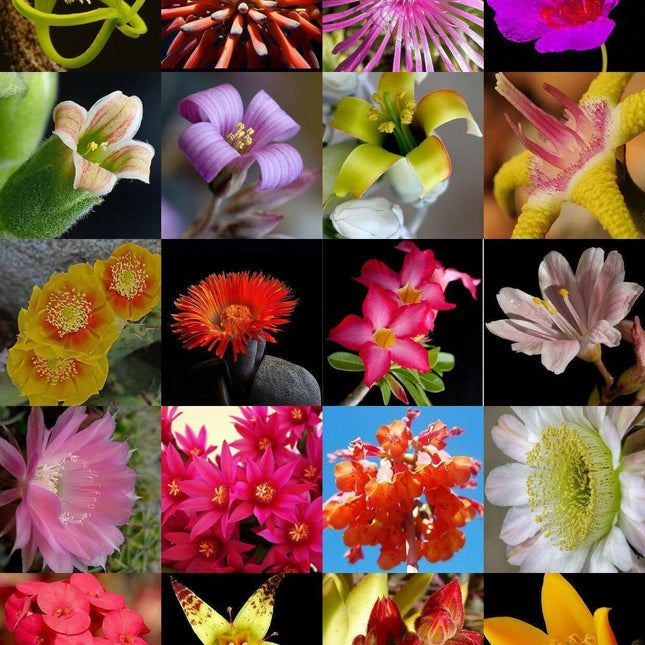
Cactus Seeds

38 products

  • Sale -6% 25 Roseroot Stonecrop Seeds 25 Roseroot Stonecrop Seeds - Seed World

    25 Roseroot Stonecrop Seeds

    Roseroot Stonecrop Golden Rose Root Sedum Rhodiola Rosea Yellow Flower Seeds Roseroot Stonecrop is a very cold hardy succulent plant that hails from the Arctic regions of Europe, Britain, Asia, & North America. The plants are able to tolerate a variety of soils including heavy clay, sandy, or rocky, & are also tolerant of drought & coastal conditions. This Stonecrop can be used as a groundcover, an alpine & rock garden plant, as a border, or in a container. Whichever you choose, you will want to plant it somewhere you will get to see it with beautiful rosettes & lovely flower clusters that attract bees & butterflies. Aside from being grown as a nice ornamental plant, Roseroot is also grown for its root’s medicinal properties. Its yellow roots are rose-scented, hence the name, & have long been used in traditional medicine.  From Wikipedia: “About 140 chemical compounds are in the subterranean portions of R. Rosea. Rhodiola roots contain phenols, rosavin, rosin, rosavin, organic acids, terpenoids, phenol carbonic acids and their derivatives, flavonoids, anthraquinones, alkaloids, tyrosol, and salidroside." Name: Roseroot StonecropOther Common Names: Rose Root / Golden Root / Aaron's Rod / Arctic Root / King's CrownScientific Name: Rhodiola Rosea / Sedum Rhodiola / Rhodiola Roanensis / Sedum Roanense / Sedum RoseaColor: YellowPlant Seeds: Fall Sow / Cold StratifyBloom Time: May - AugHardiness Zone: 1 - 9Plant Height: 12 - 15"Plant Spacing: 12 - 18"Light Requirements: SunSoil & Water Preferences: Average - Dry

    $16.99 $15.97

  • Nopal Prickly Pear Cactus Seeds – product image 1 Nopal Prickly Pear Cactus Seeds – product image 2

    Nopal Prickly Pear Cactus Seeds – 20 Seeds

    Grow Nopal Prickly Pear Cactus Seeds for food gardens and containers with suitable space and growing conditions. This listing gives you clear quantity, realistic seed-starting expectations, and the key decisions to make before sowing. Why Choose These Seeds Product identity and quantity are presented clearly Practical sowing guidance for a stronger start Realistic expectations about germination and seed-grown variation Useful for gardeners who want control over placement and growing conditions At a Glance Plant Nopal Prickly Pear Cactus Seeds Order contents One order contains 20 seeds, as stated in the title. Best for food gardens and containers with suitable space and growing conditions Success starts with Fresh mix, correct moisture, suitable temperature, and patience How to Start Start in a clean seed-starting mix or direct sow when conditions suit the crop. Sow at a depth appropriate to seed size; very small seed needs only a light covering. Keep evenly moist, provide strong light after emergence, and thin crowded seedlings. Transplant after hardening off and when outdoor temperatures are appropriate for the crop. Set expectations: Seed-grown plants can vary in color, form, vigor, and bloom or harvest timing. Photos show a representative mature result, not the appearance of the seed packet or a guaranteed individual plant. Seeds are sold for planting. Confirm crop-specific food safety, harvest maturity, and preparation guidance before eating any plant part. Frequently Asked Questions What exactly will I receive?One order contains 20 seeds, as stated in the title. Is Nopal Prickly Pear Cactus Seeds a good fit for my garden?Confirm mature size, light, climate, and local restrictions before planting. Food gardens and containers with suitable space and growing conditions are the intended use. Should I start the seeds indoors or direct sow?Either can work depending on the species and climate; indoor starting offers closer control, while direct sowing reduces transplant disturbance. How long will germination take?Timing varies by species, seed treatment, temperature, moisture, and seed dormancy. Do not discard a properly maintained tray simply because emergence is uneven. Will every plant look exactly like the photos?No. Seed-grown plants can vary in color, form, vigor, and bloom or harvest timing. Are there safety or local planting concerns?Seeds are sold for planting. Confirm crop-specific food safety, harvest maturity, and preparation guidance before eating any plant part.

  • 50 Giant Saguaro Cactus Seeds - Carnegiea Gigantea - Seed World 50 Giant Saguaro Cactus Seeds - Carnegiea Gigantea - Seed World

    Ships from Bullhead City, Arizona, USA 50 Giant Saguaro Cactus Seeds - Carnegiea Gigantea

    Grow your very own piece of the desert with Giant Saguaro Cactus Seeds (Carnegiea gigantea) — the majestic symbol of the American Southwest! Known for its towering arms and striking silhouette, this legendary cactus can live for over 150 years and grow up to 40 feet tall under ideal conditions. Perfect for collectors, xeriscape gardens, or cactus enthusiasts, the Saguaro offers a slow-growing yet rewarding journey — producing white night-blooming flowers and red fruit that attract hummingbirds and desert wildlife. Despite its size in nature, it can thrive indoors in pots for many years, making it a stunning addition to any plant collection. 🌱 Why Grow Giant Saguaro Cactus Seeds? 🌵 Iconic Beauty – The classic cactus of Arizona deserts, awe-inspiring and timeless. 🌼 Low Maintenance – Drought-tolerant and easy to care for once established. 🌞 Perfect for Warm Climates – Thrives in full sun and arid conditions. 🏡 Indoor & Outdoor Appeal – Start in containers, then transplant outdoors later. 🌸 Wildlife Friendly – Produces nectar-rich blooms for pollinators. 🌿 Growing Tips Prepare Soil: Use a well-draining cactus mix or sand-based soil. Sowing: Sprinkle seeds on top and lightly press — do not bury. Water: Mist lightly to keep the surface moist until germination. Light: Provide bright, indirect light until seedlings are strong. Temperature: Ideal germination temperature is 75–90°F (24–32°C). Transplant: Move to larger pots once seedlings are 2–3 inches tall. ❓ Frequently Asked Questions (FAQ) How long does it take a Saguaro cactus to grow?Saguaros are slow growers — they can take 10 years to reach 1 inch tall but live for more than 150 years! Can I grow a Saguaro indoors?Yes! Start your seeds indoors in a sunny spot or greenhouse. They thrive in pots for many years before outgrowing containers. What temperature do Saguaros need?Ideal range is 70–90°F (21–32°C). Avoid frost exposure, especially in early growth stages. When will it flower?Mature Saguaros (around 30–40 years old in the wild) produce large white blooms in late spring and early summer. How often should I water it?Mist lightly while germinating, then water only when the soil is completely dry once established. Where to Buy Giant Saguaro Cactus Seeds for Sale? At Seeds World, we offer fresh, high-quality Giant Saguaro Seeds with fast U.S. shipping. Whether you’re a desert plant collector or a beginner gardener, growing this iconic cactus from seed is a true botanical adventure.

  • 30 Flowering Succulent Mix Seeds – parent or mature plant reference; seed-grown results may vary 1 30 Flowering Succulent Mix Seeds – parent or mature plant reference; seed-grown results may vary 2

    30 Flowering Succulent Mix Seeds

    30 Flowering Succulent Mix SeedsGrow sculptural, drought-adapted plants from seed and enjoy the natural variation that makes each seedling distinct. The page is designed to answer the questions that matter before purchase: what is supplied, what preparation may be needed and what results are realistic.Why Choose 30 Flowering Succulent Mix Seeds? A hands-on way to grow the plant from its earliest stage Clear preparation, sowing and care guidance Transparent expectations about germination, maturity and seedling variation What’s in the PackApproximately 30 seeds in one packet.Seed-grown expectations: Photos and parent or mix names are references; seed-grown color, form, flavor and growth can vary.Growing Information Light: Bright light with gentle morning sun for young seedlings Water: Keep lightly moist during germination, then allow more drying as plants establish Life cycle: Perennial succulent Best sowing period: Spring or summer indoors Planting Instructions No cold stratification is normally needed. Surface-sow on sterile, fine, fast-draining mix; cover for humidity while providing regular airflow. Maintain steady moisture without leaving the medium waterlogged. Provide strong, appropriate light after emergence and acclimate seedlings gradually before outdoor planting. Frequently Asked QuestionsWhat is included with my order?Approximately 30 seeds in one packet.Will the mature plant match the photos exactly?Photos and parent or mix names are references; seed-grown color, form, flavor and growth can vary.Does the seed need special preparation?No cold stratification is normally needed.How long does germination and maturity take?Germination often takes several weeks and mature form develops gradually over months.Can I grow it in a container?Well suited to shallow containers with drainage.What light and watering conditions work best?Bright light with gentle morning sun for young seedlings. Keep lightly moist during germination, then allow more drying as plants establish.

  • Sale -32% Cactus Pear Seeds – Opuntia Ficus-Indica (10 Seeds Pack) - Seed World Cactus Pear Seeds – Opuntia Ficus-Indica (10 Seeds Pack) - Seed World

    Cactus Pear Seeds – Opuntia Ficus-Indica (10 Seeds Pack)

    Cactus Pear Seeds – Opuntia Ficus-Indica (10 Seeds) Grow your own cactus pear – also known as Opuntia Ficus-Indica – with this easy-to-grow and visually stunning cactus variety. Loved for its edible pads and vibrant fruits, this drought-tolerant succulent thrives in hot climates and poor soil, making it a resilient choice for xeriscaping and edible gardens alike. Why Grow Opuntia Ficus-Indica? 🌵 Edible and ornamental – produces colorful, sweet fruit and striking paddles 🔥 Thrives in heat and drought – ideal for desert-style or water-saving gardens 🌞 Full sun lover – thrives in hot, dry conditions 🌼 Yellow to orange blooms in late spring to early summer 📏 Grows up to 20 ft tall with space to spread What’s in the Pack? This pack includes 10 premium Opuntia Ficus-Indica seeds, carefully selected for high viability and shipped fresh. Perfect for outdoor sowing or greenhouse propagation. Planting Instructions Best Time to Plant: Spring or early summer Soil: Well-drained, sandy or rocky soil with low fertility Light: Full sun Depth: ¼ inch deep Watering: Water lightly and sparingly during germination (2–6 weeks) Spacing: Sow several feet apart to allow for spreading FAQs How long does it take cactus pear seeds to germinate? Germination typically takes 2 to 6 weeks under warm and sunny conditions. Soaking seeds overnight can help speed up the process. Are cactus pears edible? Yes, both the pads (nopales) and the fruits (tuna) are edible and commonly used in Latin American cuisine. Do I need special conditions to grow them? They prefer full sun and hot weather, with well-draining soil. Minimal watering is needed once established. Where to buy cactus pear seeds for sale? You can find fresh and high-quality cactus pear seeds right here at Seeds World – shipped fast across the U.S. and perfect for both edible and ornamental gardens.

    $12.99 $8.83

  • Sale -11% 50 Cactus Mix Seeds 50 Cactus Mix Seeds – Hardy Exotic Succulents (Non-GMO) - Seed World

    50 Cactus Mix Seeds – Hardy Exotic Succulents (Non-GMO)

    50+ Cactus Mix Seeds – Hardy Exotic Succulents Looking for a reliable cactus mix seed pack? This curated mix offers a diverse selection of desert cacti suitable for windowsills, containers, or xeriscape beds. Non-GMO and open-pollinated, these seeds are well-suited to bright, dry conditions and are a smart choice for beginners and collectors seeking hardy, low-maintenance plants. Why Choose Cactus Mix from Seed? Diverse assortment – grow multiple cactus types from one packet; species may vary by batch Drought and heat tolerant – thrives in arid, warm environments once established Compact, low-maintenance growth – ideal for indoor pots, balconies, and rock gardens Non-GMO, open-pollinated – naturally produced seed with dependable quality Fast U.S. shipping – sealed packet for freshness What’s in the Pack? Each sealed packet contains 50+ cactus mix seeds, suitable for starting in trays or small pots. Expect multiple forms and spination patterns; exact species composition varies. Planting Instructions Best Time to Plant: Spring–summer; indoors year-round Soil: Sterile cactus mix with added perlite/pumice and a light top-dusting of fine sand; pH near neutral Light: Bright, indirect light for germination; introduce morning sun gradually after seedlings harden Depth: Surface-sow; press in gently and dust very lightly with sand/vermiculite (many cacti need light to germinate) Temperature: 70–80°F (21–27°C) during germination Watering: Keep evenly moist (not waterlogged) under a vented dome; increase airflow as seedlings emerge Germination Window: Typically 7–30 days; some species may take longer Growing Zone: Indoors in all zones; outdoors generally USDA 9–11. Some cold-hardy types in the mix may tolerate lower zones with protection. Always acclimate gradually and confirm hardiness by species. FAQs Can I grow them indoors? Yes. Start seeds indoors in bright, indirect light. Mature plants do well on sunny windowsills; increase sun exposure gradually. What soil and watering do you recommend? Use a well-drained cactus/succulent medium with added perlite or pumice. Keep evenly moist for germination, then water sparingly once established. How long until they sprout and grow? Germination commonly occurs within 1–4 weeks; some species are slower. Growth is steady with warmth, light, and minimal overwatering. Where to buy cactus mix seeds for sale? At Seeds World, we list fresh cactus mix seeds from trusted sellers with fast U.S. shipping and a clear germination guide, so you can compare options and choose the mix that fits your setup.

    $17.99 $15.99

  • 100 Hens-and-Chicks Seeds – product image 1 100 Hens-and-Chicks Seeds – product image 2

    Shipped from Canton, Ohio, USA 100 Hens-and-Chicks Seeds

    100 Hens-and-Chicks SeedsGrow sculptural, drought-adapted plants from seed and enjoy the natural variation that makes each seedling distinct. The page is designed to answer the questions that matter before purchase: what is supplied, what preparation may be needed and what results are realistic.Why Choose 100 Hens-and-Chicks Seeds? A hands-on way to grow the plant from its earliest stage Clear preparation, sowing and care guidance Transparent expectations about germination, maturity and seedling variation What’s in the PackApproximately 100 seeds in one packet.Seed-grown expectations: Natural variation can occur in any seed-grown plant, and results depend on seed freshness and growing conditions.Growing Information Light: Bright light with gentle morning sun for young seedlings Water: Keep lightly moist during germination, then allow more drying as plants establish Life cycle: Perennial succulent Best sowing period: Spring or summer indoors Planting Instructions No cold stratification is normally needed. Surface-sow on sterile, fine, fast-draining mix; cover for humidity while providing regular airflow. Maintain steady moisture without leaving the medium waterlogged. Provide strong, appropriate light after emergence and acclimate seedlings gradually before outdoor planting. Frequently Asked QuestionsWhat is included with my order?Approximately 100 seeds in one packet.Will the mature plant match the photos exactly?Natural variation can occur in any seed-grown plant, and results depend on seed freshness and growing conditions.Does the seed need special preparation?No cold stratification is normally needed.How long does germination and maturity take?Germination often takes several weeks and mature form develops gradually over months.Can I grow it in a container?Well suited to shallow containers with drainage.What light and watering conditions work best?Bright light with gentle morning sun for young seedlings. Keep lightly moist during germination, then allow more drying as plants establish.

  • Purple Prickly Pear Cactus Seeds – product image 1 Purple Prickly Pear Cactus Seeds – product image 2

    Shipped from Marietta, Georgia, USA Purple Prickly Pear Cactus Seeds – 50 Seeds

    Grow Purple Prickly Pear Cactus Seeds for beds, borders, containers, and pollinator plantings where the species is appropriate. This listing gives you clear quantity, realistic seed-starting expectations, and the key decisions to make before sowing. Why Choose These Seeds Product identity and quantity are presented clearly Practical sowing guidance for a stronger start Realistic expectations about germination and seed-grown variation Useful for gardeners who want control over placement and growing conditions At a Glance Plant Purple Prickly Pear Cactus Seeds Order contents One order contains 50 seeds, as stated in the title. Best for beds, borders, containers, and pollinator plantings where the species is appropriate Success starts with Fresh mix, correct moisture, suitable temperature, and patience How to Start Use a clean, well-drained seed-starting mix and follow the species’ light or stratification needs. Sow at a depth appropriate to seed size; dust-like seed is usually surface sown. Keep the medium evenly moist, never saturated, and provide good air circulation. Harden seedlings off gradually before moving them to their permanent site. Set expectations: Seed-grown plants can vary in color, form, vigor, and bloom or harvest timing. Photos show a representative mature result, not the appearance of the seed packet or a guaranteed individual plant. Seed-grown plants can vary in color, form, and flowering time; photos show the mature type, not a guaranteed individual result. Frequently Asked Questions What exactly will I receive?One order contains 50 seeds, as stated in the title. Is Purple Prickly Pear Cactus Seeds a good fit for my garden?Confirm mature size, light, climate, and local restrictions before planting. Beds, borders, containers, and pollinator plantings where the species is appropriate are the intended use. Should I start the seeds indoors or direct sow?Either can work depending on the species and climate; indoor starting offers closer control, while direct sowing reduces transplant disturbance. How long will germination take?Timing varies by species, seed treatment, temperature, moisture, and seed dormancy. Do not discard a properly maintained tray simply because emergence is uneven. Will every plant look exactly like the photos?No. Seed-grown plants can vary in color, form, vigor, and bloom or harvest timing. Are there safety or local planting concerns?Seed-grown plants can vary in color, form, and flowering time; photos show the mature type, not a guaranteed individual result.

  • 30 Lithops Optica Rubra Rare Seeds 30 Lithops Optica Rubra Rare Seeds - Seed World

    Shipped from Miami, FL, USA 30 Lithops Optica Rubra Rare Seeds

    Lithops Optica RUBRA rare mesembs Exotic Succulent Living Stones Cactus Seeds Lithops is a genus of succulent plants native to southern Africa. "Lithos" means "stone" and "-ops" means "face" in Ancient Greek; therefore "Lithops" means "stone-like". This is a very good description of these plants, which avoid being eaten by blending in with surrounding rocks. They are often known as pebble plants or living stones. The formation of the name from the greek "-ops" means that even a single plant is called a Lithops. Individual Lithops plants consist of one or more pairs of bulbous, almost fused leaves opposite to each other and hardly any stem. The slit between the leaves contains the meristem and produces flowers and new leaves. The leaves of Lithops are mostly buried below the surface of the soil, with a partially or completely translucent top surface or window allowing light to enter the interior of the leaves for photosynthesis. Lithops are obligate outcrosses and require pollination from a separate plant. Like most resembles, Lithops fruit is a dry capsule that opens when it becomes wet; some seeds may be ejected by falling raindrops, and the capsule re-closes when it dries out. Capsules may also sometimes detach and be distributed intact or may disintegrate after several years. The most startling adaptation of Lithops is the coloring of the leaves. The leaves are not green as in almost all higher plants, but various shades of cream, grey, and brown, patterned with darker windowed areas, dots, and red lines. The markings on the top surface disguise the plant in its surroundings.

  • 30 Buckhorn Cholla Cactus Seeds 30 Buckhorn Cholla Cactus Seeds - Seed World

    Shipped from Needles, CA, USA 30 Buckhorn Cholla Cactus Seeds

    Buckhorn Cholla Cactus Seeds (Cylindropuntia Acanthocarpa) Cholla cactus while the name "Jumping Cholla" is applied especially to this species, it is also used as a general term for all chollas.   Flowers are white, pink, and yellow streaked with lavender. They are about one inch wide and are displayed at the joint tips blooming in mid-summer. The jumping cholla is an arborescent (tree-like) plant with one low-branching trunk. It often grows to heights of 4 m (13 ft), with drooping branches chained. The stems are light green and are strongly tuberculate, with tubercles (small, wart-like projections on the stems) measuring 6 to 9 mm. Together, the plants form fantastic-looking forests that may range over many hectares.   Leaves have been reduced to spines, 6 to 12 of which grow from each areole. Young branches are covered with 2 to 3 cm (1 to 1 in) silvery-yellow spines, which darken to a gray color with age. These spines form a dense layer that obscures the stems. Slower growing or older branches have sparse and/or shorter spines. As the spines fall off of older parts, the brown-black bark is revealed. It becomes rough and scaly with age.   Most of the fleshy, pear-shaped to nearly round, wrinkled with a few spines. They are typically about 4 cm (1.5 in) long, often producing flowers the following year which add new to those of previous seasons.

  • Sale -10% 50 Succulent Seed Mix – mature plant mix reference

    Shipped from Miami, Florida, USA 50 Succulent Seed Mix

    50 Succulent Seed MixCreate a varied collection of compact, sculptural plants from seed. This listing is written to set clear expectations before purchase: photos show mature or parent references, while seed-grown results depend on genetics and growing conditions.Why Choose 50 Succulent Seed Mix? A hands-on way to grow the plant from its earliest stage Clear sowing and care guidance for realistic planning Suitable for gardeners who value natural seedling variation What’s in the Pack50 seeds or units, as stated in the product title.Seed-grown variation: Mix and parent labels indicate the supplier’s reference only; species, color and mature form can vary among seedlings.Growing Information Light: Bright light with gentle morning sun; protect tiny seedlings from harsh midday sun. Water: Keep the surface lightly moist during germination, then allow more drying as seedlings establish. Life cycle: Perennial Best sowing period: Spring or summer indoors Planting Instructions No cold stratification is normally used. Warmth, light, sanitation and careful moisture matter most. Surface-sow on a fine, sterile, fast-draining cactus mix. Press in without burying deeply and cover for humidity with regular airflow. Keep the medium evenly moist during germination without leaving it waterlogged. Provide strong, appropriate light after emergence and acclimate seedlings gradually before outdoor planting. Frequently Asked QuestionsWill the plants match the photos or selected type?Mix and parent labels indicate the supplier’s reference only; species, color and mature form can vary among seedlings.Does the seed need special preparation?No cold stratification is normally used. Warmth, light, sanitation and careful moisture matter most.How should I sow it?Surface-sow on a fine, sterile, fast-draining cactus mix. Press in without burying deeply and cover for humidity with regular airflow.What light and water does it need?Bright light with gentle morning sun; protect tiny seedlings from harsh midday sun. Keep the surface lightly moist during germination, then allow more drying as seedlings establish.How long will it take?Germination often takes several weeks, and recognizable succulent form develops gradually over months.Can it grow in a container?Well suited to shallow containers with drainage holes.

    $19.95 $17.99

  • Assorted cactus forms shown for mixed seed reference Mixed cacti in varied shapes and textures

    Shipped from Buffalo, NY, USA 25 Mixed Cactus Seeds

    25 Mixed Cactus SeedsThis is a mixed cactus seed lot containing approximately 25 seeds. The supplier does not provide a verified species list, so mature size, spine form, flower color, growth rate and hardiness will vary. Product images are illustrative of possible cactus forms, not guaranteed results.Why Choose This Product? Assorted cactus-growing project for patient growers Species variation disclosed before purchase Seedling-specific moisture guidance included No rare-species, exact-color or mix-composition guarantee What’s in the Pack?One packet containing approximately 25 mixed cactus seeds. Exact species and proportions are not specified.Growing Information Plant type: mixed perennial cacti Light: bright filtered light for seedlings; stronger light gradually with age Soil: sterile, fine and fast draining Water: evenly moist for germination, then reduced gradually Growth: slow and variable by species Planting Instructions Surface sow the fine seed on sterilized cactus seed-starting mix. Press gently and do not bury deeply. Cover the container to maintain humidity and keep warm in bright indirect light. Vent gradually after germination to acclimate seedlings. Water carefully from below or with a fine mist, then reduce moisture as seedlings develop. Important: Do not treat tiny cactus seedlings like mature desert plants; they need steadier moisture early on. Species identity remains unverified.Frequently Asked QuestionsWhich cactus species are included?The supplier has not provided a verified species list, so the composition is unknown.Should cactus seed be buried?No. Most fine cactus seed should be surface sown or only lightly pressed into the medium.Do seedlings need desert-dry conditions?No. Young seedlings need steady humidity and moisture before gradual acclimation.How quickly will the cacti grow?Growth is generally slow and varies widely by species and conditions.Are the pictured shapes guaranteed?No. Images illustrate possible forms and do not map to specific seeds.Where can I buy mixed cactus seeds for sale?Seed World offers this 25-seed mixed packet with transparent composition and care guidance.

  • Close-up of a cactus with red fruit on a green background Cactus with red fruit against a clear blue sky

    Shipped from Houston, Texas, USA 40 Red Prickly Pear Cactus Seeds – Opuntia ficus-indica

    Grow a stunning desert gem with Red Prickly Pear Cactus Seeds (Opuntia ficus-indica) — a resilient, fruit-bearing cactus that thrives in hot, dry climates. Known for its vibrant red edible fruits (tunas) and distinctive paddle-shaped pads, this cactus brings beauty, sustainability, and versatility to your garden. Native to the Americas, the Red Prickly Pear is prized not just for its ornamental charm, but also for its nutritious fruit and medicinal properties. The fruits are packed with antioxidants, while the pads (nopales) are used in traditional dishes for their mild, citrusy flavor and health benefits. Perfect for xeriscapes, containers, and rock gardens, this drought-tolerant plant adds sculptural beauty to any landscape — no green thumb required! 🌵 Botanical Info: Scientific Name: Opuntia ficus-indica Common Name: Red Prickly Pear, Indian Fig, Nopal Cactus Type: Perennial Cactus Height: 6–15 ft. (in-ground), smaller in pots Light: Full Sun Soil: Sandy, well-draining soil Zones: USDA 8–11 Fruit: Edible red “tunas” (pear-shaped fruits) Bloom Time: Late spring to summer 🌱 Why Grow Red Prickly Pear Cactus Seeds? 🌵 Low Maintenance Beauty: Thrives in full sun and poor soil with minimal care. 🍓 Edible Fruits & Pads: Enjoy sweet, vitamin-rich red fruits and tender pads used in traditional cuisine. 💧 Drought Tolerant: Perfect for arid climates and water-wise landscapes. 🦋 Wildlife Friendly: Attracts pollinators like bees and hummingbirds with bright yellow flowers. 🌎 Eco-Friendly: Reduces water usage and thrives where other plants struggle. 🌿 Growing Tips Sowing Time: Late spring or early summer when temperatures are warm. Scarify Seeds: Lightly sand or nick seeds before soaking in warm water for 24 hours. Soil: Use cactus/succulent mix or sandy soil for best drainage. Planting Depth: Press seeds gently into soil—do not bury deeply. Light: Place in bright sunlight or under grow lights. Watering: Keep lightly moist until germination (2–6 weeks), then reduce watering. Transplanting: Move seedlings to larger pots once pads reach 2–3 inches tall. ❓ Frequently Asked Questions (FAQ) How long does it take Red Prickly Pear Cactus to grow from seed?Seeds typically germinate within 2–6 weeks and mature into fruit-bearing plants in 2–3 years under ideal conditions. Are the fruits edible?Yes! The red “tunas” are delicious and full of antioxidants. Just remove the tiny spines before eating. Can I grow it indoors?Absolutely — just make sure it gets at least 6 hours of bright sunlight daily or use a grow light. How often should I water it?Water sparingly. Once established, the cactus only needs watering every 2–3 weeks during dry periods. Is this cactus cold-hardy?A: It can handle light frost, but it’s best grown in USDA zones 8–11 or overwintered indoors in colder climates. Where to Buy Red Prickly Pear Cactus Seeds for Sale?At Seeds World, we offer fresh, high-quality Red Prickly Pear Cactus Seeds with fast U.S. shipping. Whether you’re growing for fruit, beauty, or a low-maintenance landscape, our seeds deliver exceptional germination and lasting results.

  • 20 Rare Pilosocereus Purpureus Cactus Seeds - Seed World 20 Rare Pilosocereus Purpureus Cactus Seeds - Seed World

    10 Rare Pilosocereus Purpureus Cactus Seeds

    1 review

    Looking for Pilosocereus purpureus seeds for sale? This rare columnar cactus is prized for its striking blue-to-purple epidermis and upright ribbed stems. Ideal for collectors and xeric gardens, it grows well in warm climates outdoors or as a bright indoor specimen in cooler regions. Why Choose Pilosocereus purpureus? Distinctive coloration – blue to purple tones on a columnar, ribbed cactus Collector-worthy species – uncommon and visually dramatic Drought tolerant once established – suitable for xeric/low-water designs Container friendly – thrives in bright indoor sites with good airflow What’s in the Pack? Sealed pack of 20 Pilosocereus purpureus seeds—sourced for freshness and viability. Ideal for small batch sowing or sharing among enthusiasts. Planting Instructions Best Time to Sow: Late spring–summer (or year-round indoors with heat mat) Growing Zone: Outdoors USDA 10–11; in cooler zones grow in containers indoors with bright light Medium: Sterile, very well-draining cactus mix with added perlite/pumice Light: Bright, indirect light for germination; increase sun gradually after establishment Depth: Surface-sow and lightly press; do not bury. Mist to settle. Temperature: 24–30°C (75–86°F) for germination Moisture: Keep evenly moist (not wet) under humidity dome/cover; ventilate daily Germination Window: Typically 14–45+ days; some seeds may take longer FAQs How big does Pilosocereus purpureus get? In warm climates it can become a tall, branching columnar cactus. In containers it grows more slowly and remains compact for years. Does it need full sun? Provide bright light. Seedlings prefer bright, indirect light at first; mature plants tolerate stronger sun with gradual acclimation. What temperatures does it prefer? Warmth is key. Aim for 24–30°C (75–86°F) for germination and protect from frost. Overwinter indoors in cooler climates. Where to buy Pilosocereus purpureus seeds for sale? At Seeds World, we offer fresh Pilosocereus purpureus seeds with fast U.S. shipping and a clear, step-by-step sowing guide to help you start a healthy collection. Any notes on color and seed reality? Color intensity varies by light, nutrition, and age. As with all seeds, results can vary and germination is not guaranteed; careful sterile technique and warmth improve outcomes.

  • 15 Assorted Succulent Cuttings – Live Japanese Cactus Varieties - Seed World 15 Assorted Succulent Cuttings – Live Japanese Cactus Varieties - Seed World

    15 Assorted Succulent Cuttings – Live Japanese Cactus Varieties

    You will receive 15 succulent cuttings (from 10 different varieties) ranging in size from 1 to 4 inches long. These cuttings are easy to care for and perfect for propagating your own beautiful collection. Please note that it's normal for some leaves to fall or dry out during transit. Fallen leaves can be used for propagation, and any initial dryness around the plant indicates new root growth. Some cuttings may arrive with curled edges, but with proper care, they will recover. Color: The cuttings are primarily green, with some featuring red or orange tones. Colors may fade slightly during transit, but rest assured, they will regain their vibrant beauty in a sunny, ventilated environment with the right care. Add these unique, easy-to-grow succulents to your garden, home, or office for a touch of nature!

  • Sale -17% 50 Brain Cactus Stenocactus variety mix seeds 50 Brain Cactus - Stenocactus Variety Mix Seeds - Seed World

    50 Brain Cactus - Stenocactus Variety Mix Seeds

    Stenocactus Variety Mix Brain Cactus Rare Echinofosulocactus Seeds Echinofolucactus is now StenocactusStenocactus consists of 10 species of small globular cacti from central and northern Mexico. Echinofossulocactus is now part of Stenocactus and contains the Brain Cacti, so named for the many wrinkled ribs. This interesting characteristic along with the pretty flowers and impressive spination make Stenocacti very collectable plants.Stenocactus are usually solitary although a few species are known to produce offsets once mature. For this reason they are most often propagated from seed. Fairly small cacti, they rarely exceed four inches in diameter. In late summer they produce one inch wide tubular flowers with striped petals. The flower colors range from white to a rich magenta and are generally self sterile.

    $23.99 $19.99

  • Lapidaria margaretae Seeds – product image 1 Lapidaria margaretae Seeds – product image 2

    Lapidaria margaretae Seeds – 30 Seeds

    Grow Lapidaria margaretae Seeds for beds, borders, containers, and pollinator plantings where the species is appropriate. This listing gives you clear quantity, realistic seed-starting expectations, and the key decisions to make before sowing. Why Choose These Seeds Product identity and quantity are presented clearly Practical sowing guidance for a stronger start Realistic expectations about germination and seed-grown variation Useful for gardeners who want control over placement and growing conditions At a Glance Plant Lapidaria margaretae Seeds Order contents One order contains 30 seeds, as stated in the title. Best for beds, borders, containers, and pollinator plantings where the species is appropriate Success starts with Fresh mix, correct moisture, suitable temperature, and patience How to Start Use a clean, well-drained seed-starting mix and follow the species’ light or stratification needs. Sow at a depth appropriate to seed size; dust-like seed is usually surface sown. Keep the medium evenly moist, never saturated, and provide good air circulation. Harden seedlings off gradually before moving them to their permanent site. Set expectations: Seed-grown plants can vary in color, form, vigor, and bloom or harvest timing. Photos show a representative mature result, not the appearance of the seed packet or a guaranteed individual plant. Seed-grown plants can vary in color, form, and flowering time; photos show the mature type, not a guaranteed individual result. Frequently Asked Questions What exactly will I receive?One order contains 30 seeds, as stated in the title. Is Lapidaria margaretae Seeds a good fit for my garden?Confirm mature size, light, climate, and local restrictions before planting. Beds, borders, containers, and pollinator plantings where the species is appropriate are the intended use. Should I start the seeds indoors or direct sow?Either can work depending on the species and climate; indoor starting offers closer control, while direct sowing reduces transplant disturbance. How long will germination take?Timing varies by species, seed treatment, temperature, moisture, and seed dormancy. Do not discard a properly maintained tray simply because emergence is uneven. Will every plant look exactly like the photos?No. Seed-grown plants can vary in color, form, vigor, and bloom or harvest timing. Are there safety or local planting concerns?Seed-grown plants can vary in color, form, and flowering time; photos show the mature type, not a guaranteed individual result.

  • 1 Thanksgiving Christmas Cactus Assortment Plug Rooted in a 4” Pot - Seed World 1 Thanksgiving Christmas Cactus Assortment Plug Rooted in a 4” Pot - Seed World

    Thanksgiving Cactus Plug – Assorted Color, 4-Inch Pot

    Receive one rooted Thanksgiving cactus (Schlumbergera truncata type) growing in a 4-inch pot. Each plant is selected from the colors available at packing time, making every order naturally individual.What You Receive One live rooted plant in a 4-inch nursery pot Assorted color selected by availability No guarantee of buds or open flowers at delivery Plant size and branching vary naturally Care InstructionsLightProvide bright, indirect light. Gentle morning sun is usually suitable, but protect the plant from intense midday exposure that can scorch the segments.WaterWater thoroughly after the upper inch of potting mix begins to dry, then allow excess water to drain. Do not leave the pot standing in water.Temperature and HumidityTypical indoor temperatures of about 60–80°F are suitable. Protect from frost, heaters and sudden temperature changes. Average household humidity is usually adequate.Encouraging Future BloomsThanksgiving cactus commonly sets buds in response to longer nights and cooler autumn conditions. Consistent darkness at night and moderately cool temperatures can support bud formation, but flowering dates are not guaranteed.Growing Information Plant type Tropical epiphytic cactus Light Bright indirect light Water Moderate; allow partial drying Pet safety Keep plants out of reach of pets and children as a general precaution Outdoor use Warm, frost-free conditions only Frequently Asked QuestionsCan I choose the flower color?No. This listing is for one assorted plant, and color is selected from current availability.Will it arrive flowering?Not necessarily. Plants may arrive without buds or open blooms depending on season and shipping timing.Should I repot it immediately?Usually not. Allow the plant to acclimate first, then repot only if the mix stays wet too long or roots have clearly filled the nursery pot.Please note: Live plants vary naturally and may show minor cosmetic shipping stress. The terms “Thanksgiving cactus” and “Christmas cactus” are often confused; this listing is presented as a Thanksgiving cactus type.

  • 20 Blossfeldia Liliputana Cactus Seeds - Seed World 20 Blossfeldia Liliputana Cactus Seeds - Seed World

    Shipped from Riverview, Florida, USA 20 Blossfeldia Liliputana Cactus Seeds

     Blossfeldia Liliputana Cactus Seeds - Perennial Flowering Cacti Blossfeldia Liliputana is established over a wide geographical area ranging from Southern Bolivia to northwestern Argentina. This is the smallest cactus species on Earth! They are the only cacti that are capable of completely drying out and then rehydrating their cells when watered.Blossfeldia liliputana v. fechseri - the biggest and most beautifull Blossfeldia - Collected at Miraflores/Catamarca Argentina. USDA 8b-10. Cold hardy to 15 deg. F.Light shade. Solitary or clumping miniature cactus, up to 0.5" in diameter0 Small pinkish and white flowers. Blossfeldia is the smallest of the cacti. Native to: Southern Bolivia, northwestern Argentina, at elevations of 4000 to 12000 feet.

  • Haworthia Veneosa Tessellata Cactus Succulent Live Plant - Seed World Haworthia Veneosa Tessellata Cactus Succulent Live Plant - Seed World

    Haworthia Veneosa Tessellata Cactus Succulent Live Plant

    Haworthia Veneosa Tessellata cactus Cacti Succulent real live plant (This plant comes in a 2" pot. You will receive a very similar plant to the one in the picture. It may or may not be blooming at the time of your purchase. The plant is shipped in its pot to prevent any damage to the roots).Haworthia Veneosa Tessellata goes by the common name “Veined Haworthia” or “Window Haworthia”. This succulent is spiral-shaped. The plant originated in Namibia and comes from the family of Asphodelaceae. It becomes dormant in mid-winter and late spring and can grow up to a height of 6 inches. Growth Rate The succulent is a slow-growing plant with green and brownish leaves. It forms rosettes that are fleshy and firm in texture.  Flowering You will witness tiny white and green flowers on top of extremely long stems. You will see these flowers growing out in the summer season. Watering and Feeding Water deeply but only when the soil has dried out. Stop watering during the summers to prevent root rot. Take a rest from feeding in summer, but continue it in the spring and fall. Dilute the fertilizer by half.  Soil The succulent does not settle in any soil except a well-drained mix. Ensure it has coarse sand, pumice, or perlite. Containers should have holes. Hardiness Hawrothia grows best in the summer season. It has a frost tolerance of anywhere between -3.9° C (25° F). Furthermore, it is hardy in the 9b to 11b zones. Light Direct sunlight is not recommended since it will burn the leaves. Provide it with medium light.  Propagation Allow the offsets to grow to a decent size before you separate them. To make sure it survives on its own and has some roots. You would love to know that Haworthia Veneosa Tessellata loves to live in the same temperatures that we humans like to live in. They are much like us since they can flower only when they are happy.

  • 20 Myrtillocactus Geometrizans Seeds - Seed World 20 Myrtillocactus Geometrizans Seeds - Seed World

    Shipped from Miami, FL, USA 20 Myrtillocactus Geometrizans Seeds

    Myrtillocactus Geometrizans, Cacti Cactus Seeds Common name: Blue Torch, Blue Candle, Blue Flame, Blue Myrtle Cactus, and Bilberry CactusSize: Up to 16 FeetMyrtillocactus geometrizans grow best in porous, slightly acidic, and well-draining sandy soils with a 5 to 6.5 PH. This plant reacts negatively to stagnant soil water; thus, you should target excellent drainage. You may pot your Blue Myrtle Cactus with a cactus mix. However, you may want to add some perlite to these soils to improve aeration and drainage. The best results may result from moving one part of pumice with two parts of cactus soil. Alternatively, it’s relatively easy to make the ideal soil mix for Myrtillocactus geometrizans at home. For indoor growth, make the base with equal peat moss and bark quantities. Then proceed to add coarse sand and vermiculite, pumice, or perlite. Suppose you’re growing outdoors. The base combination remains the same, after which you’ll have to mix one part of it with equal amounts of insoluble grit and coarse sand. You may add some gravel to enhance drainage. It’s advisable not to make your mix base using compost, and that’s because compost boasts excellent nutrient levels, which may cause root burns. The ideal light condition for Blue Flame varies according to its age and the current season. Younger Myrtillocactus geometrizans grow better in filtered sunlight or partial shade, while mature cacti prefer direct sunlight glare. Your window sills — particularly if the southern or western exposure gets to your room — are an excellent place for planting this plant at its genesis.However, this desert cactus hibernates in the cold season. Therefore, the light requirements change for both young and mature Blue Torch during winter. Keeping the plant in a part of the room receiving indirect sunlight until spring is ideal here.Myrtillocactus geometrizans seeds will usually germinate in 5-180 days, even under good conditions germination may be erratic.

  • Tephrocactus Articulatus Papyracanthus (Paper Spine Cactus) | 4 Cuttings - Seed World Tephrocactus Articulatus Papyracanthus Paper Spine Cactus – 4 Cuttings

    Tephrocactus Articulatus Papyracanthus (Paper Spine Cactus) | 4 Cuttings

    Paper Spine Cactus – Tephrocactus articulatus var. papyracanthus One of the most distinctive cacti in the world, the Paper Spine Cactus is instantly recognizable by its loose, pine-cone-shaped stem segments and its extraordinary flat, ribbon-like spines — unlike anything else in the cactus family. A slow-growing conversation piece that thrives on neglect, it is equally at home on a sunny windowsill or in a xeriscape garden. Plant Characteristics Scientific Name: Tephrocactus articulatus var. papyracanthus Common Names: Paper Spine Cactus, Papery Spine Cactus Mature Height: Up to 30 cm (12 inches) Stems: Segmented, pine-cone-shaped joints that detach easily Spines: Broad, flat, ribbon-like — papery in texture, variable in color and length Flowers: White or yellow blooms Fruit: Brown, 1–5 cm long Hardiness: USDA Zones 8 – 11 What You Get 4 live cuttings, shipped bare root. Segments may separate during transit — this is completely normal and each separated segment can be rooted independently. Rooting Instructions Lay cuttings flat on the surface of dry, well-draining cactus soil — do not bury them upright, as this can cause rot before roots form. The segment may shrivel or curl slightly, but will send out new growth once roots establish. Keep watering to a minimum until you feel resistance when gently tugging the plant (a sign roots have formed). Avoid overwatering, especially in cool or cold weather. Tip: Handle with paper, not gloves — the barbed spines can catch on fabric. Frequently Asked Questions How do I root Paper Spine Cactus cuttings? Lay the cutting flat on dry cactus soil and leave it alone. Do not water until roots form — usually 2–6 weeks. You’ll know roots have taken hold when the cutting resists a gentle tug. Why are the segments falling apart? This is completely normal — the joints of Tephrocactus articulatus are designed to detach easily (a natural dispersal mechanism). Each segment can be rooted individually. How much water does it need? Very little. Water sparingly once rooted, and reduce watering significantly in winter. This cactus is highly drought-tolerant and will rot if overwatered. Can I grow it indoors? Yes — it thrives on a sunny windowsill with at least 4–6 hours of direct sunlight per day. Use a well-draining cactus mix and a pot with drainage holes. Are the spines dangerous? The flat, papery spines are barbed and can catch on skin or fabric. Always handle with a folded piece of paper or cardboard, not gloves.

  • 25 Christmas Cactus Seeds - Thanksgiving Cactus - Seed World 25 Christmas Cactus Seeds - Thanksgiving Cactus - Seed World

    25 Christmas Cactus Seeds - Thanksgiving Cactus

    Christmas Cactus - Schlumbergera Truncata - Thanksgiving Cactus Seeds If you are looking to fill your home with festive indoor plants for the holiday season? Christmas cacti make a great addition to your house decor. They bloom right in time for Christmas and are stunning to look at when they flower. Schlumbergera truncata is a species of plant in the Cactaceae family. It is endemic to a small area of the coastal mountains of south-eastern Brazil where its natural habitats are subtropical or tropical moist forests. How to Care for a Christmas Cactus A lack of water and dramatic temperature swings can cause flower buds to drop more rapidly. Maximize your specimen's blooming period by paying attention to these six key factors:Soil: Use a quality soil rich in humus and other nutrients.Temperature: Maintain an optimal climate of 65 degrees.Watering: Keep the soil evenly moist while your plant is blooming, misting it frequently.Light: Place the cactus in an east-facing window for moderate light and some direct sun.Fertilization: Apply a high-potassium fertilizer every two weeks once buds form.Transplantation: Repot your cactus each year after flowering.

  • 20 Silver Torch Cactus Seeds - Seed World 20 Silver Torch Cactus Seeds - Seed World

    20 Silver Torch Cactus Seeds

    Silver Torch Cactus Seeds - (Cleistocactus strausii) Cleistocactus Strausii is a perennial cactus with slender, erect, grey-green columns up to 10 feet (3 m) tall and only about 2.5 inches (6 cm) in diameter. The columns are formed from around 25 ribs and are densely covered with areoles, supporting four yellow-brown spines up to 2 inches (5 cm) long and 20 shorter white radials. Older plants, over 18 inches (45 cm) tall, produce deep red, burgundy, flowers in late summer. The up to 3 inches (6 cm) long cylindrical flowers protrude horizontally from the columns. Choose a location that gets full sun and has well-draining soil. Water Cleistocactus during the spring and summer when the top inch (2.5 cm) of soil dries out. During the fall, reduce watering to every five weeks if the ground dries out. In winter, keep Cleistocactus dry or the moist ground combined with the cool temperatures and dormancy may cause the roots to rot. Fertilize Cleistocactus with a low-nitrogen fertilizer during the active growth period. A slow-release fertilizer applied in the spring will be sufficient for the whole year.


You have seen 24 out of 38 products

Spread the beauty of spikes and desert vibes into your garden with our handpicked cactus seeds.

For everyone fascinated by cacti’s unique nature, Seed World is your perfect destination to discover endless cactus varieties. Small or large, rare or common, basic greens or colorful flowering cacti—our seed assortment includes diversity that meets every individual’s demands. We have curated high-quality seeds to ensure they grow effortlessly and quickly into those spiky beauties. Since cacti easily survive the odds of weather and soil conditions and do not require much attention, they are a perfect choice for busy plant lovers. 

Ready to witness a transformation from seeds to pricky green wonder? Place your cactus seed order now!

Our Cactus Seeds Categories

1. Large Cacti:

Giant Saguaro Cactus – It’s an iconic, tall-growing desert cactus.

Peruvian Apple Cactus – Tall columnar species that produces edible fruits.

Silver Torch Cactus – Columnar, covered in silver spines.

2. Fruit Cacti:

Dragon Fruit (Hylocereus Undatus Cactus) – Produces sweet dragon fruits.

White Dragon Fruit (Cactus) – A cactus providing white-fleshed fruits.

Mexican Lime Cactus – An unusual cactus that produces edible lime-like fruits.

Purple Prickly Pear Cactus – A striking purple variant of prickly pear.

Cactus Pear (Opuntia Ficus-Indica) – Common edible cactus producing prickly pear fruits.

Nopal Edible Cactus – Known for edible pads and fruits (prickly pears).

3. Decorative and Flowering Cacti:

Egg Succulents | Echinopsis Tubiflora Cactus – Egg Succulent seeds grow plants having large, fragrant flowers.

Blossfeldia Liliputana Cactus – One of the smallest cacti, often grown for its beautiful tiny blooms.

Myrtillocactus Geometrizans – Popular for its sculptural shape and blue-green color.

Sand Dollar Cactus – Features a flattened appearance and delicate flowers.

4. Barrel and Globe Cacti:

Golden Barrel Cactus – Famous for its spherical shape and golden spines.

Arizona Barrel Cactus – Large, round cactus with distinctive spines.

5. Holiday Cacti:

Christmas Cactus / Thanksgiving Cactus – Popular houseplants, blooming during winter holidays.

6. Unique and Exotic Cacti:

Green Brain Cactus – A brain-like appearance, with twisted, ridged growth.

Buckhorn Cholla Cactus – Features segmented stems with sharp spines

7. Seed Mixes:

Gymnocalycium Variety Mix Cactus – A mix of different Gymnocalycium species known for vibrant flowers.

Rebutia Variety Mix Exotic Flowering Cactus – A variety of Rebutia species, famous for their colorful blooms.

Brain Cactus - Stenocactus Variety Mix – A mix of Stenocactus species, known for their intricate, brain-like ribbing.

Reasons You Should Choose Cactus Seeds?

1. Drought Tolerance

Known for their natural adaption to survive in dry environments, cactus seeds are an excellent choice for regions experiencing water scarcity.

2. Low Maintenance

Cactus seeds are renowned for their low-maintenance nature and strong resistance to pests and diseases, making them an excellent choice for individuals who travel frequently or have limited time to dedicate to plant care.

3. Indoor Gardening Opportunities 

These seeds are an excellent choice for indoor gardening as they require less light than many other plants and are well-suited for small, apartment-like spaces. Another remarkable quality is their variety in sizes, colors, and shapes, which not only makes them ideal for indoor use but also enhances the visual appeal of your space. This versatility further offers a fantastic opportunity to build creative landscapes.

3. Soil Conservation

Best for stabilizing soil with their extensive root systems, cactus seeds are ideal for areas prone to soil degradation. Furthermore, cultivating cactus from seeds supports the propagation of endangered or rare species while reducing the demand for wild-harvested plants, further aiding in the conservation of fragile desert ecosystems.

4. Adaptability To Various Conditions

These are known for their adaptability to various conditions, meaning they can tolerate a wide range of environments, from variable light levels to indifferent soil quality. 

Frequently Asked Questions

Q1: How do I plant and grow cactus seeds successfully?

To plant cactus seeds successfully, use these tips:

  • Use a well-draining cactus soil mix.

  • Sow seeds shallowly on the surface without burying them too deep.

  • Maintain a warm temperature.

  • Mist the seeds lightly to keep the soil moist but not waterlogged.

  • Place in indirect sunlight or under a grow light for sufficient light exposure.

  • Now, just patiently wait to see your seeds grow into adorable cacti.

Q2: Can I purchase cactus seeds in bulk?

Certainly! With us, you can purchase seeds in bulk. Just select your required quantity before adding the seeds to the cart. 

Q3: What types of cactus seeds are available for sale?

The types of cactus seeds available range from Giant Saguaro Seeds, Christmas Cactus Seeds (Thanksgiving Cactus), Green Brain Cactus Seeds, and Cactus Mix Seeds. 

Q4: How long does it take for cactus seeds to germinate?

The germination time for cactus seeds varies from one cactus species to another. Generally, cactus seeds can germinate anywhere from 1 to 6 weeks.

© 2026 Seed World, Powered by Shopify

    • PayPal

    Login

    Forgot your password?

    Don't have an account yet?
    Create account