
Products
-


1 Rotala Rotundifolia RED Live Aquarium Plant Aquatic Plant
Rotala Rotundifolia RED – Live Aquarium Plant Add vibrant color to your aquarium or terrarium with Rotala Rotundifolia RED, one of the few red aquatic plants prized for its stunning hues and ease of care. Whether submerged in aquariums or grown emersed in high-humidity terrariums, this versatile plant thrives with minimal demands. Why Choose Rotala Rotundifolia RED? 🌿 Striking Red Color: Produces shades ranging from pink-green to deep red, depending on lighting and iron supplementation.🌿 Easy to Grow: Undemanding and adapts well to most environments; CO2 and intense light enhance growth but aren’t required.🌿 Rapid Growth: Grows quickly, forming visually attractive cascades when reaching the surface.🌿 Versatile Use: Perfect for aquariums or terrariums, adding a pop of color and texture. Care Tips Light Requirements: Low to high; intense light brings out rich red tones. Propagation: Easily propagated by cuttings. Growth Conditions: Thrives in nutrient-rich environments; CO2 and iron supplements boost health and color. Enhance your aquatic setup with this captivating plant. Order Rotala Rotundifolia RED today and bring vibrant life to your aquarium or terrarium! 🌿
$16.99
-


1 San Diego Red Live Bougainvillea Starter Plug
San Diego Red Live Bougainvillea Starter/Plug Plant with Good Roots In milder climes, bougainvillea can be grown indoors or in a hanging basket. It grows well in hot climes year-round and is a great hot season plant for the landscape due to its drought tolerance. It is a natural choice for color in coastal areas due to its great salt resistance.Although it can be trained into a conventional shape, it is also cultivated as a hedge or accent plant along fences, on walls, in pots, and in hanging baskets. It has masses of papery flower bracts and heart-shaped leaves on its long, arched, thorny branches.The pots for these 5-6"+ plants are 2.5" x 2.5" x 3.5". Cultivation When established, bougainvilleas take minimal water and, in fact, won't thrive if overwatered. They grow best in dry soil, full light, and periodic fertilizing. Zones 9b to 11 of hardiness. Quantity: 1 Bougainvillea - 'San Diego Red' - Live Starter/Plug
$39.99
-


1 Serendipity Elephant Ear - Alocasia Live Plant
Finding the perfect plant that adds beauty and a tropical vibe to your home or garden can be a challenge. Many plants either require too much maintenance or fail to make a bold statement in your space. This often leaves your indoor or outdoor areas looking dull and uninspiring, diminishing your enjoyment and the overall aesthetic appeal. This lack of vibrant greenery can affect your daily life by creating an environment that feels less refreshing and welcoming. Whether you’re trying to create a relaxing indoor oasis or enhance your garden’s curb appeal, missing the right focal piece can limit your design options and personal satisfaction. The 1 Serendipity Elephant Ear - Alocasia Live Plant is the ideal solution to bring drama and exotic charm to your living space. This striking plant stands out with its large, arrow-shaped deep green leaves and bold architectural features, making it a captivating centerpiece for any garden or indoor setting. Thrives in partial shade and adapts well to low indoor lighting, making it versatile for various environments Requires consistently moist, well-drained, organic-rich soil for optimal growth, supporting healthy foliage Grows to an impressive 3-5 feet tall, serving as a standout tropical accent with up to 2-3 feet of spacing for airflow and development Customers rave about the Serendipity Elephant Ear’s ability to transform dull spaces into lush, vibrant sanctuaries. One buyer shared, “This plant completely changed my living room’s vibe — it’s like having a little piece of the tropics right inside my home.” If you’re searching for elephant ear plants for sale, don’t miss out on the Serendipity Elephant Ear. It’s more than just a plant; it’s a statement of style and serenity. Bring home this exotic beauty today and enjoy a fresh, tropical atmosphere that lifts your space and spirit.
$32.99
-

1 Silver Dragon Elephant Ear - Alocasia baginda Live Plant
Silver Dragon Elephant Ear – Alocasia baginda Live Plant Meet the Silver Dragon – one of the most coveted jewel alocasias in the world. Its thick, textured leaves shimmer with a silver-white sheen, traced by deep green veins that look almost hand-painted. Compact enough for a windowsill, dramatic enough to stop guests in their tracks. Whether you're a seasoned collector or adding your first statement plant, the Silver Dragon delivers year-round wow factor with minimal fuss. Specifications Latin Name: Alocasia baginda 'Silver Dragon' Type: Perennial (Jewel Alocasia) USDA Zones: 9–11 Mature Size: 2–3 feet tall and wide Environment: Indoor or sheltered outdoor Light: Bright, indirect light Soil: Rich, well-draining mix Moisture: Keep moist; allow top inch to dry between waterings Temperature: Warm and humid – avoid cold drafts Deer Resistant: Moderately Plant Spacing: 2 feet apart Planting & Care Tips Light: Bright, indirect sunlight enhances the silver leaf color without scorching. Watering: Keep soil evenly moist; reduce frequency in cooler months. Humidity: Loves humidity – mist regularly or use a pebble tray. Soil: Use a chunky, well-aerated mix (perlite + peat or coco coir). Fertilizing: Feed monthly during the growing season with a balanced liquid fertilizer. Your plant ships as a healthy, rooted baby – 3 to 8 inches tall in a 3-inch pot – ready to grow and thrive under your care. Frequently Asked Questions Is the Silver Dragon Elephant Ear safe for pets?No – Alocasia baginda is toxic to cats, dogs, and humans if ingested. Keep it out of reach of children and pets. How big will my plant get?Indoors, the Silver Dragon typically reaches 2–3 feet tall and wide at maturity. Growth rate depends on light, humidity, and pot size. What size plant will I receive?You'll receive a young, rooted baby plant – approximately 3 to 8 inches tall – shipped in a 3-inch deep nursery pot. Can I grow it outdoors?Yes, in USDA Zones 9–11 it can be grown outdoors in a sheltered spot. In cooler climates, keep it indoors or bring it in before temperatures drop below 60°F (15°C). Why are the lower leaves yellowing?Some yellowing of older leaves is normal as the plant matures. If multiple leaves yellow quickly, check for overwatering, low humidity, or insufficient light.
$40.00
-


1 Thanksgiving Christmas Cactus Assortment Plug Rooted in a 4” Pot
1 Thanksgiving Christmas Cactus Assortment plug rooted in a 4” pot. Mature Plants Different Colors. We’ll send it the available. No buds. No flowers.Thanksgiving Christmas Cactus Assortment mature Size Plants - almost all are blooming, 4+” tall All Different Varieties - Schlumbergera Christmas cactus is known as the Thanksgiving cactus or Easter cactus. This plant has a flattened body and the leaves are actually its stems, from which the red-pink flowers bloom during the holiday season. The plant displays little yellow daisy-like flowers on a long reddish stalk all year round. Christmas cactus is not only easy to care for but propagates easily too, making it an exceptional candidate for holiday gift giving. Caring for Christmas cactus Light: Partial sun, partial shade. Soil: Porous, well-drained. Temperature: This cactus prefers cooler temperatures, so avoid placing it close to any heat sources. But also protect the plant from frost and freezing temperatures. Water: Try not to overwater the plant, but you can mist its leaves every other day to maintain its preferred level of humidity (50-60%). Note:Please be mindful of the temperatures in your area, nights 28 or warmer and days 35 or warmer are best for safe arrival.
$24.99
-


1 Tuberose Bulb The Pearl – Fragrant Polianthus
Few flowers can match the intoxicating fragrance of Tuberose 'The Pearl'. This premium double-petaled variety has been treasured for centuries — in gardens, bridal bouquets, and the world's finest perfumes. Plant one bulb and let it fill your outdoor space with its rich, sweet scent all summer long. With tall, elegant stems and clusters of pure white blooms that open in succession, it's as beautiful as it is unforgettable. What You Get ✅ 1 Tuberose bulb – 'The Pearl', size 12/14 CM (premium grade) Plant Highlights 🪷 Double-Petaled White Blooms — elegant clusters on tall, sturdy stems 🌸 Intensely Fragrant — one of the most scented flowering bulbs available ☀️ Bloom Time: Summer to early fall 📏 Height: 24–36 inches 🌿 USDA Zones: 8–11 (grow as annual in cooler climates) ✂️ Excellent Cut Flower — long-lasting in vases with exceptional fragrance indoors 🪨 Uses: Borders, flower beds, patio containers, cutting gardens Specifications Variety: Polianthes tuberosa ‘The Pearl’ Bulb Size: 12/14 CM (premium grade) Flower Color: White, double-petaled Light: Full sun Soil: Well-drained, moderately fertile Watering: Moderate — keep moist during active growth Planting Guide When to plant: Spring, after the last frost, when soil is warm (60°F+) Depth: Plant 2–3 inches deep with the pointed end facing up Spacing: 6–8 inches apart Location: Full sun, sheltered from strong winds In colder zones: Lift bulbs after the first frost and store in a cool, dry place over winter Frequently Asked Questions When will my Tuberose bulb bloom? Expect blooms in mid-to-late summer, continuing into early fall. Flowers open gradually in succession, extending the display over several weeks. Is Tuberose 'The Pearl' a perennial? Yes, in USDA Zones 8–11 it returns year after year. In colder climates, dig up the bulbs after the first frost and store them indoors over winter to replant in spring. How fragrant is it really? Tuberose is considered one of the most intensely fragrant flowering bulbs in the world. Its rich, sweet scent is a key ingredient in many luxury perfumes — even a single stem can fill a room. Can I grow Tuberose in a container? Yes! It grows beautifully in pots and containers. Use a deep pot (at least 12 inches), well-draining soil, and place in a sunny spot on your patio or balcony. What does the 12/14 CM bulb size mean? This refers to the circumference of the bulb. A 12/14 CM bulb is a premium, mature-grade bulb that is more likely to bloom in its first season compared to smaller sizes.
$37.99 $19.99
-


Shipped from Greenville, SC, USA 1 Upright Elephant Ear Bulb (7–8”) – Giant Alocasia Odora
Upright Elephant Ear Bulb (7–8”) – Giant Alocasia Odora for Tropical Garden & Indoor Decor Transform your home or garden into a lush tropical paradise with the Upright Elephant Ear (Alocasia Odora). Known for its dramatic oversized leaves and striking upright growth, this stunning plant makes a bold statement whether planted outdoors or in decorative containers. Each large bulb (7–8”) produces towering elephant ear leaves that can reach up to 5–8 feet tall, creating an instant exotic vibe. Loved for its low-maintenance care, this hardy perennial thrives in warm climates but can also be grown indoors for year-round tropical flair. 🌿 Why You’ll Love It: Impressive Size - Giant leaves add drama and elegance to any space Fast Growth – Bulbs quickly sprout lush greenery Versatile Planting - Perfect for gardens, patios, or large indoor pots Low Maintenance – Easy to grow with minimal effort Tropical Aesthetic – Instantly elevates your landscaping or interior décor Add the Upright Elephant Ear Alocasia Odora to your garden or living space today and enjoy its show-stopping beauty season after season! FAQs – Upright Elephant Ear Bulb (7–8”) – Giant Alocasia Odora How big will my Upright Elephant Ear grow?When planted in the right conditions, Alocasia Odora can grow 5–8 feet tall with large, lush leaves. Is this plant suitable for indoors?Yes! It thrives in large indoor pots with bright, indirect light and adds a tropical touch to any room. How do I plant the bulb?Plant your 7–8” bulb 3–4 inches deep in rich, well-draining soil. Keep soil moist but not soggy for best results. Can it survive cold winters?Elephant Ears are tropical. In colder regions, bulbs should be dug up before frost and stored in a dry, cool place until spring. How fast does it grow?With the right care, sprouts can appear in 2–4 weeks, and full-sized foliage develops within the first season.
$59.99 $49.99
-


1,000 Baby’s Breath Flower Seeds
Baby's Breath is one of the most popular wildflowers and it is easy to grow from flower seed. Baby's Breath has tiny, virtually insignificant flowers compared to other wildflowers, but without Baby's Breath other more showy flowers don't appear to their best advantage. Everything looks better with Baby's Breath around it! Gypsophila plants grow upright 12 - 24 inches tall and as wide. It is quite drought-tolerant. The Gypsophila flowers are single form, one-half inch across, abundant, and typically white but there are cultivars available in pink and rose. Its leaves are 3 inches long, lance-shaped, and fleshy. Successively planting the flower seed every 2 - 3 weeks should ensure never being without it during the growing season. Flower SpecificationsSeason: AnnualUSDA Zones: 3 - 10Height: 12 - 24 inchesBloom Season: SummerBloom Color: WhiteEnvironment: Full sunSoil Type: Well-drained, pH 6.6 - 7.8Deer Resistant: YesPlanting DirectionsTemperature: 70FAverage Germ Time: 10 - 20 daysLight Required: YesDepth: 1/16 inchSowing Rate: 3 ounces per 1,000 square feet or 7 pounds per acreMoisture: Keep seed moist until germinationPlant Spacing: 10 inches Quantity: 1,000 Baby’s Breath Flower Seeds
$11.27 $9.99
-

Shipped from Saint Augustine, Florida, USA 1,000 Pink Rock Soapwort Flower Seeds
Pink Rock Soapwort Flower Seeds (Saponaria Ocymoides) If you are looking for lots of lush ground coverage for your borders, beds, or rock garden at a great deal, look no further than pink Saponaria Ocymoides Soapwort. This broadleaf evergreen perennial blooms thousands of tiny beautiful pink flowers from May to August. The frost-resistant greenery of Saponaria Ocymides trails elegantly on walls all year long in most climates. It is also so very easy to grow. As an added bonus, Soapwort doesn't need a lot of watering once established.All parts of the plant are rich in saponins, thus all parts of Soapwort can be used as an all-natural soap alternative. How cool is that right? Imagine standing in your garden with dirty hands and a new neighbor pops up to say hi. No problem, grab the hose and a few leaves, crunch them up and wash your hands with suds before you greet them with a handshake. It makes for a great conversation starter!Germination Instructions: Gently press soapwort seeds onto the soil surface and do not cover them as they need sunlight to germinate. Keep seeds and soil moist until germination occurs, up to 30 days.Grow Zones: 2,3,4,5,6,7,8,9Other names: Tumbling Ted
$11.99
-


1,000 Wasabi Mustard Seeds
Wasabi Mustard Seeds - Japanese Heirloom Wasabini Experience the unique zest of Wasabi Mustard, a Japanese heirloom variety known as Wasabini, with our fresh, premium Non-GMO seeds. This distinct mustard offers a sharp, wasabi-like kick, making it perfect for adding a bold flavor to salads, sandwiches, and gourmet dishes. Cultivate your own Wasabini for a fresh, spicy twist right from your garden. Specifications for Wasabi Mustard Seeds - Japanese Heirloom Wasabini: Season: Cool season crop; best planted in early spring or late summer/fall. USDA Zones: 2-9 for spring and fall planting. Height: Typically grows 6-12 inches tall. Bloom Season: Flowers in late spring if overwintered or if spring temperatures rise quickly. Bloom Color: Yellow. Environment: Performs best in cooler weather. Soil Type: Fertile, well-drained soil with plenty of organic matter. Deer Resistant: Moderately resistant. Latin Name: Brassica juncea. Temperature: Prefers cooler temperatures; growth slows or stops in high heat. Average Germ Time: 5-10 days. Light Required: Full sun to partial shade. Depth: Sow seeds 1/4 inch deep. Sowing Rate: Direct sow and thin to desired spacing. Moisture: Keep soil moist but not soggy. Plant Spacing: Thin seedlings to 12 inches apart to allow full leaf development. Planting Instructions: Sun Exposure: Prefers full sun to partial shade. Soil Type: Grows best in well-drained, fertile soil. Watering Needs: Keep soil consistently moist but not waterlogged. Planting Depth: Sow seeds 1/4 inch deep. Plant Spacing: Space seeds 6 inches apart; thin seedlings to 12 inches apart as they grow. Start growing your own Wasabini mustard and enjoy the sharp, refreshing bite of wasabi in your home-cooked meals. Whether you're a seasoned gardener or a culinary enthusiast, these seeds are sure to spice up your garden and your plate.
$17.99
-


1,200 Wallflower Siberian Seeds
Bring a burst of vibrant orange to your garden with these hardy Wallflower Siberian seeds. Known for their early-summer blooms and ability to thrive in cool climates, they’re perfect for cut flowers, borders, rock gardens, and even fabric dye production. Why Grow Siberian Wallflowers? 🌼 Brilliant orange flowers – striking and cheerful in any setting 🧊 Cold hardy – thrives even in USDA Zone 3 🐝 Pollinator-friendly and deer-resistant 🌱 Sealed 1200-seed pack – great for large spaces or repeated sowing What’s Included? Each pack contains approximately 1,200 Wallflower Siberian seeds, carefully packaged for freshness. With high germination rates and wide climate tolerance, they’re a favorite for both beginners and experienced gardeners. Planting Instructions Best Time to Plant: Early spring or fall Temperature: 65°F–75°F Soil: Sandy, well-drained; pH 6.1–7.3 Depth: 1/8 inch Light: Full sun Watering: Keep soil moist until germination (15–30 days) Spacing: 9–12 inches ❓ Frequently Asked Questions (FAQ) Are Wallflower Siberian seeds suitable for cold climates? Yes! These plants are cold hardy and can thrive even in USDA Zone 3. They are perfect for northern gardens. How tall do Siberian Wallflowers grow? They typically reach a height of 12 to 18 inches, creating a beautiful and manageable floral display. Can I use them as cut flowers? Absolutely. Siberian Wallflowers are often used in floral arrangements thanks to their vibrant color and long-lasting blooms. Where to buy Wallflower Siberian seeds for sale? You can purchase fresh and high-quality Wallflower Siberian seeds right here at Seeds World. We offer fast U.S. shipping and reliable germination.
$17.99 $14.99
-


10 Acacia Confusa Seeds
Bring the beauty and utility of Acacia Confusa to your garden or landscape, where it will grow quickly into a striking and useful tree! Acacia Confusa, or Koa, is Hawaii's largest native tree, reaching up to 115 feet tall with a 30-foot spread. Valued for its beautiful, durable wood, Koa is one of the most expensive woods globally, used in furniture and crafts. This fast-growing tree can add up to 5 feet per year in its early years and produces stunning yellow blossoms. Koa thrives in tropical, frost-free climates, making it ideal for regions like Hawaii, Southern California, Texas, and Florida. Acacia Confusa Seeds: Foliage: Feathery, fine leaves Light Requirements: Full sun to partial shade Soil Type: Well-draining, adaptable to poor soils Watering: Regular until established, drought-tolerant afterward Germination Time: 2-4 weeks Maintenance: Low maintenance, occasional pruning if needed Growing Instructions: Sowing: Scarify the seeds by lightly nicking them with a knife or soaking them in hot water for 24 hours to improve germination. Sow the seeds in well-draining soil, lightly covering them with soil. Light Requirements: Acacia Confusa thrives in full sun but can tolerate partial shade. Ensure it receives plenty of sunlight for optimal growth. Watering: Water the seeds regularly until they germinate. Once established, the tree is drought-tolerant and requires minimal watering. Soil: Plant in well-draining soil. Acacia Confusa can grow in poor soils but will thrive in moderately fertile, sandy, or loamy soils. Germination: Seeds typically germinate within 2-4 weeks under optimal conditions, with warmth and consistent moisture. Maintenance: This tree requires minimal maintenance once established. Prune if necessary to shape or control growth.
$15.99
-


10 Acacia Golden Mimosa Tree Seeds
Golden Mimosa Tree - Acacia Baileyana Yellow Wattle Tree Flower Seeds This Acacia has silvery green feathery mimosa-type leaves and is evergreen. It is a fast grower and it blooms all year round. Outdoors it is not very cold hardy but can be enjoyed in cooler climates as a potted or houseplant. Indoors they will grow to a much smaller size than they would outdoors in the ground. They also make excellent bonsai specimens and have fragrant blooms. If you do grow yours outdoors, birds will love eating its seeds. Name: Acacia Golden MimosaOther Common Names: Bailey’s Wattle / Bailey Acacia / Cootamunda WattleScientific Name: Acacia BaileyanaColor: YellowPlant Seeds: Outdoors After Frost / Indoors Weeks Before Last FrostBloom Time: All Year RoundHardiness Zone: 8 - 11Plant Height: 20 - 30’Plant Spacing: 30 - 40’Light Requirements: Sun - IndoorsSoil & Water Preferences: Average
$17.95
-


Shipped from Willow Spring, NC, USA 10 Albion Everbearing Live Strawberry Bare Roots
Albion Everbearing Live Strawberry Bare Roots | High-Yield, Sweet & Juicy Berries | Non-GMO Grow your own supply of sweet, juicy strawberries right at home with Albion Everbearing Live Strawberry Bare Roots. Known for their exceptional flavor, high yields, and disease resistance, Albion strawberries are a gardener’s favorite for both backyard gardens and commercial planting. 🌱 Why Choose Albion Everbearing Strawberries? 🍓 Everbearing Variety – Enjoy multiple harvests throughout the growing season. 🌞 High-Yield & Hardy – Strong plants that thrive in full sun with consistent fruiting. 🍯 Exceptional Flavor – Sweet, aromatic berries perfect for fresh eating, desserts, and jams. 🌍 Non-GMO & Naturally Grown – Healthy plants you can trust for your family. These bare-root strawberry plants are easy to establish, highly productive, and will reward you with plump, delicious strawberries season after season. Whether you’re planting in raised beds, pots, or directly in your garden, Albion strawberries are the perfect choice for gardeners who want premium results. ❓ Frequently Asked Questions (FAQ) How many harvests can I expect from Albion Everbearing strawberries?Albion strawberries are an everbearing variety, meaning you’ll enjoy multiple harvests throughout the season—spring, summer, and fall. How should I plant bare-root strawberry plants?Plant in well-drained soil, about 12–18 inches apart, in a sunny location. Keep roots moist during planting and water regularly. How long until I get strawberries after planting?Most plants begin producing fruit within the first season. Expect larger yields in the second year as plants mature. Can I grow Albion strawberries in containers?Yes! Albion strawberries thrive in pots, hanging baskets, and raised beds as long as they receive full sun and regular watering. Are these plants organic or GMO?All of our Albion Strawberry Bare Roots are Non-GMO and naturally grown for healthy, delicious results.
$39.95
-
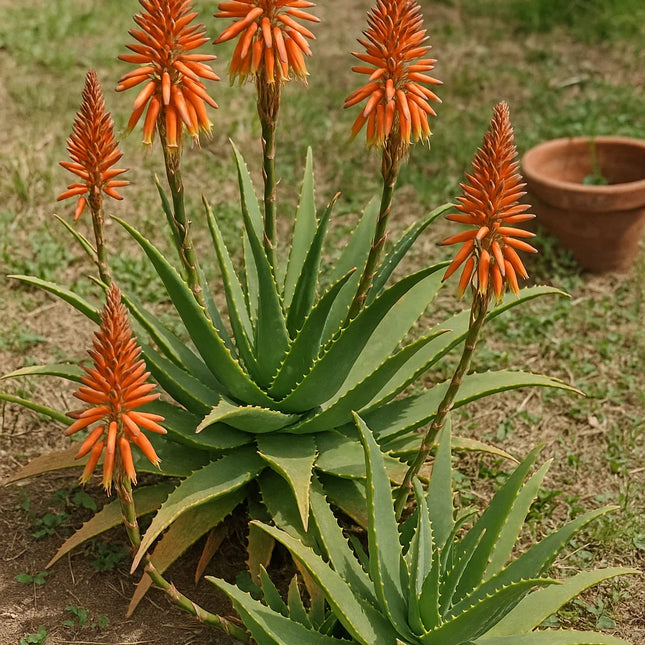

10 Aloe Arborescens kranz Vera Seeds – Rare Succulent
10 Aloe Arborescens kranz Vera Seeds Looking for Aloe Arborescens seeds for sale? You've found them. This rare Aloe variety produces a stunning plant with tall red-orange flower spikes and thick fleshy leaves known for traditional healing properties. Ideal for home gardeners, indoor growers, and natural medicine enthusiasts. Why Choose Aloe Arborescens? 🪴 Rare and striking succulent – with rose-like leaf formations 🌿 Beginner-friendly – easy to grow indoors or out 🌤️ Loves light – thrives in bright spots or gardens 🩺 Traditional medicinal uses – known in various cultures 📦 Sealed pack of 10 seeds – ships fast from the USA What’s in the Pack? You’ll receive a sealed pack of 10 premium Aloe Arborescens seeds, ideal for growing in containers, raised beds, or natural remedy gardens. Planting Instructions Best Time to Plant: Early spring or late summer Soil: Well-draining cactus/succulent mix Light: Full sun to partial shade Depth: Light surface coverage Watering: Water lightly and allow soil to dry out between watering FAQs Is Aloe Arborescens hard to grow? Not at all. It’s very easy to grow and is a great choice for beginners and indoor gardeners alike. Can I grow Aloe Arborescens indoors? Yes, it thrives in well-draining pots and bright, indirect sunlight—perfect for windowsills. What is Aloe Arborescens used for? Traditionally, its gel has been used for immune support, skin healing, and natural remedies. Always consult a professional before use. Where to buy Aloe Arborescens for sale? At Seeds World, we offer fresh and high-quality Aloe Arborescens seeds with fast U.S. shipping and germination support. Order now and start growing your own medicinal aloe plant.
$21.99
-


10 Annona Muricata Seeds
Discover the Power of Annona muricata: Unlock the Secrets of this Extraordinary Fruit! The custard apple tree, Annona muricata, produces edible fruit known as soursop due to its mildly acidic flavor when ripe. Originally from the Caribbean, India, and Central America, it has become widely grown and, in some areas, an invasive species in tropical and subtropical regions worldwide. In Indonesia, it is called sirsak and serves as the primary host plant for tailed jay caterpillars (Graphium agamemnon), which feed on its leaves and pupate underneath them. Annona muricata trees are small, evergreen, and can reach heights of up to 30 feet (9.1 meters). The leaves are oblong to oval, 3 to 7 centimeters wide and 8 to 16 centimeters long, with a lustrous dark green color and hairless on top, lighter and barely haired to hairless underneath. The flower stalks are woody, 2 to 5 millimeters long, each bearing one to two flowers appearing opposite the leaves or close to the leaf stalk. The individual flower stalks are thick, hairless or sparsely haired, and about 15 to 20 millimeters tall, with smaller, densely haired bractlets near the base. Flowers have thick, yellowish petals. Outer petals are broadly ovate, not overlapping, 2.8 cm to 3.3 cm long and 2.1 cm to 2.5 cm wide, tapering to a point with a heart-shaped base. Inner petals overlap, about 2.5 cm to 2.8 cm long, 2 cm wide, sharply angled and tapering at the base. Stamens are 4.5 mm long, wedge-shaped with unequal anther hollows. Sepals are thick and non-overlapping. Carpels are linear, 1-ovuled, with reddish-brown hairs. Fruits are dark green, prickly, ovoid, up to 30 cm long, with juicy, acidic, whitish flesh and aromatic scent. Common Name: Soursop, Graviola, Guyabano, Guanabana, Prickly Custard Apple, Durian Belanda, Durian Europa, Durian Makkah, Durian Benggala Quantity: 10 Annona Muricata Seeds
$21.00
-


10 Assorted Succulent Cuttings
10 Assorted Succulent Cuttings – Colorful Mix Bring color, texture, and life to any space with these assorted succulent cuttings. Each cutting is hand-selected from a rotating mix of varieties — think rosette-shaped Echeverias, trailing sedums, and more — making every order a unique surprise. Perfect for dish gardens, terrariums, living walls, mini fairy gardens, and creative DIY projects. What You Get ✅ 10 assorted succulent cuttings, approx. 1.5–5 inches each Plant Highlights 🌈 Colorful Mix — variety of colors, shapes, and textures based on current availability 🌱 Genus: Primarily Echeveria and mixed succulents ☀️ Sunlight: Partial shade to full sun depending on variety 💧 Watering: Light — drought-tolerant once established 🌍 Climate: Dry, sub-tropical, temperate (USDA Zone 10, 30–40°F) 🌿 Foliage: Evergreen, fleshy leaves — all seasons interest 🪨 Uses: Living walls, dish gardens, terrariums, fairy gardens, party favors How to Root Your Cuttings Callous first: Allow the cut end to dry and seal over for 3–7 days before planting (cactus may take longer). Open immediately: Upon arrival, unbox your cuttings right away. Do not expose to direct sun. Plant in well-draining soil: Use cactus/succulent mix. Moisten soil slightly, then insert the cutting ½–2 inches deep. Indirect light only at first: Place in a warm, airy spot with filtered or indirect sunlight. Water after 5–10 days. Wait for roots: Roots typically develop in 2–6 weeks. Bare-root cuttings root faster. Transition to more light: Once established, move to bright filtered sunlight. Some varieties may need direct sun for best color. 📌 Please Note The specific varieties and colors you receive will vary based on current availability. The cuttings shown in product photos are for illustration purposes only — your mix will be unique! Frequently Asked Questions Do I need to do anything before planting the cuttings? Yes — let the cut end callous over for 3–7 days in a dry, shaded spot before planting. This prevents rot and helps the cutting root successfully. How long until the cuttings develop roots? Most cuttings develop roots within 2–6 weeks under the right conditions — warm temperature, indirect light, and light watering starting 5–10 days after planting. Can I choose which varieties I receive? No — the mix is assorted and based on current availability. Each order is unique, which is part of the fun! We do our best to include a variety of colors and shapes. Are succulents good for beginners? Absolutely. Succulents are among the easiest plants to grow — they're drought-tolerant, low-maintenance, and thrive in a wide range of indoor and outdoor conditions. What soil should I use? Use a cactus or succulent-specific potting mix, or any well-draining soil blend with sand, perlite, or pumice. Avoid regular potting soil that retains too much moisture.
$25.00
-


10 Autumn Crocus Seeds (Colchicum autumnale)
Autumn Crocus Seeds – Colchicum autumnale Bring late-season magic to your garden with Autumn Crocus — also known as Naked Lady or Meadow Saffron. These striking deer-resistant, fall-blooming perennials send up large, purplish-pink flowers without a single leaf in sight, creating a bold, unexpected display just when most gardens are winding down. 🌸 Key Features: • Blooms in September–October • Cold-hardy (Zones 5–10) & deer-resistant • Perfect for beds, borders, and meadows • Plant height: 6–12" | Spacing: 3–6" • Sun-loving — thrives in moist, well-drained soil ⚠️ Toxic if ingested — handle with care and keep away from children and pets. Add rare, vibrant charm to your fall garden with this eye-catching seasonal favorite! Frequently Asked Questions When should I plant Autumn Crocus seeds? Plant in late summer to early fall, ideally 6–8 weeks before the first frost. This gives the seeds time to establish before winter dormancy. How deep should I plant the seeds? Sow seeds about 1–2 inches deep in well-drained soil. Space them 3–6 inches apart for a natural, clustered look. Do Autumn Crocus seeds need full sun? Yes — they thrive in full sun to partial shade. Choose a spot that gets at least 4–6 hours of direct sunlight daily for the best blooms. Are these seeds safe around pets and children? No — Colchicum autumnale is toxic if ingested. Plant in areas away from pets and children, and always wash hands after handling. Will Autumn Crocus come back every year? Yes! These are perennials that return year after year in Zones 5–10. Once established, they naturalize beautifully and multiply over time.
$16.99
-


10 Beach Plum (Prunus Maritima) Seeds
Perfect for patios, gardens, or sandy coastal areas, Beach Plum shrubs are salt-resistant and hardy, growing 4–10 ft. tall without pruning. Known for their fragrant pink and white spring blooms, they produce delicious plums in summer, with vibrant fall foliage to follow. Zones: 3–7 Height: 4–10 ft. Light: Full sun to partial shade Soil: Tolerates sandy, saline, or regular soil Uses: Fresh fruit, jams, jellies, pies Germination Instructions: Apply cold stratification: wrap seeds in a moist paper towel, place in a ziplock bag, and refrigerate for 2–3 months. Sow seeds in moist sand, peat moss, or loam and allow 2–3 months for germination. Enjoy this hardy east coast native for its beauty, fruit, and low-maintenance versatility!
$15.99
-


10 Begonia Tuberous Double Yellow Seeds
Brighten shaded spaces with the stunning elegance of Begonia Tuberous Double Yellow Seeds. This compact annual produces luxurious, fully double blooms up to 6 inches wide, glowing in vibrant golden yellow against rich, textured green foliage. With its long flowering season and exceptional performance in partial shade, this begonia is a top choice where many flowering plants struggle. Growing just 12 inches tall, Double Yellow Tuberous Begonia delivers nonstop color from spring through fall. Its fragrant blooms attract hummingbirds, butterflies, and bees, making it both a visual showstopper and a pollinator-friendly garden addition. Ideal for containers, borders, window boxes, and shaded beds, this begonia brings high-impact beauty to small spaces. 🌱 Why Grow Begonia Tuberous Double Yellow Seeds? 🌼 Extra-large, fully double bright yellow flowers 🌿 Compact growth—perfect for containers and borders 🌤 Thrives in partial shade and dappled light 🐝 Attracts hummingbirds, butterflies, and bees 🌸 Long bloom season from spring through fall 🪴 Excellent choice for pots, hanging baskets & window boxes 🌿 Growing Tips Plant Type: Annual flowering plant Height: ~12 inches Light: Partial sun to partial shade (indirect light preferred) Soil: Moist, well-drained soil (pH 5.5–6.2) Water: Water when soil begins to dry; avoid overwatering Seed Depth: Surface sow—press gently into soil Start Indoors: 8–12 weeks before last frost Germination: 17–28 days Bloom Time: Spring, Summer, Fall 💡Tip: Use bottom watering or fine misting to avoid washing away tiny seeds. ❓Frequently Asked Questions (FAQ) Are these begonias good for shade gardens?Yes! They thrive in partial shade and indirect light. Can I grow them in containers?Absolutely—this variety is ideal for pots, window boxes, and hanging baskets. Do begonias need full sun?No. Too much direct sun can damage foliage; filtered light is best. Are the flowers really double?Yes—this variety produces large, fully double blooms up to 6 inches wide. Is this plant suitable for all U.S. regions?Yes, as an annual it can be grown throughout North America. Where to Buy Begonia Tuberous Double Yellow Seeds for Sale?At Seeds World, we offer fresh Begonia Tuberosa seeds, carefully selected for quality and packed for success. Enjoy fast U.S. shipping and dependable germination so you can grow with confidence.
$18.95
-


Shipped from Walterboro, South Carolina, USA 10 Bell Mimosa Seeds – Dichrostachys cinerea
Add exotic beauty and wildlife interest to your landscape with Dichrostachys cinerea, commonly known as Bell Mimosa, Sickle Bush, or Chinese Lantern Tree. This unique shrub or small tree is celebrated for its charming bi-colored “bell-shaped” flowers—lavender-purple on top, golden-yellow below—giving it a striking lantern-like appearance. Native to Africa and Asia, Bell Mimosa is drought-tolerant, fast-growing, and incredibly adaptable. It thrives in poor soils, heat, and dry climates, making it an outstanding choice for xeriscapes, wildlife gardens, and low-maintenance landscapes. Its fine, feathery foliage and showy blooms make it beautiful both as an ornamental shrub or bonsai specimen. Perfect for gardeners seeking a hardy, eye-catching, pollinator-attracting plant that thrives with minimal care. 🌱 Why Grow Bell Mimosa (Dichrostachys cinerea) Seeds? 🌸 Rare and exotic bi-colored fragrant blooms 🐝 Attracts bees, birds & pollinators 🌿 Thrives in dry, sandy, or rocky soils ☀️ Heat, drought & poor soil tolerant 🌳 Grows as shrub, tree, hedge, or bonsai 🌍 Easy to grow—great for beginners 🌿 Growing Tips Sow seeds in warm soil after frost. Lightly scarify or soak seeds 12–24 hours to improve germination. Plant in full sun for best flowering. Water moderately—Bell Mimosa prefers dry to average moisture. Prune to shape if growing as hedge or bonsai. Ideal for zones 9–11; grow indoors in cooler climates. ❓ Frequently Asked Questions (FAQ) How tall does Bell Mimosa grow?Typically 6–20 ft depending on climate and pruning. Is it drought tolerant?Yes—this species thrives in hot, dry environments. Can I grow it in a container?Absolutely! It adapts well to container or bonsai culture. How long does germination take?Usually 1–4 weeks after scarification and warm soil. Is it suitable for beginners?Yes—Bell Mimosa is hardy, forgiving, and easy to grow. Where to Buy Bell Mimosa Seeds for Sale?At Seeds World, we offer fresh, high-quality Dichrostachys cinerea seeds with fast U.S. shipping—perfect for collectors, exotic plant lovers, and gardeners seeking unique flowering trees.
$19.99
-

10 Better Boy Tomato Seeds VFN (F1 Hybrid) | Non-GMO
Better Boy VFN Hybrid Tomato Seeds | Solanum Lycopersicum Better Boy VFN Hybrid Tomatoes are a top choice for slicing, boasting large, smooth, bright red fruits with classic flavor—perfectly balanced with acid and sugar. These indeterminate vines produce until frost and are widely adapted across the country. Key Features: Fruit Weight: 12–16 oz | Days to Maturity: 75 days Disease Resistance: Fusarium Wilt, Root Knot Nematodes, Verticillium Wilt Light: Full Sun | Zones: 3–9 Sow Method: Start indoors | Spacing: 36" | Row Spacing: 4' Growing Tips: Sow seeds 1/4" deep indoors before transplanting. Stake vines for support. Ideal for greenhouse or field production. Enjoy unbeatable flavor and robust plants with Better Boy VFN Hybrid Tomatoes, the ultimate choice for home gardeners!
$11.99
-


Shipped from Wisconsin, USA 10 Bigleaf Maple Tree Seeds
Bigleaf Maple Tree Seeds (Acer Macrophyllum) (Big Leaf Maple Tree) Oregon Maple 10 Sprouted Germinated Bigleaf Maple Tree Seeds ( Acer macrophyllum ) Organic- You will receive 10 individual actively sprouting Bigleaf Maple seeds, all in different stages of growth, which are organically grown and sustainably harvested from a private woodland in Sequim, Washington. *Please be aware that some tails on these seeds may be broken off, although most will still be intact. The tails are not important, as the only purpose they serve is to travel more efficiently to the ground. Discover the majestic beauty of the Bigleaf Maple Tree! Bigleaf Maple Tree Seeds (Acer Macrophyllum), commonly known as the Big Leaf Maple or Oregon Maple. Native to the lush landscapes of the Pacific Northwest. These premium seeds encapsulate the majestic beauty of this deciduous tree. The Bigleaf Maple is celebrated for its colossal leaves, which can span up to a foot in diameter, showcasing a vibrant green canopy that transforms into a spectacular display of golden hues in the fall. Cultivating these seeds promises to bring a touch of the Pacific Northwest's grandeur to your outdoor haven.
$21.00 $19.99
-


10 Black Barlow - Aquilegia Vulgaris Seeds
Aquilegia Vulgaris Var. Stellata Plena | Barlow-series 'Black Barlow' Aquilegia vulgaris comes from the Ranunculaceae family. It is commonly known as Double Columbine and is a perennial blooming from May to July. It enjoys well-drained soil and shade to semi-shade. It is native in Central and Southern Europe, including Britain, South, and East to N. Africa and Temperate China. It attracts hummingbirds and butterflies and is resistant to rabbits and deer. It grows up to 3ft by 2ft. Zones 3-9GerminationMix seeds and soil together in a ziplock bag. Write the name of the seed on the bag. Place in the refrigerator for 60 days. Seed should be sown into well-drained, sandy compost and covered to their own depth with sand or grit. Place the seed tray in filtered light and keep moist. Seeds germinate very slowly and may take more than a year to germinate.
$19.99


You have seen 48 out of 1983 products