




Explore the Seed World Marketplace online catalog - our complete, curated selection of flower, herb, grass, tree, and specialty seeds. Discover reliable growers, non-GMO Seeds, and seasonal bestsellers. Filter by plant type, plant characteristics, and more to find seeds that fit your garden and goals, with fast U.S. shipping and clear, practical guidance.
Seed World Catalog
-


20 Flowering Dogwood Tree Seeds
White Flowering Dogwood (Cornus Florida Southern) Seeds Elegant, beautiful spectacular tree. Easy to grow, ideal for beginners, masters, and children alike. You will get the best seeds. They are fast growing. Use regular Potting soil. Perfect for gifts to give to mom, dad, him or her on birthdays, holidays, housewarming,s or any other occasion. Name: White Flowering Dogwood Scientific Name: Cornus florida southern Hardiness zone: 5 through 9 Plant height: 15-30 feet Light requirements: full sun to part shade Soil & water preferences grow well in well-drained soil. Growing Instructions: 1. Scarification: Soak in water for 24hrs 2. stratification: cold stratify for 120 days. Check every two weeks to make sure seeds are moist and that seeds are not molding. if there is a sign of mold, seeds should be soaked in 3:2 parts of water: bleach then rinsed with clean water and put back into cold stratification.
$18.99
-


Shipped from Allentown, Pennsylvania, USA 50 Japanese Katsura Tree Seeds – Cercidiphyllum Japonicum
Add elegance, color, and fragrance to your garden with the Japanese Katsura Tree (Cercidiphyllum japonicum) — a beloved ornamental tree admired for its heart-shaped leaves, graceful form, and sweet caramel scent in autumn. Originating from Japan and China, this deciduous beauty transforms throughout the seasons: soft reddish-purple leaves in spring, rich green in summer, and glowing golden-orange in fall. Reaching 40–60 feet tall, the Katsura Tree is ideal as a shade or specimen tree in large gardens and landscapes. Its rounded crown, vibrant foliage, and pleasant aroma make it a top choice for those seeking both visual appeal and sensory delight. Hardy, adaptable, and long-living, the Katsura is truly a tree that gets more beautiful with time. 🌱 Why Grow Japanese Katsura (Cercidiphyllum japonicum) Seeds? Unique heart-shaped leaves that change color beautifully each season Emits a sweet, caramel-like fragrance in fall Adds shade, elegance, and structure to any landscape Low-maintenance and disease-resistant once established Perfect for decorative gardens, parks, or large yards 🌿 Growing Tips: Cold Stratify: Refrigerate seeds for 60–90 days in a moist paper towel before sowing. Sowing: Plant seeds ¼ inch deep in well-draining, moist soil. Light: Prefers full sun to partial shade. Water: Keep soil evenly moist, especially in the first year. Transplant: Once seedlings are strong, move outdoors in early spring or fall. The Katsura Tree thrives in fertile, slightly acidic soils and benefits from consistent watering. With patience, your tree will reward you with decades of stunning color and fragrance. ❓ Frequently Asked Questions (FAQ) How tall does a Japanese Katsura Tree grow?It typically reaches 40–60 feet tall with a rounded, elegant crown. Do Katsura trees really smell like caramel?Yes! In autumn, fallen leaves release a sweet, brown sugar or caramel-like fragrance that delights the senses. What zones are best for Katsura trees?Katsura trees grow best in USDA Zones 4–8. How long do seeds take to germinate?With cold stratification, expect germination in 30–60 days after planting. Is the Katsura Tree suitable for small gardens?While it grows large, you can prune and shape it for smaller spaces or grow as a bonsai. Where to Buy Japanese Katsura Tree Seeds for Sale? At Seeds World, we offer fresh, high-quality Japanese Katsura (Cercidiphyllum japonicum) seeds with fast U.S. shipping. Perfect for gardeners looking to grow a majestic, fragrant, and colorful shade tree.
$14.99
-


Shipped from Allentown, PA, USA 20 Loblolly Pine Seeds – Pinus taeda | Fast-Growing Southern Pine Tree
Grow one of the tallest, fastest-growing, and most widely planted pines in the U.S. with Loblolly Pine (Pinus taeda) Seeds. Known for its impressive height, straight trunk, and adaptability, Loblolly Pine is an ideal choice for timber production, windbreaks, erosion control, wildlife habitat, and large-scale landscaping. This evergreen giant thrives in warm climates and is highly tolerant of heat, humidity, poor soils, and periodic flooding. Its long, soft needles and attractive cones make it both functional and ornamental, while its rapid growth rate ensures quick establishment and early shade. Perfect for homesteaders, reforestation projects, large gardens, and growers looking for a resilient, high-performing pine species. 🌱 Why Grow Loblolly Pine (Pinus taeda) Seeds? One of the fastest-growing Southern pines Excellent for timber, windbreaks, and erosion control Highly adaptable—thrives in sandy, clay, or low-fertility soils Provides wildlife shelter and year-round evergreen beauty Tolerates heat, humidity, and seasonal flooding 🌿 Growing Tips Plant in full sun for best growth Sow seeds ¼" deep in moist, well-drained soil Cold stratify for 30–45 days for highest germination Water regularly during the first year until established Mature trees reach 80–120 ft with a strong central leader ❓ Frequently Asked Questions (FAQ) What zones is Loblolly Pine best suited for?It grows well in USDA Zones 6–10, especially across the Southeastern U.S. How fast does Loblolly Pine grow?Very fast—2–3+ feet per year in the right conditions. Does Loblolly Pine tolerate poor soil?Yes, it thrives in sandy, clay, acidic, and nutrient-poor soils. How tall will it get?Mature height ranges from 80 to 120 feet, sometimes taller. Do the seeds need cold stratification?Cold stratification improves germination but is not always required. Where to Buy Loblolly Pine Seeds for Sale?At Seeds World, we provide fresh, high-quality Pinus taeda seeds with fast U.S. shipping. Ideal for reforestation, timber growers, and home landscapers wanting dependable, vigorous trees.
$14.99
-


20 Northern Bayberry (Myrica Pensylvanica) Seeds
Northern Bayberry (Myrica pensylvanica) Seeds Name: Northern BayberryScientific Name: Myrica pensylvanicaZone: 3 to 7Plant height: 5-10 feetLight requirements: part shade to full sunSoil & water preferences: grows well in well-drained soils.Growing Instructions: 1. Scarification: wash in warm detergent water to completely get the wax off, rinse 3 times with water2. Stratification: Cold stratify for 90 days3. Germination: seeds may start to germinate in cold stratification, sow seed 1/8" deep, tamp the soil
$14.99
-


20 Bitter Cherry (Prunus Emarginata) Seeds
Bitter Cherry (Prunus Emarginata) Seeds Name: Bitter CherryScientific Name: Prunus emarginataPlant height: 6-40 feetLight requirements: full sun to part shadeSoil & water preferences grow well in well-drained soils.Growing Instructions:1. Scarification: Soak in water for 24 hours2. stratification: cold stratify for 120 days3. germination: sow seed 1/4" deep, tamp the soil
$11.99
-


25 European Larch Tree Seeds – Larix decidua
Bring timeless elegance to your garden with the European Larch Tree (Larix decidua) — a majestic deciduous conifer prized for its vibrant seasonal color and resilience. This hardy tree grows 40–80 feet tall, displaying soft green needles in spring and summer that turn a brilliant golden yellow in autumn before gracefully shedding in winter. Thanks to its deep root system and superior wind resistance, the European Larch is ideal for soil stabilization on slopes, windbreaks, and ornamental landscapes. In spring, it produces adorable pinecones, perfect for natural home décor or craft projects. 🌱 Why Grow European Larch Tree Seeds? Striking green-to-golden foliage through the seasons Excellent for soil retention and erosion control Hardy and wind-resistant — thrives in zones 3–7 Produces decorative pinecones for crafting or décor 🌿 Growing Tips Sow indoors before the last frost or directly outdoors once the ground warms. Choose full sun and well-drained soil for best growth. Space trees 30–40 feet apart to allow for mature development. Water moderately until established, then enjoy a low-maintenance, long-lived tree. ❓ Frequently Asked Questions (FAQ) How long does it take for European Larch seeds to germinate?Germination typically takes 2–4 weeks under optimal conditions. Cold stratification (chilling seeds before planting) can help improve germination rates. Can European Larch trees grow in clay or rocky soil?Yes! While they prefer average, well-drained soil, European Larch trees are adaptable and can tolerate rocky or clay soils once established. Do European Larch trees lose their needles in winter?Yes, they are deciduous conifers, meaning they shed their golden needles each winter and regrow lush green ones in spring. How fast do European Larch trees grow?This species is considered fast-growing, often gaining 12–24 inches per year under favorable conditions. Are European Larch trees good for windy areas?Absolutely! Their deep root system and sturdy trunk structure make them highly wind-resistant, perfect for open landscapes or hillsides. Where to Buy European Larch Tree Seeds for Sale?At Seeds World, we offer fresh European Larch Tree seeds with fast U.S. shipping and excellent germination quality. Whether for landscaping, reforestation, or crafts — these hardy seeds deliver beauty and function year after year.
$14.99
-


50 Sitka Spruce Seeds
Sitka Spruce (Picea sitchensis) Seeds Name: Sitka SpruceScientific Name: Picea sitchensisPlant height: 50-100 feetLight requirements: full sun to part shadeSoil & water preferences: grow well in well-drained soil.Growing Instructions: Scarification: Soak in water for 24hrs Stratification: None required Germination: sow seeds 1/8" deep in the soil, tamp the soil & mulch the seedbed.
$14.99
-


20 Pink Climbing Rose Seeds
Pink Climbing Rose Rosa Bush Vine Climber Fragrant Butterfly Flower Seeds Climbing Roses are similar to rose bushes, except they have climbing canes that allow them to climb upward. These climbers can be grown in a beautiful display covering arbors or arches or climbing up a fence or trellis. They can be made into a wonderful privacy screen or to cover up something unsightly. Once they begin to grow, simply point them in the right direction or loosely tie the canes & they will climb upward. The huge double blooms of this climbing rose are fragrant, & will attract bees & butterflies. They are repeat bloomers, & have a long bloom time. Roses make an excellent cut flower and these large blooms will last for up to 2 weeks once cut. They are also popular dried flowers. About the Pink Rose: The pink rose was the first color of rose discovered centuries ago. It symbolizes gentleness, admiration, appreciation, grace, elegance, joyfulness, and gratitude. Name: Pink Climbing RoseScientific Name: RosaColor: PinkPlant Seeds: Fall Sow Seeds or Cold StratifyBloom Time: Early - Late Summer Repeat Bloomer!Hardiness Zone: 6 - 9Plant Height: 8 - 12'Plant Spacing: 6 - 8'Light Requirements: Sun - Part ShadeSoil & Water Preferences: Average
$16.91
-


5 American Hazelnut Seeds
American Hazelnut Tree Seeds - Filbert Corylus Americana The American Hazelnut is a shrub or small tree native to the eastern US & Canada. They are grown for their edible nuts, their value to wildlife, & as ornamental. The Hazelnut has a medium to the fast growth rate. They tolerate soil that is dry or moist, as well as rocky, sandy & heavy clay soil. They can easily be pruned into your desired form. The plants have both male & female flowers that look different from one another. The male flowers are 2 - 3" long & showy, & the reddish female flowers turn into nuts. These edible Hazelnuts are sweet & are roasted or made into flour. The nuts are also loved by squirrels, deer, turkey, woodpeckers, pheasants, quail, grouse, & jays. In fall, the leaves turn lovely combinations of yellow, orange, rose, & purplish red. Name: American HazelnutOther Common Names: American FilbertScientific Name: Corylus AmericanaColor: Yellow - Brown / ReddishPlant Seeds: Fall Sow Seeds or Cold StratifyBloom Time: Flowers April - JuneHarvest: Nuts Sept-octHardiness Zone: 4 - 9Plant Height: 12 - 15'Plant Spacing: 6 - 8'Light Requirements: Sun - Part ShadeSoil & Water Preferences: Average
$16.95
-


Shipped from Ravensdale, Washington, USA 5 Bright Green Willow Seeds
5 Bright Green Willow Seeds Tree Weeping Flower Giant Full Landscape Seed Native to China, the weeping willow tree (Salix babylonica) is easily identified by its weeping, pendulous branches that sweep the ground and its rounded form. A deciduous tree, the weeping willow grows to 50 feet in height with a 20- to 40-foot spread and does best within U.S. Department of Agriculture plant hardiness zones 6 through 8, although some nurseries claim a broader range – 4 through 9. Germination The seeds of many trees have a dormancy period that must be broken before they will germinate. Weeping willow tree seeds have no dormancy period and do not require any special pre germination treatment. In fact, in nature, weeping willow seeds germinate within 12 to 24 hours if they fall to moist soil. To germinate in the home or greenhouse, sow the seed immediately after collection into a moist media, such as sand or a mixture of peat moss and sand. Keep the medium slightly moist during germination.Seed Care When the weeping willow tree seeds sprout, keep the seedlings in a lightly shaded area and continue to keep the germination medium slightly moist. When the seedling reaches 6 inches in height, transplant it into a 1-gallon container filled with commercial potting soil and increase the amount of sunlight it receives, gradually, until it is in full sun. The ideal time to plant it outside is in early spring after the danger of frost has passed. Weeping willow trees grow quickly – 8 to 10 feet per year – once they are planted in the landscape.How to Care for Dogwood Trees Most dogwoods require supplemental water during summer and fall, especially during hot, dry spells. For care of flowering dogwood trees, regular watering once a week to a depth of 6 inches should suffice. However, adding a generous layer of mulch will help retain moisture, minimizing watering chores. Most established trees do not require fertilizer. However, if you do choose to fertilize young dogwoods, use only a small amount of slow-release fertilizer. Dogwood trees seldom need pruning; however, it may be necessary to remove dead or injured branches, suckers, and diseased or insect-infested parts on occasion. Shaping trees may also help keep them more attractive looking. Flowering dogwood trees are considered “bleeders,” which means they bleed sap if pruned during late winter. Summer is an ideal time to take care of any pruning tasks that may be needed since these plants do not bleed sap during this time. Once established in the landscape, caring for dogwood trees is relatively easy. As long as they have been planted in the proper conditions and location, the overall care of flowering dogwoods is minimal.
$17.99
-


5 Pink Chinese Wisteria Seeds
Pink Chinese Wisteria Seeds Vine Climbing Flower Perennial Rare Tropical Wisteria is a fast-growing, deciduous vine which, according to the National Gardening Association, can grow 10 feet or more in one year. They are noted for their fragrant flower, which resembles clusters of grapes. Wisteria is very versatile and can be grown as shrubs, vines, or even trees. Wisteria can grow to achieve heights of 20 to 30 feet with flowers widely in color. Germination Put your wisteria seeds in a bowl of hot water for 10 to 12 hours. Remove the seeds from the water and with a nail file, gently nick, or file off, a portion of the seed hull.Fill up your planting cells with a seed starting mix. Saturate the soil, allowing it to drain off. Place two wisteria seeds in each planting receptacle and cover with no more than 1/4 inch of the seed sprouting mix.Place your wisteria seeds in a room in your house that has ample light and warmth. Inspect the seeds each day. According to New Mexico State University's Extension Outreach Program, keep your wisteria seeds well moistened until they sprout. Germination time for wisteria seeds is sporadic; it can require 10 to 30 days before you will see any sprouts.Once your wisteria seeds have sprouted and are 4 to 5 inches tall, with at least two sets of leaves, decide if you want to plant them directly into the ground, or in other growing containers, such as barrels. Transplanting Wisteria Wisteria is not picky about soil, but choose a sun-filled location in your garden to plant your wisteria. Or if you're going to plant them into larger pots, or barrels, ensure that they are in a location that's conducive to growing a wisteria, and which can provide ample support for your wisteria as it grows.Turn over the soil with your shovel removing sticks, rocks, or weeds. The Ohio State University Extension Horticulture and Crop Science Department suggest working in either peat moss, compost, or well-rotted manure into the soil where you're going to plant your wisteria. If you're transplanting your wisteria into pots, or barrels, replace the soil with an average potting mix.Dig holes that are only as deep as the planting receptacle, but are 2 to 3 times wider than the planting receptacle. And if you're planting multiple wisteria plants in the ground, each hole should be spaced 10 to 15 feet apart. Fill the hole halfway with water; allow it to drain.Remove a wisteria from a planting cell by pushing up from the bottom of the root. Once the plant is free, carefully extract it from the receptacle. Place the wisteria plant in the hole, making sure the level of the surrounding soil is level with the base of the wisteria stem. Fill the hole, tapping down on the dirt as you go, to remove any air pockets. Carefully water each wisteria plant, make sure not to drench the stems or leaves.Bear in mind it can be many years before your wisteria blossoms. To care for and maintain your wisteria, the National Gardening Association recommends the following: placing a layer of compost under each plant every spring, followed by a 2-inch layer of mulch; water your wisteria during the summer months if rainfall is less than 1 inch per week; and encourage plentiful blooms, after blossoming, by pruning back side shoots that sprout off main stems.
$14.99
-


Shipped from Ravensdale, WA, USA 5 Red Black Dragon Wisteria Vine Seeds
Red Black Dragon Wisteria Seeds - Climbing Vine Perennial Transform your garden with the spectacular Red Black Dragon Wisteria, a climbing vine known for its vibrant deep red flowers. This perennial is ideal for adorning trellises, archways, and pergolas, creating stunning vertical displays each spring. With its cascading racemes of richly colored blooms, it adds a dramatic flair to any outdoor space. Specifications for Red Black Dragon Wisteria Seeds: Season: Perennial USDA Zones: 5-9 Height: Up to 30 feet Bloom Season: Spring Bloom Color: Deep red Environment: Full sun to partial shade Soil Type: Fertile, well-drained Deer Resistant: Yes Latin Name: Wisteria 'Red Black Dragon' Temperature: Temperate climates preferred Germ Time: 30-60 days Light Required: Full sun Depth: Plant seeds 1/2 inch deep Moisture: Regular watering, keep soil moist Plant Spacing: 10-15 feet apart Planting Instructions: Sun Exposure: Best in full sun for optimal flowering. Soil Type: Prefers fertile, well-drained soil. Watering Needs: Ensure regular watering, particularly in dry spells. Plant Spacing: Allow 10-15 feet between plants to ensure enough space for expansive growth. Red Black Dragon Wisteria is perfect for those looking to introduce a striking and colorful climber to their garden. Its unique red blooms and vigorous climbing ability make it a standout plant that enhances the beauty and biodiversity of any outdoor area.
$14.99
-

50 Green Twist Coneflower Seeds
Green Twist Coneflower Seeds | Echinacea Transform your garden with Green Twist Coneflowers, featuring unique green petals and a bold central cone. These easy-to-grow perennials attract pollinators and add an elegant touch to any space. Key Features: Plant Type: Echinacea (Coneflower) Bloom Time: Summer to Frost Height: 24–36 inches | Spacing: 18–24 inches Zones: 4–10 | Light: Sun to Part Shade Soil: Well-draining; Average to Dry Benefits: Supports local wildlife and pollinators Perfect for garden beds, borders, and containers Bring biodiversity and timeless beauty to your garden with Green Twist Coneflower Seeds!
$12.99
-


Shipped from San Francisco, CA, USA 10 Punica Granatum White Pomegranate Seeds
Punica granatum | White Pomegranate | Babylon White Seeds Punica granatum white is a deciduous shrub in the Lythraceae family. A native of Iran and India. The white one has a higher sugar level and also has the lowest acidity of all the pomegranates. It has been harvested since ancient times throughout the Mediterranean regions. It was introduced to California in 1769 by Spanish settlers. It grows to around 10 feet tall and 8 feet wide. It is a full sun tree that can handle droughts. It is visited by insects such as bees, birds, butterflies, and deer. Zones 7-11 Germination: Soak seeds in warm water overnight. Sow seeds the thickness of the seeds on top of the medium and lightly cover. Keep moist in a bright spot. Do not cover and keep temperatures around 65-75F. Germination is in 7-60 days.
$21.00
-


5 Hardy Trifoliate Orange Tree Seeds
Hardy Orange - Trifoliate Orange (Poncirus trifoliata) Seeds A Hardy Orange? Yes indeed! And no, this isn’t some newfangled creation – it’s an heirloom species native to parts of China & Korea that have been cultivated for thousands of years. They are valued both for their ornamental value as well as for their edible fruit, & they have traditional medicinal uses too. These deciduous plants are considered a shrub to a small trees – they take pruning well, so can be allowed to bush out or be trimmed into tree form. The Hardy Orange has glossy dark green leaves during the warmer months, & then provides great fall color in jazzy yellow shades as the weather cools. The fruit will remain on the tree throughout the winter if it is not harvested, providing additional interest through all the seasons. The leaves are fragrant, as are the lovely large 2” showy white spring flowers with pink stamens that will attract bees & butterflies. The Hardy Orange can grow in a wide variety of conditions. They tolerate heat & drought well, & are not picky about soil type. They are able to grow in heavy clay soils, sandy soil, & nutritionally poor soil ranging from very alkaline to acidic. Part shade is perfectly acceptable for growing these, although the plants will produce more fruit in full sun. Hardy Orange shrubs have thorns, making them deer & rabbit resistant, & also a great choice for a ‘security’ type hedgerow. Of course one of the main thrillers is the extreme cold tolerance of this bad boy! The Hardy Orange is commonly used as rootstock for other citrus plants to help increase their cold hardiness. I will caution you though, the plants are ‘borderline’ hardy in Zone 5. If you are in Zone 5, you will want to protect your shrubs with some extra mulch for the winter & grow them in a sheltered location if possible. Whether or not the Hardy Orange is technically citrus or is a citrus relative is debated, but after tasting the fruit, I am siding with the citrus camp. The fruit is somewhat bitter with a taste akin to that of a lemon or a grapefruit. You can enjoy it raw, made into juice or jelly, or in any number of recipes from a chutney to smother chicken or in deserts. The fruits start out green & ripen to a deep yellow color in the fall. Hardy Oranges measure 2 - 2 ½” in diameter, & their skin is covered in a light fuzz. They are high in Vitamin C. Each plant can produce as much as 30 pounds of fruit in a season! OTHER COMMON NAMES: Trifoliate Orange / Bitter OrangeSCIENTIFIC NAME: Citrus Trifoliata syn. Poncirus Trifoliata / Citrus Trifolia / Citrus TripteraCOLOR: White Flowers / Orange FruitPLANT SEEDS: Fall / Cold stratify / Outdoors after frost / Indoors weeks before last frostHARVEST: FallBLOOM TIME: Spring (Apr-May)HARDINESS ZONE: 5 - 9PLANT HEIGHT: 12 - 18'PLANT SPACING: 5 - 15'LIGHT REQUIREMENTS: Sun - Part ShadeSOIL & WATER PREFERENCES: Average
$16.99
-

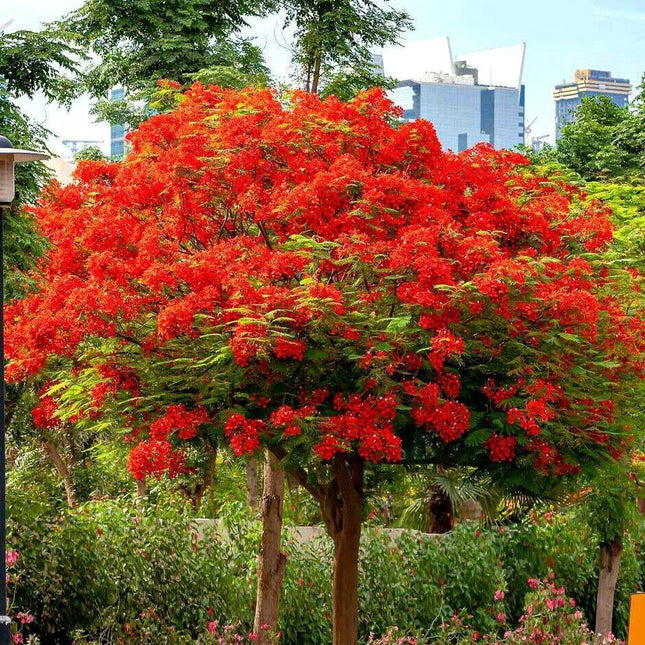
Shipped from Allentown, Pennsylvania, USA 5 Royal Poinciana Tree (Delonix Regia) Seeds
Royal Poinciana Tree (Delonix regia) Seeds Delonix regia, commonly called flamboyant or royal poinciana, is a tropical tree that is native to Madagascar but has been widely planted around the world in tropical and semi-tropical areas. It typically grows to 30-40' tall with a broad-spreading, flat-topped, umbrella-like crown. Crowns of mature trees often spread to 60-70' wide. This tree is noted for featuring a superb ornamental display of showy scarlet flowers and compound mimosa-like leaves. In the U. S., it can be grown outdoors in the far southern areas of Florida, Texas, Arizona, and California plus Hawaii.This tree is deciduous in climates that have a dry season or mildly cool winter but otherwise are evergreen. Lacy, feathery, mimosa-like, bipinnately compound leaves to 8-15" long, each having 10-20 pairs of pinnae with further division into 25-35 pairs of smaller pinnules. Flowers (3-4") are a brilliant scarlet orange. Each flower has four spreading petals and a larger fifth petal (the banner) which has streaks of yellow and white.In the continental U. S., flowering typically occurs from late spring into summer. Flowers give way to flattened bean-like fruit pods (each 24" long). Where winter hardy, flamboyant is an outstanding flowering tree for gardens, parks, along streets, and for large front yards. Mature trees provide excellent shade. Winter hardy to USDA Zones 10-12 where it is easily grown in medium moisture, well-drained soils in full sun. Best with consistent moisture except during the dry/dormant season when watering should be reduced. Plants dislike temperatures that dip below 50 degrees F so bring them indoors before the temperatures start to drop. Flame Trees also make for some of the Most Stunning Bonsai specimens as well. Name: Royal Poinciana TreeScientific Name: Delonix regiaHardiness zone: 10 through 12Plant height: 30-40 feetLight requirements: full sunSoil & water preferences grow well in well-drained soils.Growing Instructions:1. Scarification: Soak in cold water for 24hrs2. stratification: No Required3. germination: pick out seeds that imbibe, sow imbibed seeds 1/4" deep, tamp the soil & mulch the seeds bed. Note* seeds that did not imbibe, re-scarify them again until imbibe.
$12.99
-


10 White Bat Flower Seeds
White Bat Flower Seeds (Tacca integrifolia) Seeds from Tacca chantrieri NIVEA white. Brilliant white flowers that are 12 inches in width that stand upright with the petals spread to the extent that they appear in a bat-like form. The throat shows the coloration of faint purple-brown, and from this region protrudes 10 to 20 prominent dark purple bracts. Flowing from this area are up to 30 thin white tentacles whiskers. An irresistible plant for many. Zones 9 to 11 Scientific Name: Tacca IntegrifoliaHeight: Up to 120 Cm (4 Feet)width: Up to 40 Cm (2 Feet)Preparation: Soak OvernightGermination: 4-6 WeeksStart: Seed TraySoil: Seed Raising MixMaturity: 3-5 YearsIndoors: Yes During Winter
$15.99
-


25 Antonovka Apple Seeds
Grow one of the world’s most cold-hardy, reliable, and delicious heirloom apple varieties right from seed! Antonovka Apple Trees are famous for their exceptional toughness, disease resistance, and ability to thrive where many other apple varieties fail. Known for their fragrant white–pink spring blossoms and crisp yellow-green fruit, Antonovka apples are perfect for fresh eating, cider making, baking, and long-term storage. This Russian heirloom apple is widely used as a rootstock due to its strong vigor and adaptability, making it perfect for orchard growers, homesteaders, and anyone wanting a dependable fruit tree that lasts for generations. Cold hardy down to Zone 3 and naturally resilient, Antonovka apple trees deliver consistent harvests even in challenging climates. 🌱 Why Grow Antonovka Apple Seeds? One of the hardiest apple varieties—thrives in cold northern climates Excellent heirloom fruit for eating, baking, canning & cider Highly adaptable and disease resistant Strong rootstock for grafting other apple varieties Beautiful spring blooms attract pollinators A long-lived tree—perfect for homestead orchards 🌿 Growing Tips Cold stratify seeds for 60–90 days for best germination Plant in full sun to part shade Use well-drained soil and keep consistently moist during establishment Trees grow 15–20 ft tall with a 25 ft spread Harvest begins mid-September (early–mid season) Prune annually to maintain shape and fruit quality ❓ Frequently Asked Questions (FAQ) How long does it take Antonovka apples to bear fruit?3–5 years with proper care. Do these seeds grow true to type?Antonovka is one of the few apples known to grow fairly true from seed—excellent for seedlings and rootstock. Do I need more than one tree for pollination?Yes. Antonovka is a good pollinator partner and benefits from another apple variety nearby. How hardy are Antonovka apple trees?Extremely hardy—down to Zone 3, with excellent disease resistance. Can these be grown in containers?They can be started in pots but should eventually be planted in the ground due to their vigorous root system. Where to Buy Antonovka Apple Seeds?At Seeds World, we offer fresh, high-quality Antonovka Apple Seeds with fast U.S. shipping and careful packaging to ensure strong germination.
$17.99 $14.40
-


Shipped from Allentown, PA, USA 10 Golden Rain Tree Seeds (Koelreuteria Paniculata) Seeds
Golden Rain Tree seeds (Koelreuteria Paniculata) Seeds The Golden Rain Tree is a fast-growing knockout! Koelreuteria paniculata is a tree in the Sapindaceae family. A native to Korea, China, and eastern Asia. Familiar names include Golden Rain Tree, Golden Raintree, Panicled Goldenraintree 'Coral Sun, Pride of India, China Tree, and Varnish Tree. It is a famous tree for landscaping worldwide for its flowers, leaves, and seed pods. It grows to almost 40 feet tall and wide. The leaves are approximately 15 inches long with 7-15 leaflets with serrated margins. The flowers are yellow, with four petals growing 8-15 inches long on a panicle. In the autumn, the seed pods come out a yellow-orange and slowly turn a deep red pink. It prefers to grow in full sun with dry to medium water needs. Zones 5-9 Name: Golden Rain TreeOther Common Names: Goldenrain TreeScientific Name: Koelreuteria PaniculataColor: YellowPlant Seeds: Outdoors After Frost / Indoors Weeks Before Last FrostBloom Time: Mid Spring - Early FallHardiness Zone: 5 - 9Plant Height: 40’Plant Spacing: 20 - 30’Light Requirements: Sun - Part ShadeSoil & Water Preferences: Average Growing Instructions:1. Scarification: Soak in hot tap water, let seeds sit in water for 24hrs2. stratification: cold stratify for 90 days. Check every two weeks to make sure seeds are moist and that seeds are not molding. if there is a sign of mold, seeds should be soaked in 3:2 parts of water: bleach then rinsed with clean water and put back into cold stratification.3. germination: sow 3/8" deep, tamp the soil, and mulch the seedbed. Note* sporadic germination will occur over a 2-3 year period.
$11.99
-


20 Jewelweed - Impatiens Capensis Seeds
Jewelweed - Impatiens Capensis Seeds Seeds Impatiens capensis Jewelweed rare wildflower Impatiens capensis or Orange Jewelweed touch-me-not. This relative of the common impatiens also forms small seed pods that burst and send seeds quite a distance. Growing 2-5 feet tall and liking moist soil, this plant will produce these orange blossoms from May to October. Jewelweed is a natural remedy for skin rashes, especially poison ivy; helps to heal insect bites fast. I heal my tick bites with Jewelweed. Hummingbirds are the main pollinators, but other insects like bees and bumblebees can pollinate as well. These seeds improve germination with stratification.
$19.99
-


Shipped from Allentown, PA, USA Showy Medlar Tree Seeds – Mespilus germanica | Rare Hardy Fruit Tree
Grow one of Europe’s oldest and most unique fruit trees with Showy Medlar (Mespilus germanica) Seeds. Known for its striking spring blossoms, glossy foliage, and unusual fall fruit, the Medlar tree is a standout ornamental and edible variety prized for centuries. In spring, the tree bursts with large white flowers, attracting beneficial pollinators and adding elegance to gardens. By late fall, it produces brown, apple-like fruits that soften naturally after frost—a process called bletting—creating a rich, spiced flavor perfect for jams, jellies, sauces, and traditional desserts. The Showy Medlar is a compact, hardy tree, ideal for small gardens, food forests, and landscape borders. Cold-tolerant, low maintenance, and long-lived, it offers beauty, history, and delicious fruit all in one exceptional plant. 🌱 Why Grow Showy Medlar Tree Seeds? Unique heirloom fruit not commonly found in stores Beautiful large blossoms in spring and ornamental appeal year-round Hardy, adaptable, and tolerant of cold climates Compact size—perfect for home gardens and small spaces Produces flavorful fruit for preserves, baking, and traditional recipes 🌿 Growing Tips Cold stratify seeds for 8–12 weeks before planting Plant in full sun for strongest fruit production Prefers well-draining, moderately moist soil Trees begin fruiting in 3–5 years Allow fruit to “blet” (soften) after frost for best flavor ❓ Frequently Asked Questions (FAQ) How tall does the Showy Medlar tree grow?Most mature trees reach 10–20 feet, making them ideal for small gardens. Are Medlar fruits edible?Yes! Once softened by frost (bletting), they become sweet, creamy, and flavorful. Do Medlar trees require a pollinator?No—most Medlars are self-fertile. What zones do they grow in?Hardy in USDA Zones 5–8. How long until they bear fruit?Typically 3–5 years depending on climate and care. Where to Buy Showy Medlar Seeds for Sale?At Seeds World, we offer fresh, high-quality Medlar tree seeds with fast U.S. shipping. Perfect for gardeners, collectors, and heirloom fruit enthusiasts.
$14.99 - $27.95
-


25 Green Ash Tree Seeds (Fraxinus Pennsylvanica) Seeds
Green Ash Tree (Fraxinus Pennsylvanica) Seeds Name: Green Ash Tree seedsScientific Name: Fraxinus PennsylvanicaLeaf color: Green and YellowHardiness zone: 2 through 9Plant height: 50-60 feetLight requirements: ideal condition for the tree is full sunlightSoil & water preferences grow well in both acidic & alkaline environment. Also grows well in loamy, well-drained, or wet soils.Growing Instructions:1. Scarification: Soak in water for 24 hours2. stratification: warm stratify for 60 days, cold stratify for 60 days. Check every two weeks to make sure seeds are moist and that seeds are not molding. if there is a sign of mold, seeds should be soaked in 3:2 parts of water: bleach then rinsed with clean water and put back into cold stratification.3. germination: sow seed 4/8" deep, pack/tamp the soil, keep moist
$14.99
-


40 Eastern White Pine - Pinus Strobus Seeds
Eastern White Pine Seeds (Pinus strobus) – Iconic North American Evergreen Grow one of North America's most majestic and versatile conifers with Eastern White Pine Seeds. Known for its towering height, soft bluish-green needles, and graceful form, the Eastern White Pine (Pinus strobus) is ideal for reforestation, landscape projects, windbreaks, or simply enjoying its natural beauty. 🌲 Why Choose Eastern White Pine?• Fast-Growing & Long-Lived – Reaches heights of 80 to 150 feet, with some trees surpassing 200 feet• Soft, Elegant Foliage – Bundles of five bluish-green needles give it a delicate, feathery appearance• Versatile & Adaptable – Thrives in sandy, loamy, and well-drained soils across USDA zones 3–8• Ecologically Beneficial – Provides habitat and food for birds, squirrels, and small wildlife• Highly Valuable Timber – Straight-grained, lightweight wood ideal for construction, furniture, and finish work• Landscaping & Windbreak Use – A favorite for large-scale landscapes, parks, and erosion control 🌱 Seed Info:• Botanical Name: Pinus strobus• Common Names: Eastern White Pine, White Pine, Northern White Pine, Weymouth Pine• Cone Size: 4–8 inches long• Needles: 2.5–5 inches, in bundles of five• Light: Full sun to partial shade• Mature Height: 80–150 ft (can exceed 200 ft in ideal conditions) Whether you're planting for beauty, wildlife, or lumber, Eastern White Pine offers enduring strength, grace, and utility. It’s not just a tree—it’s a legacy.
$34.99
-


30 Kashmir Cypress Seeds – Cupressus cashmeriana
Bring rare Himalayan beauty to your landscape with Kashmir Cypress (Cupressus cashmeriana) Seeds, a highly sought-after conifer known for its long, graceful weeping branches and stunning bluish-silver foliage. This sacred tree of Bhutan and the Himalayas creates a dramatic vertical accent, perfect for gardens, bonsai culture, and ornamental plantings. Hardy, fast-growing, and naturally elegant—this tree is a showpiece from seedling to maturity. The Kashmir Cypress, also known as the Himalayan Cypress or Weeping Cypress, is admired worldwide for its ethereal, cascading form and soft, feathery needles. Native to the cool, high-altitude forests of the eastern Himalayas, this rare conifer thrives in well-drained soil and full sun, growing into a tall, statuesque evergreen reaching 50–80 ft in ideal conditions. Gardeners love it for: Its unique pendulous foliage (rare in conifers) Beautiful silvery-blue needles Fast, upright growth habit Excellent use as a specimen tree, screen, or bonsai subject These seeds are fresh, high quality, and ready for propagation—perfect for collectors, landscapers, and anyone seeking a stunning ornamental tree. 🌱 Why Grow Kashmir Cypress (Cupressus cashmeriana) Seeds? Growing this rare cypress from seed allows you to enjoy: A striking, graceful ornamental tree Silvery-blue foliage that turns heads year-round Fast growth and strong adaptability A premium tree species rarely found in nurseries Ideal for meditation gardens, zen landscapes & large yards Excellent bonsai potential This is a tree that instantly elevates any landscape with its soft, cascading beauty. 🌿 Growing Tips Germination: Cold stratify for 30–45 days for best results. Soil: Well-drained, sandy or loamy soil. Avoid heavy clay. Light: Full sun to partial shade. Watering: Keep moist but never soggy during early growth. Temperature: Prefers cool to mild climates; protect young seedlings from extreme heat. Transplanting: Move outdoors after frost danger has passed. ❓ Frequently Asked Questions (FAQ) Is the Kashmir Cypress easy to grow from seed?Yes—when stratified properly. They germinate reliably with cool, moist pre-treatment and well-drained soil. Can it be grown as a bonsai?Absolutely. Its weeping growth habit and fine foliage make it an exceptional bonsai specimen. What climate does it grow best in?Zones 7–10 are ideal. Young plants may need winter protection in colder zones. How fast does it grow?Kashmir Cypress grows moderately fast, especially in full sun with regular watering during establishment. Does the foliage stay blue year-round?Yes—the tree maintains its soft silver-blue color throughout all seasons. Where to Buy Kashmir Cypress Seeds?At Seeds World, you’ll find fresh, high-quality Kashmir Cypress seeds with fast U.S. shipping and carefully protected packaging. Grow one of the world’s most visually stunning conifers right at home!
$11.99
You have seen 1632 out of 1972 products