
Products
-

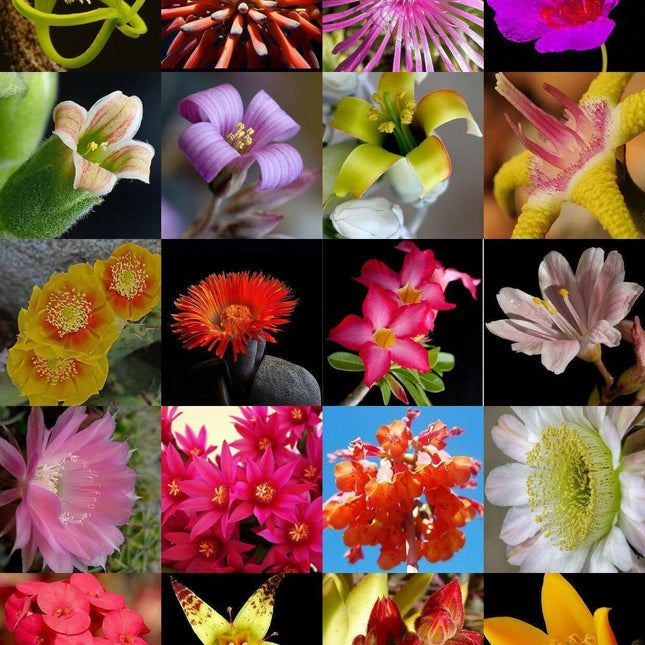
30 Rare Flowering Succulent Mix Seeds
Create a stunning, desert-inspired garden with our Rare Flowering Succulent Mix Seeds, a premium blend of colorful, uniquely shaped succulents and cactus varieties. Perfect for collectors, beginners, and succulent enthusiasts, this mix includes many species and forms, offering endless visual interest and garden creativity. These seeds were freshly harvested this season and arrive mixed together (not individually labeled)—making each planting a fun surprise. Expect a variety of textures, colors, flower forms, and growth habits that look incredible in rock gardens, windowsill pots, terrariums, and curated cactus landscapes. A must-have for any succulent lover, this mix brings exotic blooms, sculptural shapes, and hardy, low-maintenance plants to your indoor or outdoor garden. 🌱 Why Grow Rare Flowering Succulent Mix Seeds? Dozens of rare shapes, colors & growth habits Freshly harvested seeds for strong germination Ideal for cactus gardens & xeriscaping Beautiful flowering varieties included Low maintenance, drought tolerant & long-lived A fun mystery mix—each seed is a surprise 🌿 Growing Tips Sow on the surface of gritty, well-draining cactus soil Keep lightly moist until germination—avoid overwatering Provide bright indirect light or filtered sun Maintain warm temperatures (70–80°F) Once seedlings appear, slowly reduce watering Transplant into individual pots after they strengthen ❓ Frequently Asked Questions (FAQ) Are the seeds individually labeled by species?No. This is a surprise mix—seeds arrive combined, not labeled individually. Do these succulents bloom?Yes! Many varieties in the mix produce beautiful, colorful flowers. Are they beginner-friendly?Absolutely. Succulents are some of the easiest plants to grow and maintain. Can I grow them indoors?Yes—succulents thrive on sunny windowsills and under grow lights. How long until they sprout?Most germinate within 7–30 days, depending on the species and conditions. Where to Buy Rare Flowering Succulent Seeds for Sale?At Seeds World, we offer high-quality, freshly collected flowering succulent mix seeds with fast U.S. shipping and excellent germination—perfect for collectors and hobbyists.
$16.99
-


30 Rare Lapidaria Margaretae Living Stone Exotic Seeds
Lapidaria margaretae rare mesembs living stone cacti exotic cactus seed Plump white paired leaves look like they are carved from stone, and large yellow flower, leaves emerge at right angles to the old. Foliage: EvergreenSunlight: Full Sun Season of Interest: All yearPlant Type: Succulent Climate: Dry, Sub-tropical, TropicalSoil Type: Sandy soil Common Name: Living StoneFeatures: Evergreen
$19.99
-


30 Rare Mix Lithops Seeds
Rare Mix Lithops Seeds Living Stones Succulent Cactus Lithops is a genus of succulent plants native to southern Africa. "Lithos" means "stone" and "-ops" means "face" in Ancient Greek; therefore "Lithops" means "stone-like". This is a very good description of these plants, which avoid being eaten by blending in with surrounding rocks. They are often known as pebble plants or living stones. The formation of the name from the greek "-ops" means that even a single plant is called a Lithops. Plant Type: SucculentGenus: LithopsCommon Name: Living Stone Plant Form: CaudexClimate: Dry, TemperateSunlight: Full Sun, Partial ShadeFoliage: EvergreenWatering: LightAspect: East-facing, North-facing, South-facing, West-facingPlant Characteristic: Dwarf, FloweringSoil Type: SandSoil pH: Neutral How to Grow Sempervivum From Seed Plants of the genus Sempervivum go by many common names, including hen and chicks, and stonecrop. which is a direct translation of the Latin name. All species of sempervivum are small, low-growing succulent plants with a rosette form and spreading growth habit. Although most sempervivums are commonly cultivated using vegetative propagation methods such as division, they also grow reliably from seeds if they are exposed to very warm, bright conditions and kept moderately moist. Sempervivum seedlings are very susceptible to a fungal infection called damping-off, but this is easily avoided by not overwatering.
$17.99
-


30 Red Agastache ‘Heather Queen’ Seeds
Red Agastache 'heather Queen' Hummingbird Mint Hyssop Flower Herb Agastache is a fragrant, long-blooming beauty, and ’Heather Queen’ is one of the most fragrant varieties. Its slender spikes of tubular flowers are a favorite of HUMMINGBIRDS, bees, & butterflies. This herb is very tolerant of dry conditions, so it is quite suitable for containers. Name: Red Agastache ‘heather Queen’Other Common Names: Red Hummingbird Mint / Mexican Giant Hyssop / Mosquito PlantScientific Name: Agastache Cana ‘heather Queen’Color: Purplish RedPlant Seeds: Outdoors After Frost / Indoors Weeks Before Last FrostBloom Time: All Summer - FrostHardiness Zone: 5 - 10Plant Height: 24 - 36"Plant Spacing: 15 - 18"Light Requirements: Sun - Part ShadeSoil and Water Preferences: Average - Dry
$16.99
-


30 Red Papaya Seeds
Rare Dwarf Red Papaya Seeds Papaya trees are stunning tropical plants that can reach up to 10 feet tall, producing an abundance of delicious fruits. Ideal for gardens or containers, they are easy to grow and maintain. Planting Instructions: Use loamy sand mixed with a little peat moss for optimal growth. Ensure the planting mix is free of fungi or germs to support seed germination. Plant 2 seeds per hole with 2-inch spacing between plants. Keep seedlings moist and monitor for sprouts, which may take 15 days to 6 weeks. Growth Tips: Papayas can be planted year-round, with late summer being ideal. Space plants 1.5 meters apart and rows 3–4 meters apart. Female trees are identified after flowering; planting multiple seeds ensures proper selection. These rare dwarf red papayas are perfect for adding tropical charm to your garden while enjoying homegrown fruits!
$17.99
-


30 Rudbeckia Solar Eclipse Flower Seeds
This unusual rudbeckia has a wonderful color combination of bright yellow with a broad mahogany flame. Blooms early summer until the first frost. Hardy zones 5-9. Grows to a height of 19-24 inches on well-branched sturdy stems. Each flower is approx. 4 inches across.And long-lasting. Each flower lasts 4 weeks or more. They make beautiful cut flowers with a long vase life. Super easy to grow and instructions are included. Likes full sun to partial shade. Moderate water. Almost any type of soil. Attracts butterflies.Ideal for baskets, bedding, and borders. You can have these for years and years. The original plants will last for a couple of seasons. However, they readily self-seed and will multiply without becoming invasive. Flower SpecificationsApproximate seeds per pound: 1,697,000Season: PerennialUSDA Zones: 3 - 10Height: 24 - 36 inchesBloom Season: Late summer and fallBloom Color: YellowEnvironment: Full sunSoil Type: Any soils that are not too dry, pH 5.8 - 6.8Deer Resistant: YesPlanting DirectionsTemperature: 70FAverage Germ Time: 7 - 30 daysLight Required: YesDepth: Do not cover the seed but press it into the soilSowing Rate: 1/2 ounce per 1,000 square feet or 2 pounds per acreMoisture: Keep seeds moist until germinationPlant Spacing: 12 - 18 inches
$15.99
-


30 Shoestring Acacia Willow Tree Seeds
Elevate your landscape with 30 Shoestring Acacia Willow Tree seeds (Acacia stenophylla), known for its elegant weeping branches and rapid growth. This drought-tolerant variety thrives in full sun or partial shade, making it perfect for ornamental gardens, privacy screens, and sustainable xeriscaping. Why Choose Shoestring Acacia Willow Tree? 🌿 Drought-tolerant & low maintenance – ideal for arid climates. 🌳 Fast-growing, ornamental foliage – graceful weeping canopy. ☀️ Sun adaptable – performs in full sun to partial shade. 📦 30 premium seeds per pack – perfect for small plantings. Planting Instructions Best Time to Plant: Spring to early summer Soil: Well-draining sandy loam, neutral pH Light: Full sun to partial shade Seed Depth: ¼ inch (6 mm) Watering: Keep moist until germination (14–21 days) Spacing: 15–25 ft apart for mature canopy FAQ Is this product seeds or seedlings? This packet contains 30 raw Shoestring Acacia Willow Tree seeds (Acacia stenophylla); seedlings are not included. What is the germination time and rate? Germination typically occurs within 14–21 days under warm, moist conditions, with an average success rate of 60–80%. Which USDA hardiness zones is this tree suitable for? Shoestring Acacia thrives in USDA Zones 8a–11a, tolerating temperatures down to 15 °F (–9 °C). Where to buy Shoestring Acacia Willow Tree seeds for sale? At Seeds World, we offer fresh Shoestring Acacia seeds with fast, reliable shipping across the U.S., backed by our quality guarantee.
$13.99
-


30 Siberian Crab Apple | Malus baccata Tree Seeds
Siberian Crab Apple, Malus baccata, Tree Seeds The Siberian Crab Apple is a deciduous tree with a rounded canopy of spreading branches, ultimately reaching 20 to 50 feet in height. The Siberian Crab Apple is among the earliest of all crab apples to flower. The very fragrant blooms appear in great abundance and the single, 1 1/2 inch flowers are pink when in bud but open up to white. The blooms are followed in fall by long-lasting, usually bright red and sometimes yellow fruits which are very popular with the birds or can be used to make jelly.Apple trees begin to fruit in the 3rd year and come into full production from the 11th to 20th year. They may continue to fruit for about 100 years although the fruits may become commercially unprofitable. They require a period of winter dormancy, in general, 900-1000 hours or more at less than 45°F. They perform best in areas with medium to low humidity, long daylight hours, high light intensity, and relatively warm days and cool nights.Other Names: Siberian Crab apple, Siberian CrabappleZone: 2 to 7Growth Rate: ModeratePlant Type: Small deciduous fruiting treeFamily: RosaceaeNative Range: Eastern AsiaHeight: 20 to 35 feetSpread: 15 to 25 feetShape: Rounded small tree with a dense crown.Bloom Time: April-MayBloom Color: WhiteFlower/Fruit: White fragrant flowers followed by a red or yellow 1/2 inch edible fruit.Sun: Full SunFall Color: YellowDrought Tolerance: ModerateWater: MediumMaintenance: MediumSite Requirements /Soil Tolerances: Best grown in loamy, medium moisture, well-drained, acidic soil in full sun. Adapts to a wide range of soils.Culture: Promptly remove root suckers to control spread. Responds well to pruning and may be used as a hedge plant.Uses Bonsai, espalier, screen, specimen, street tree, and shade tree.Fruit Uses: The fruit can be eaten fresh, or used to make cider, soft drinks, juice, and vinegar. Pectin is a valuable by-product of cider. The fruit is excellent for jams and jellies. The wood is hard and strong and used for quality tool handles and firewood.Sowing Malus baccata Seeds:For best results, please follow the instructions in the order provided.Scarify: Soak in water for 24 hoursStratify Cold 30-75 days, 40 Degrees F in a Moist Medium.Germination: Sow 1/8” Deep
$14.99
-


30 Snowberry Shrub Seeds
Other Names: Snowberry, Ice Apple, Waxberry Zone: 3 to 7 Growth Rate: Moderate-Fast Plant Type: Medium size deciduous multi-stemmed shrubFamily: Caprifoliaceae (Honeysuckle family) Native Range: Nova Scotia and Alberta south to Minnesota and VirginiaHeight: 3 to 6 feetSpread: 3 to 6 feetShape: Moderately spreading shrub, rounded, bushy habit. Bloom Time: June - July Bloom Color: Pinkish whiteFlower/Fruit: Pinkish, tubular blossoms .25 inches long, followed by showy clusters of small very ornamental brilliant white berries (not for human consumption). Sun: Full Sun to Part ShadeFall Color: Green, Yellow, not showy Drought Tolerance: Medium-High Water: MediumMaintenance: Medium Site Requirements /Soil Tolerances: Will grow anywhere and sometimes spreads rapidly. Tolerates any soil. Easy to transplant. Culture: Prune before new growth. Remove root suckers and runners to control any unwanted spread of the plant. To keep it at a low height, cut it back to knee-high every 5 to 10 years. If it gets too leggy, it can be cut back to the ground and it will come back bushier and with more berries the next year. Uses: Naturalize in open woodland areas where it can be allowed to spread. Erosion control on slopes. Native plant gardens, informal hedge, shrub border.
$14.99
-


30 Sophora Japonica | Japanese Pagoda Tree Seeds
Sophora Japonica | Japanese Pagoda Tree Japanese pagoda (also known as Styphnolobium Japonicum) is a large deciduous tree native to China but cultivated in Japan for hundreds of years. It is an upright, broad-spreading tree that grows as wide as it does tall, forming a lacy canopy of dark green, pinnate leaves. Fluffy pyramidal panicles, or clusters, of creamy white-green, fragrant flowers appear in summer, followed by green "pea pods". Leaves turn yellow in fall but are not considered consistently ornamental. Its younger branches remain olive-green through winter, adding seasonal interest.Preferring full sun and well-drained soil, the Japanese pagoda also tolerates pollution, making its several cultivars a good choice for urban landscapes. Japanese pagoda tree makes a beautiful shade tree on large lawns or along city streets.In some areas this tree has become very invasive, casting seeds into the landscape. Consult with regional authorities to learn if this tree is prohibited for garden use, or at a minimum, to be kept away from native ecological areas. Be aware that it is an aggressive plant in most landscapes. Genus - SophoraSpecies - JaponicaCommon name - Japanese Pagoda TreeOther names - Chinese Scholar Tree, Styphnolobium japonicumPre-Treatment - Not-requiredHardiness zones - 4 - 7Height - 40'-75' / 12 - 23(60) mSpread - 40'-75' / 12 - 23(60) mPlant type - TreeVegetation type - DeciduousExposure - Full SunGrowth rate - FastSoil PH - Acidic, Neutral, AlkalineSoil type - Clay, loam, Sand, well-drainedWater requirements - Drought tolerant, the average waterLandscape uses - Shade Trees, Street Trees, Topiary / Bonsai / EspalierLeaf / Flower color - Dark Green / White, Light GreenPlant growth rate - Fast
$17.99
-


30 Sorrel Tree Seeds
30 SOourwood - Sorrel Tree Seeds - Oxydendrum Arboreum This is a deciduous understory tree that is native to the eastern United States from Pennsylvania south to Florida and Louisiana.In cultivation, it typically grows 20-25’ tall with a straight, slender trunk and narrow oblong crown. In the wild, it may reach 50-60’ tall. Gray bark on mature trees is fissured, ridged, and scaly. Finely-toothed, glossy green leaves (to 5-8” long) are reminiscent of peach. Leaves have a sour taste, hence the common name. Leaves produce consistently excellent fall color, typically turning crimson red. Waxy, lily-of-the-valley-like, white flowers bloom on slender, drooping, one-sided terminal panicles (4-8” long) in early summer. Flowers have a slight fragrance and are quite attractive to bees. Sourwood honey is a highly prized local product. It is considered by many to be unmatched by clover, orange blossom, fireweed, or any other honey.Zone: 5 to 9Medicinal use: The leaves are cardiac, diuretic, refrigerant, and tonic. A tea made from the leaves has been used in the treatment of asthma, diarrhea, indigestion and to check excessive menstrual bleeding. It is diuretic and is a folk remedy for treating fevers, kidney, and bladder ailments. The bark has been chewed in the treatment of mouth ulcers.Edible parts: Leaves - raw. A pleasant acid flavor. They allay thirst.Other uses: Wood - heavy, hard, attractive, very close-grained. It weighs 46 lb per cubic foot and is sometimes used for paneling, tool handles, bearings, etc.
$15.99
-


30 Spanish Moss - Tillandsia Usneoides Seeds
Spanish Moss - Tillandsia Usneoides Seeds Spanish Moss (Tillandsia usneoides) is a unique air plant that thrives by absorbing water and nutrients through its leaves, making it a fascinating addition to any landscape or garden. This distinctive plant features long, thin, hair-like wisps that hang elegantly from oak, cypress, and other large trees, or can even be cultivated in pots for a striking display. Key Features: Season: Suitable for spring, summer, fall, and winter. Height: Cascading growth up to 6 feet. Bloom Season: Produces blooms in spring, summer, and fall. Growing Conditions: Prefers partial to full sun and thrives in zones 8–11. Planting Time: Best planted after the last frost. Planting Method: Simply attach seeds to bark or place them just under the bark of a host plant. Spanish Moss is not only visually captivating but also highly versatile. Traditionally used as stuffing, packing material, and bedding for gardening, it is a favorite for arts and crafts projects as well. Its ability to thrive in humid environments makes it an excellent choice for gardeners seeking an elegant, low-maintenance plant. Germination Information: Germination may take up to 3 months, requiring patience and care to establish. Create a touch of southern charm with this enchanting air plant that grows effortlessly while adding natural elegance to your garden or indoor spaces.
$14.99
-


30 Sunflower - Dwarf Sunspot Seeds
Sunflower Sunspot Dwarf (Helianthus Annuus) is one of the easiest flower seeds to grow. Sunflower seeds, makes a huge statement in the summer landscape, great for containers and flower beds, and they only reach 24 - 36 inches tall with an average sized single 10 inch head. Grow Sunflower Sunspot plants in a sunny location in somewhat fertile well-drained soil. Keep soil weed free and moderately moist while plants are young. Once established, Sunflower plants are somewhat drought and heat tolerant. They will flower mid-summer through fall. Birds are attracted to the seed Flower SpecificationsSeason: AnnualUSDA Zones: 3 - 9Height: 24 - 36 inchesBloom Season: SummerBloom Color: YellowEnvironment: Full sunSoil Type: Moist, fertile, pH 5.5 - 6.2Planting DirectionsTemperature: 69 - 75FAverage Germ Time: 10 - 15 daysLight Required: NoDepth: 1/2 inchSowing Rate: 21 ounces per 1,000 square feet or 58 pounds per acreMoisture: Keep seed slightly moist but not wetPlant Spacing: 6 - 9 inches Quantity: 30 Sunflower - Dwarf Sunspot Seeds
$11.99 $8.99
-


30 Super Sweet Hybrid Cherry Tomato Seeds
Super Sweet Hybrid Cherry Tomato Seeds - Bursting with Flavor Cultivate deliciously sweet, cherry-type tomatoes with our Super Sweet Hybrid Cherry Tomato Seeds. These prolific plants produce clusters of juicy fruits, ideal for fresh salads or snacks. Support growth by staking or using a fence to enhance yields. Key Features: Flavorful Harvest: Enjoy tomatoes that burst with a sugary sweetness. Growth Support: Best grown with support for higher yields. Growing Information: Sunlight Needs: Full sun Planting: Sow indoors 6-8 weeks before the average last frost date; transplant outdoors. Harvest: Ready in 70 days Annual: Suitable for growing zones 1-11 Plant Super Sweet Hybrid Cherry Tomato Seeds for a continuous supply of incredibly sweet tomatoes right from your garden.
$12.99
-


Shipped from Tarpon Springs, FL, USA 30 Thai Hot Pepper Seeds | Non-GMO
Thai Hot Pepper Seeds | Non-GMO Plants produce prolific harvests of small 1.5” inch long peppers that are traditionally used in Asian cuisinePeppers can be harvested when green or red, can be used in any recipe calling for Thai PeppersRemoving the seeds completely and blanching the pepper first will mellow out its heat slightly to make powdered seasoning use Dried Pepper Pods.Botanical Name: Capsicum annuumLife Cycle: AnnualLight Requirement: Full SunPlanting Season: Warm SeasonPlant Type: Hot 50,000-100,000 ScovilleFeatures: Drought Tolerant, Container Garden, Deer ResistantFruit Size: 1 inch LongDays to Maturity: 80 DaysPlant Spacing: 12-18 inchesPlanting Depth: 1/4 inchSowing Method: Start Indoors, Direct SowCold Stratification: NoHardiness Zones: 3, 4, 5, 6, 7, 8, 9, 10
$11.99 $9.99
-


30 Tiny Tim Tomato Seeds - Solanum Lycopersicum
Tiny Tim Tomato Seeds - Solanum Lycopersicum Tiny Tim is an heirloom tomato variety that was introduced by the University of New Hampshire in 1945. This is an extremely productive micro-dwarf variety that only grows to about 16 inches, but it produces tons of small almost 1-inch fruit that sometimes outweigh the plant 3:1! This is a perfect one for hanging baskets or growing in a sunny window. It also has really good disease resistance.Common Name - TomatoBotanical Name - Solanum LycopersicumHeirloom Status (lineage established at least 50 years ago) - Heirloom TomatoOpen-Pollinated Status - Open-PollinatedOrganic Status - Organic TomatoGrowth Habit - Dwarf-Determinate TomatoDays to Maturity - 50-60 DaysDays to Germinate - 6-14 DaysFruit Color - Red TomatoFruit Size - Small/ Cherry TomatoSoil Depth - ¼ InchSoil Temperature - 75-85 DegreesPlant Spacing - 36-48 inchesRow Spacing - 4-5 FeetPreferences - Full Sun, Moist Well Drained Soil
$11.99
-


30 Toad Lily - Tricyrtis Hirta Seeds
Toad Lily Seeds - Tricyrtis Hirta / Shade Perennial / Deer Resistant These perennial herbaceous plants, native to Asia (from the Himalayas to Japan and the Philippines), are generally found in shady conditions on the edge of forests. Of the 16-20 species, only two (and their hybrids) used to be commonly grown as garden ornamentals, primarily for their orchid-like blossoms which open in fall after most other plants have finished blooming. These grow from creeping rhizomes, forming a clump of foliage that slowly expands over time. It is a highly variable plant that can reach a height of 12”-36”, emerging late in the spring. It produces arching, unbranched stems with alternate leaves all along the stems in a ladder-like arrangement. The 3-6 inch long, light green leaves are oval to oblong with parallel veins and clasping leaf bases. The stems often arch in the same direction, creating a graceful, flowing appearance.The flowers open in late summer to early fall, lasting for about three weeks or until a hard frost (both the leaves and flowers are damaged below 28ºF).
$15.99
-


Shipped from Pittsburgh, PA, USA 30 Top Crop Green Bean Seeds
Top Crop Green Bean Seeds | Heirloom Stringless Tender Vegetable Seed Fresh 2022 Top Crop green bean is an AAS Award-winning variety of green beans developed to be disease-resistant, particularly to bean mosaic virus. This low-maintenance variety easily grows a heavily concentrated set of 6-7 inch long, stringless, round beans. Plant Name: Bean, Top CropLatin Name: Phaseolus vulgarusDays to Germinate: 6-10Days to Harvest: 56Germination Rate: 93%Test Date: 9/21Growth Habit: BushUSDA Zones: 3-12Lifespan: AnnualCountry of Origin: United StatesSunlight: Full Sun, Partial ShadeGMO: NoPollination:Heirloom, Open-Pollinated Planting InstructionsSoil Preparation:Remove weeds, large rocks, and litter from the planting area. Till the soil 8-10 inches deep and rake several times to break up large clods. It is best to do this when the soil is dry enough to not stick to garden tools. Loosening the soil will help the plant establish strong roots.Planting:In the Spring, plant beans after all danger of frost have passed. In the Fall, plant beans 10 to 12 weeks before the first expected frost. For large plots, use ¼ to ½ pound of seed for every 100 feet of row of green beans. Plant bush beans 1 inch deep and 1 to 2 inches apart in the rows that are 2½ to 3 feet apart. Planting in moist soil is best for seeds to germinate and emerge quickly. After the beans have sprouted, thin the plants to 3-4 inches apart. Planting Depth: 1 inch Within-Row Spacing: 1-2 inches, thin to 3-4 inches Between-Row Spacing: 2 1/2-3 feet Care During the SeasonWatering: Water the plants about once a week in dry weather. Try not to let the soil dry out while the beans are blooming or the blooms will drop and yields will be decreased.Weeding: The roots of beans grow near the soil surface. When hoeing and pulling weeds, try not to dig too deep to prevent the plant's roots from being damaged.Fertilizing: As the plants begin to flower and set beans, you may optionally apply fertilizer to help plants produce more beans. Apply by scattering between the rows about 1/2 cup of fertilizer for every 10 feet of row. Water the plants after fertilizing.Insecticides: Insecticides may be used to protect plants. Bt-based insecticides and sulfur are organic options. Sulfur also has fungicidal properties and helps in controlling many diseases. Before using a pesticide, read the label and always follow cautions, warnings, and directions.Diseases: Diseases may be a possibility during cool, wet weather. If spots appear on leaves or bean pods, treat the plant with an approved fungicide. Neem oil, sulfur, and other fungicides may be used.
$11.99
-


Shipped from Allentown, Pennsylvania, USA 30 Traveller's Joy - Old Man's Bear Seeds
Traveller's Joy, Old Man's Bear (Clematis vitalba) Seeds Name: Traveller's Joy, Old Man's BeardScientific Name: Clematis vitalba Hardiness zone: 4 through 8Plant height: 20-50 feetLight requirements: full sun to part shadeSoil & water preferences grow well in well-drained soil. Growing Instructions:1. Scarification: Soak in water for 24hrs2.Stratification: cold stratify for 60 days. Check every two weeks to make sure seeds are moist and that seeds are not molding. if there is a sign of mold, seeds should be soaked in 3:2 parts of water: bleach then rinsed with clean water and put back into cold stratification.3. Germination: sow seeds 1/8" deep in the soil, tamp the soil & mulch the seedbed.
$11.99
-


30 White African Sorghum Seeds
Cultivate a stunning and versatile addition to your garden! Grain sorghum is an ancient cereal that was a staple in ancient Egypt. The origins of this tall-growing grass are in both Asia and Africa. Growing to a height of 9 to 10 feet, white African sorghum is a dual-purpose grain and syrup sorghum that yields white seeds partially encased in a black glume. As a grain, sorghum can be ground into flour and used to make loaves without gluten, flatbreads, and other baked goods. The plant's ability to retain water is aided by the waxy coating on its leaves, which is advantageous during certain seasons, particularly in hot climates. It can be ground into grits or cooked whole and consumed like rice or couscous. Sorghum cane can be used as a sweetener by pressing it into a delightful fresh juice that can be fermented into alcohol or cooked down into syrup. White African sorghum may grow in tough situations where other plants usually do not thrive because of its remarkable tolerance to drought. Growing Instructions: Sorghum is planted with equal spacing to corn.(See the section on corn.) Plant seeds 1/2–3/4 in. profound.Harvesting Seeds: When the seed stem begins to dry out, the seed is ready to be harvested. Trim the stalk, let it dry more under cover, then manually remove the seeds and winnow to make it clean.You can use grain sorghum just like flour corn. It works particularly well on pancakes.flour Harvesting Syrup: Remove the leaves in the fall, then chop the cane into manageable lengths. Then, crush the cane and squeeze out the juice into a saucepan. Once the liquid has reduced to the consistency of maple syrup, cook it. We prefer to cultivate a small patch of cane sorghum for munching; the luscious canes can be peeled and consumed like candy.Seed Savers: Set apart from other Sudan grass, broom corn, sorghum, and grass for half a mile.
$14.95
-


30 Winterberry Holly - Ilex Verticillata Shrub Seeds
Winterberry Holly - Ilex Verticillata Shrub Seeds (Hardy, Showy) Winterberry is a deciduous holly native to eastern North America where it typically occurs in swamps, damp thickets, low woods, and along ponds and streams. It is a slow-growing, large deciduous shrub or small tree with an upright rounded habit that typically grows 3 to 12 feet tall.The trunk is short and generally, branches close to the ground and the stout, upright, spreading branches bear slender twiggy branchlets, producing a rounded crown, 8 to12 feet across. Winterberry often suckers and grows in a multi-stemmed clump and may form a thicket of erect stems.Leaves are elliptic to obovate, toothed, dark green, and 2 to 3 inches long. Fall color is usually negligible, but in some years leaves may turn attractive shades of maroon. If the leaves haven't fallen by the first hard frost, they turn black, hence the common name, "Black Alder." Relatively inconspicuous greenish-white flowers appear in the leaf axils in late spring.Flowers, if properly pollinated, give way to a crop of glossy bright red 1/4 inch berries in late summer to fall. Berries are quite showy and will persist throughout the winter (hence the common name) and often into early spring. Berries provide considerable impact and interest to the winter landscape.A Winterberry, loaded with bright red berries on slender twigs is one of the prettiest shrubs in winter. It's especially attractive standing proudly with snow on its branches. It is a great shrub for wet areas in the landscape. Use it in shrub borders or in masses for its winter berry display. Winterberry is a good choice for an unclipped hedge. It looks great in front of evergreens. Many kinds of birds eat the fruits and often the shrubs are stripped bare before Christmas.Winterberry branches with their showy red berries are often used as Christmas decorations and there is a commercial industry cultivating the plants for that purpose. Use them dry (don't put them in water) and they will keep for months indoors. Name: WinterberryOther Common Names: Winterberry Holly / Coralberry / Michigan Holly / Canada Holly / Candian Holly / Fever Bush / Black Alder / False Alder / Common WinterberryScientific Name: Ilex Verticillata Syn. Var. Cyclophylla, Var. Padifolia, Var. Fastigiata, & Var. Tenuifolia / Ilex Bronxensis / Ilex FastigiataColor: White Flowers / Red BerriesPlant Seeds: Seeds Requires Warm Stratification Followed by Cold Stratification or They Can Be Sown Outside in Spring for Germination the following Spring. Bloom Time: Flowers - May to July / Berries - Late Summer to Fall Through WinterHardiness Zone: 3 - 9Plant Height: 6 - 10' (Up to 16')Plant Spacing: 6 - 12'Light Requirements: Sun - Part ShadeSoil & Water Preferences: Average - Moist
$14.99
-


300 African Marigold Crackerjack Mix Seeds – Giant Blooms in Bright Yellow & Orange
Brighten Your Garden with Giant Marigold Blooms Known for their impressive size and sunny colors, these African Marigold "Crackerjack Mix" seeds bring bold beauty to any garden. With large double blooms in brilliant yellow, orange, and gold, they’re perfect for borders, pollinator gardens, or vibrant summer displays. Why Grow African Crackerjack Marigolds? 🌼 Huge, ruffled blooms – up to 3–4 inches wide! 🌞 Full sun lovers – thrive in hot, dry climates 🧡 Bright mix of orange, yellow, and gold – ideal for eye-catching beds 🐝 Attracts pollinators – bees and butterflies love them What’s in the Pack? Each pack includes approximately 300 African Marigold Crackerjack seeds – enough to cover large sections or to sow in waves throughout the season. Planting Instructions Best Time to Plant: After last frost (outdoors) or indoors 4–6 weeks earlier Soil: Average, well-draining soil Light: Full sun Depth: ¼ inch Watering: Keep moist until germination (5–14 days) FAQs How tall do African Crackerjack marigolds grow? They typically reach 24–36 inches tall, making them ideal for mid or back borders in flower beds. Are marigolds easy to grow from seed? Yes! These marigolds are perfect for beginners – they germinate quickly and require minimal maintenance once established. Do marigolds repel insects? Yes, marigolds are known to deter pests like aphids and nematodes, making them great companions in vegetable gardens. Where to buy African Crackerjack marigold seeds for sale? At Seeds World, you can order fresh African Marigold Crackerjack seeds with fast shipping across the U.S. – ideal for gardeners looking for bulk flower seeds with stunning results.
$11.99 $10.99
-


Shipped from Wichita, Kansas, USA 300 Blue Fescue Grass Seeds
Add elegance and texture to your garden with Blue Fescue Grass Seeds (Festuca glauca) — a stunning ornamental grass known for its compact, clumping habit and striking blue-gray foliage. Perfect for borders, rock gardens, containers, and edging, Blue Fescue is drought-tolerant, low-maintenance, and thrives in a variety of soils. This hardy perennial grass grows into neat, rounded tufts about 8–12 inches tall, producing soft blue blades and golden flower spikes in late spring to summer. Whether planted alone as an accent or in masses for dramatic effect, Blue Fescue is a versatile choice for home landscapes, public gardens, and eco-friendly xeriscaping. 🌱 Why Grow Blue Fescue Grass Seeds? Beautiful blue-gray foliage adds year-round interestLow-maintenance & drought-tolerant once establishedIdeal for borders, edging, rock gardens, and containersCompact growth habit, perfect for small spaces & modern landscapesAttracts pollinators with delicate summer flower spikes 🌿 Growing Tips Soil: Prefers well-drained soil with average fertility Sunlight: Best in full sun but tolerates partial shade Watering: Water regularly until established; drought-tolerant afterward Planting Depth: Sow seeds on the surface or lightly cover with soil (do not bury deeply) Spacing: 8–12 inches apart for a full, tufted look Maintenance: Trim old foliage in early spring to encourage fresh growth ❓ Frequently Asked Questions (FAQ) How tall does Blue Fescue Grass grow?Blue Fescue typically grows 8–12 inches tall, making it perfect for borders, edging, and compact landscaping. Is Blue Fescue grass easy to grow from seed?Yes! With well-drained soil, full sun, and light watering, Blue Fescue is very easy to establish and requires little maintenance. Does Blue Fescue come back every year?Yes, it’s a perennial grass that provides year-round beauty with minimal care. When should I plant Blue Fescue Grass Seeds?Sow seeds in spring or early fall when soil temperatures are mild for the best germination. Can Blue Fescue be grown in containers?Absolutely! Blue Fescue grows beautifully in pots and containers, making it a great choice for patios and small gardens. Where to Buy Blue Fescue Grass Seeds for Sale?At Seeds World, we offer fresh Blue Fescue Grass Seeds with fast U.S. shipping. Order today and transform your garden into a beautiful, low-maintenance landscape!
$15.99
-


300 Bright Red Orach Seeds - French Spinach (Atriplex Hortensis)
Orach (Atriplex Hortensis Red Plume) - Grow Orach seeds and grow some beautiful herb plants for an edible landscape. Atriplex hortensis, commonly referred to as Garden Orache, Red Orach, Mountain Spinach, or French Spinach, is a hardy, annual herb plant that grows upright up to 72 inches tall depending on where it is grown. The leaves are variously shaped, but somewhat oblong, comparatively thin in texture, and slightly acid to the taste. The flowers are small and obscure, greenish or reddish, corresponding in a degree with the color of the foliage of the herb plant. The Orach herb is a cool season plant, but it does not bolt as quickly as regular spinach. The leaves can be harvested longer into the summer without any bitter taste, and they are used as salad greens or cooked. This Red Plume variety is also highly ornamental and prized for its red coloring. How To Grow Red Orach Red Orach is an annual herb suitable for full sun. Sow the Orach seeds in the spring as early as the soil can be worked. Thinly cover the herb seeds and keep them moist. Sow the seeds 2 inches apart and in rows 12 to 18 inches apart. Thin the young plants when they are 6 inches in height, leaving 12 to 18 inches for spacing. The thinned plants can be eaten. Harvest the young leaves like spinach. Flower SpecificationsSeason: AnnualUSDA Zones: 4 - 8Height: 72 inchesBloom Season: Mid summerFoliage Color: RedEnvironment: Full sunSoil Type: Well drained, sandy to loamy, soil pH 5.0 - 8.2 Planting DirectionsTemperature: 60 - 70FAverage Germ Time: 14 - 21 daysLight Required: YesDepth: Surface sow and thinly coverSowing Rate: 2 - 3 seeds per plantMoisture: Keep seeds moist until Qauntity: 100 Seeds
$11.95 $9.99


You have seen 1080 out of 1940 products