
Products
-


10 Ground Ivy Seeds – Glechoma hederacea | Hardy Perennial Groundcover
Ground Ivy (Glechoma hederacea), also known as Creeping Charlie, is a fast-spreading perennial groundcover prized for its lush green foliage, light purple spring blooms, and incredible adaptability. This vigorous creeper forms dense, mat-like carpets that suppress weeds naturally—perfect for shady areas where grass struggles. Whether you’re filling gaps between pavers, creating a soft lawn alternative, or establishing an erosion-control cover, Ground Ivy offers beauty, resilience, and effortless growth. Cold-hardy, drought-tolerant once established, and ideal for naturalized landscapes, woodland gardens, and pollinator spaces. 🌱 Why Grow Ground Ivy (Glechoma hederacea) Seeds? Spreads quickly for easy ground coverage Excellent for shady or partial shade areas Produces lovely lavender-purple blooms in spring Great for erosion control & natural weed suppression Attracts bees & early-season pollinators Hardy perennial — comes back stronger each year Low maintenance once established 🌿 Growing Tips Light: Prefers partial shade to full shade; tolerates some sun Soil: Moist, well-drained soil is ideal Sowing: Lightly press seeds into soil — do not bury Water: Keep evenly moist until established Spacing: Allow room to spread; 12–18" apart Maintenance: Trim runners if you want to control spread ❓ Frequently Asked Questions (FAQ) Is Ground Ivy invasive?Ground Ivy spreads quickly and can become invasive in some areas. Plant in controlled spaces if you want to manage its growth. Will Ground Ivy grow in full shade?Yes! It thrives in shade and is ideal for areas where grass won’t grow. How long does it take to germinate?Expect germination in 10–20 days, depending on temperature and moisture. Is Ground Ivy safe for pets?It may cause mild digestive upset if eaten in large amounts. Observe pets if they chew plants. Does Ground Ivy attract pollinators?Absolutely—its spring blooms draw bees and early-season pollinators. Where to Buy Ground Ivy Seeds for Sale?At Seeds World, we offer fresh Ground Ivy seeds, fast U.S. shipping, and reliable germination.
$24.95
-


Shipped from Massillon, Ohio, USA 10 Hedge Apple Seeds
HEDGE APPLE Osage Orange Horse Apple Monkey Ball Maclura Pomifera Tree SEEDS The Hedge Apple is a small tree to a large shrub with spiny branches & interesting bark. It gets its name because they’re commonly used as a windbreak/fence row, & has bright yellow-green round 3 - 6" fruit. Hedge Apples have bumpy skin rather than smooth though. The fruit is not poisonous, but it’s not worth eating either. Lol. The plant has many other uses. The wood is dense, & is used for fence posts & is great for fires because it is slow-burning. The plant also has medicinal properties, is used to make dyes, & the fruit is used decoratively. Name: Hedge AppleOther Common Names: Osage Orange / Horse Apple / Monkey BallScientific Name: Maclura PomiferaColor: Bright Yellow - Green FruitPlant Seeds: Fall Sow Seeds or Cold StratifyBloom Time: SpringHarvest: FallHardiness Zone: 4 - 8Plant Height: 20 - 50'Plant Spacing: 30 - 40'Light Requirements: Sun - Part ShadeSoil & Water Preferences: Average
$15.99
-


10 Horsetail Plant Cuttings to Grow
Horsetail - Equisetum hyemale also called rough horsetail or scouring rush—is a non-flowering evergreen perennial. It has vertical green stems with horizontal bands similar to bamboo, but they're skinnier and taller like ornamental grass. Horsetail is usually planted in early spring, though it will survive planting at almost any time. This is an extremely fast-growing plant that achieves full height within a matter of weeks. Horsetail is toxic to grazing animals. Common Name: Horsetail, Rough Horsetail, Scouring RushBotanical Name: Equisetum HyemaleFamily: EquisetaceaePlant Type: Evergreen PerennialMature Size: 2–5 Ft.Sun Exposure: Full Sun, Partial ShadeSoil Type: Moist but Well-drainedSoil Ph: Neutral to AcidicHardiness Zones:4–9, USANative Area: North America, Europe
$54.00
-


10 Hosta Elegans Shade Flower Seeds
Hosta Elegans Shade Flower Seeds If you have a shady area, you have to have Hostas! They grow very well in areas of full shade. They will grow in any soil and don’t seem to mind a lot of moisture or very dry conditions. Hostas are a perfect way to add some color to the shade and are completely carefree. NAME: Hosta Elegans SCIENTIFIC NAME: Hosta Elegans COLOR: Lavender PLANT SEEDS: Outdoors after frost / Indoors weeks before last frost BLOOM TIME: Summer HARDINESS ZONE: 5 - 10 PLANT HEIGHT: 24 - 32” PLANT SPACING: 24 - 36” LIGHT REQUIREMENTS: Shade - Part Sun SOIL and WATER PREFERENCES: Average
$15.83
-


10 Indian Gooseberry Seeds
Phyllanthus Emblica Indian Gooseberry Tropical Plant A wild deciduous tropical tree noted for its edible fruit and the ornamental qualities of its pale gray bark and feathery foliage. Over time it will reach a mature height of roughly 60 feet. The leaves are fern-like, oblong but narrow, up to 2 cm and the flowers are inconspicuous as they are green in color. The flowers are bisexual and appear in clusters. Fruits are smaller in size with a diameter of up to 3 cm, in a greenish-yellow color that changes into orange-brown after maturity. The flesh is tart, juicy, and crisp. All parts of the tree are useful, its leaves, roots, fruits, seeds, bark, and flowers are used to prepare a variety of items like juice, chutney, jam, infusions, lotions, concentrates, herbal teas, and other natural concoctions. HOW TO GROW INDIAN GOOSEBERRY Step 1 Soak seeds for 24 hours prior to sowing. Sow into pots or a seed tray approximately 3mm deep into a well-draining soil mix or another well-draining medium. Moisten the medium but be sure that it is not wet and boggy as this will rot your seeds and result in no germination or unhealthy seedlings. If you have a mini greenhouse, use this to ensure moisture and humidity levels remain at their peak - if you do not have a greenhouse, cover your pots tray, with plastic kitchen wrap (glad wrap), this will create a homemade greenhouse. Step 2 Place into a warm, well-lit position out of the direct sun and keep moist (but again not wet) for the entire germination process. For optimal germination soil temperatures need to be warm. Preferred temperatures for germination are between 20-25°C/70-80°F If you can not provide these temperatures, you may need to use a heat mat. Average germination time in optimal conditions will be 10-21 days. Step 3 Once a few seeds have begun to germinate, you can peel back a small corner of the glad wrap to allow some airflow and help the seedling to adjust to the outdoor environment. Remove the rest of the plastic gradually over a week or so to avoid shock and prevent growth restriction on the quite fast-growing little seedlings. Step 4 Seedlings can be repotted if necessary once they have at least two true leaves. Introduce gradually to full sun. If planting into the garden wait until the plant is around a foot tall and don't plant out until winter has passed, to avoid the plant having to deal with frost as well as transplant. Final position should be in full sun, however, they will tolerate some shade. Please note: If you are planting out in cooler regions your Indian Gooseberry may lose it's leaves (become deciduous) over the winter but should green up again once the weather warms. Gooseberry trees can take 7-10 years to bear fruit.
$17.99
-


10 Indian Mulberry Noni Morinda Citrifolia Seeds
Morinda Citrifolia Noni SeedsSeeds from this very unusual plant Morinda Citrifolia or Indian Mulberry, or Noni. These grow into small trees or shrubs reaching 15 feet. The glossy leaves make this plant all year long. The fruit this plant produces is used extensively for health purposes in some parts of the world and is said to have an unpleasant odor. There are numerous articles on how to prepare the juice although I myself have never tried this. Extremely cold-sensitive with a minimum temperature of 55 degrees. Zones 9-11.
$18.99
-


Shipped from North Carolina, USA 10 Japanese Grey Bark Elm (Zelkova serrata) Tree Seeds
Japanese Grey Bark Elm Tree The Japanese Elm is native to Korea, China, and Japan. A Very Fast Growing Tree that forms a Broad or upright vase~shaped silhouette, 80~100 feet tall. The deciduous leaves stay dark green throughout the year until fading to a beautiful yellow before they drop in the Fall. In the early Spring, before the new leaves unfold, small green flowers appear on the stalks. These blooms are followed by green, wafer-like seedpods which will mature soon after flowering is finished, and the seeds a very popular with birds and other wildlife. The Japanese Elm has an extensive, yet shallow root system, which makes it perfect for bonsai cultivation. This elm is a native of Japan and China and is related to the Ulmus genus, which is the genus of the European and American elms. It is deciduous with small ovate, serrated, pointed leaves, and smooth gray bark. It is a vigorous grower and is most often used for broom and group plantings. Root-over-rock plantings are also common. The gray-bark elm is considered by some to be the classic broom-style tree.Zones: 5~8Light: Full or Mostly SunnySoil: Well DrainedWater: LowGrowth: Very FastSoil PH: 4.5~7
$15.99
-

10 Jerusalem Artichoke Tubers for planting
Jerusalem Artichoke tubers for planting- Helianthus Tuberosus Jerusalem artichokes (Helianthus tuberosus) are also called sunchokes, sunroof, wild sunflower, topinambur, and earth apple. The plant is native to North America, specifically Central North America, where it grows as a perennial. It is a staple in plains Native American diets. Jerusalem artichoke is popular throughout the Northern Hemisphere today. As its botanical name suggests, Jerusalem artichoke is a member of the sunflower family. Jerusalem artichoke is an herbaceous perennial in domestic situations as well and grows up to 10 feet tall. Climate: Cold, Dry, Sub-tropical, Temperate, Tropical Planting Time: Fall or SpringCommon Name: Artichoke Color: MulticolorGrowth Habit: RunningUSDA Hardiness Zone (°F): 3 to 9 Soil Type: Any garden soilSoil pH: NeutralSeason of Interest: Fall, Spring, Summer Type: BulbsLife Cycle: Perennial Watering: LightGenus: sun choke tuber Sunlight: Full Sun, Medium Sun, Partial ShadeFeatures: Cold Resistant, Edible, Fast Growing, Flowering Cultivating Difficulty: Very Easy
$69.99 $64.99
-


Ships from Sterling Heights, MI, USA 10 Kaffir Lime Tree Seeds – Citrus Hystrix
Bring a touch of Southeast Asia to your garden with Kaffir Lime Tree Seeds (Citrus hystrix) — the source of the iconic double-lobed leaves and fragrant fruits beloved in Thai, Indonesian, and Vietnamese cuisine. Known for its intense citrus aroma and striking appearance, this small evergreen tree produces unique knobby green fruits and glossy leaves that add zest and fragrance to every meal or garden space. Whether grown indoors in a sunny window or outdoors in warm climates, Kaffir Lime trees are both ornamental and practical — a perfect choice for chefs, herbal enthusiasts, and tropical plant lovers. 🌱 Why Grow Kaffir Lime Tree Seeds? 🍋 Culinary Essential – Leaves and zest are prized in Thai, Indonesian, and Southeast Asian dishes. 🌿 Highly Fragrant – Every part of the plant emits a refreshing citrus aroma. 🏡 Compact & Ornamental – Ideal for containers, patios, or indoor growing. 🌸 Beautiful Evergreen Foliage – Glossy leaves and small white blossoms year-round. 🌞 Low Maintenance – Drought-tolerant once established and easy to care for. 🌿 Growing Tips Seed Prep: Soak seeds in warm water for 24 hours before planting to soften the outer shell. Planting Depth: Sow ½ inch deep in rich, well-draining soil or citrus mix. Temperature: Maintain a warm environment between 75–85°F (24–29°C). Sunlight: Requires full sun or bright indoor light (6–8 hours daily). Watering: Keep soil slightly moist but not soggy. Fertilizer: Use a balanced citrus fertilizer every 4–6 weeks during the growing season. Hardiness Zones: Best for USDA Zones 9–11. Can be grown indoors year-round in cooler zones. Harvest Time: Fruits appear in 2–3 years under optimal care. ❓ Frequently Asked Questions (FAQ) How long does it take for Kaffir Lime seeds to germinate?Germination usually takes 3–6 weeks in warm, moist soil conditions. Can Kaffir Lime trees grow indoors?Yes! They thrive indoors with plenty of sunlight and regular watering. Perfect for sunny windows or greenhouses. Are Kaffir Lime leaves edible?Absolutely! The double-lobed leaves are famous for their rich citrus flavor used in Asian cuisine. How big does a Kaffir Lime tree get?When grown in pots, trees reach 3–6 feet tall; outdoors, they can grow up to 10–12 feet. Is this the same lime used in Thai cooking?Yes! These are the authentic Citrus hystrix seeds, used for Thai curries, soups, and teas. Where to Buy Kaffir Lime Tree Seeds for Sale? At Seeds World, we offer fresh, high-germination Kaffir Lime Tree Seeds (Citrus hystrix) with fast U.S. shipping. Grow your own supply of aromatic leaves and tangy fruits for cooking, natural remedies, or ornamental beauty — straight from your home garden!
$19.99
-


Shipped from San Francisco, California, USA 10 Kahili Ginger Seeds – Hedychium Gardnerianum | Fragrant Tropical Flower
Bring exotic tropical beauty and a sweet fragrance to your garden with Kahili Ginger Seeds (Hedychium gardnerianum). This striking ornamental ginger produces tall flower spikes covered with bright yellow blooms and delicate red stamens, filling the garden with a beautiful tropical appearance and captivating scent. Also known as Kahili Ginger Lily, this vigorous perennial is prized for its lush green foliage, elegant flowers, and strong garden presence. Perfect for tropical landscapes, shaded borders, containers, and woodland-style gardens, Kahili Ginger adds height, texture, and seasonal color to outdoor spaces. A favorite among gardeners who love unique ornamental plants, this fragrant ginger is a rewarding choice for creating a tropical-inspired garden. 🌿 Plant Details Botanical Name: Hedychium gardnerianum Common Name: Kahili Ginger, Kahili Ginger Lily Plant Type: Perennial Tropical Flower Bloom Color: Yellow Flowers with Red Stamens Plant Height: 4–8 feet Fragrance: Sweet, Tropical Scent Light Requirements: Partial Shade to Full Sun Soil: Moist, rich, well-draining soil Bloom Season: Summer to Fall Uses: Tropical gardens, borders, containers, ornamental landscapes 🌺 Why Grow Kahili Ginger Seeds? Fragrant Tropical Blooms: Produces beautiful, sweet-scented yellow flowers. Lush Ornamental Foliage: Adds height and texture to garden spaces. Tropical Garden Appeal: Creates an exotic landscape look. Container Friendly: Can be grown in large pots in cooler regions. Attracts Pollinators: Flowers provide beauty and garden interest. 🌱 Growing Tips Soak seeds in warm water for 24 hours before planting to encourage germination. Sow seeds in a warm, moist, well-draining growing medium. Keep soil consistently moist but avoid waterlogging. Provide warm temperatures and bright indirect light during early growth. Transplant outdoors once plants are established and temperatures remain warm. Protect from frost in cooler climates. Germination: Can take several weeks to months depending on conditions. ❓ Frequently Asked Questions (FAQ) Is Kahili Ginger a perennial plant?Yes. Kahili Ginger is a perennial flowering plant that returns year after year in suitable climates. Can Kahili Ginger grow in containers?Yes! It grows well in large containers and can be overwintered indoors in colder regions. How long does Kahili Ginger take to germinate?Germination can vary and may take several weeks to months depending on temperature and growing conditions. Does Kahili Ginger have a fragrance?Yes. Its yellow flowers produce a sweet, tropical fragrance when blooming. Where to Buy Kahili Ginger Seeds for Sale?At Seed World, we offer fresh Kahili Ginger (Hedychium gardnerianum) Seeds with fast U.S. shipping. Grow a fragrant tropical flowering plant that adds exotic beauty and natural charm to your garden.
$21.00
-


10 Krantz Aloe Seeds
Krantz Aloe Seeds (Aloe Arborescens) "Krantz" is the Afrikaner word meaning "cliff" or "rocky ledge," referring to the natural habitat. The plant prefers dry to mesic soil and full sun to part shade. Sow seed in regular greenhouse conditions. Aloe arborescens has succulent green leaves, vibrantly-colored flowers, and winter blooming. The sweet nectar attracts birds, butterflies, and bees. A large, trunk, bushy, branched Aloe to about 3 m tall with wide, green, or bluish leaves and orange-red or very rarely yellow flowers. It is native to a variety of habitats from the Cape in South Africa northeast to Mozambique, Zimbabwe, and Malawi from low to high elevations. Aside from being an easy-to-grow ornamental for tropical and warm temperate climates in USDA Zones 9 to 11, it has medicinal properties similar to Aloe vera and is used in the treatment of cancer.
$17.99
-


Shipped from Boiling Springs, SC, USA 10 Large Bulbs Daffodil - Mix
Add a burst of vibrant color and elegant charm in your garden! This delightful mix offers an assortment of daffodil varieties, each boasting its own unique combination of colors, shapes, and sizes. From classic yellow blooms to delicate white petals with orange centers, this mix ensures a stunning and diverse display that will brighten up any landscape. Season: Plant bulbs in the fall for spring blooms USDA Zones: Suitable for USDA Zones 3-9 Height: Various heights depending on the cultivar, typically ranging from 6-24 inches (15-60 cm) Bloom Season: Early to mid-spring Bloom Color: Assorted colors including yellow, white, orange, and bi-colors Environment: Prefers full sun to partial shade Soil Type: Well-draining soil enriched with organic matter Deer Resistant: Generally resistant to deer browsing Latin Name: Narcissus spp. (various cultivars) Temperature: Optimal: 65°F to 75°F (18°C to 24°C) Average Germ Time: Germination typically occurs within 2-4 weeks Light Required: Requires full sun to partial shade Depth: Plant bulbs approximately 4-6 inches (10-15 cm) deep Sowing Rate: Space bulbs 4-6 inches (10-15 cm) apart Moisture: Keep soil consistently moist during the germination period Plant Spacing: Space bulbs 4-6 inches (10-15 cm) apart Note: Follow planting instructions for best results. Enjoy the diverse beauty of daffodils with our Daffodil Flower Bulbs Mix!
$31.00
-


10 Lemon Tree Seeds
The tree's ellipsoidal yellow fruit is used for culinary and non-culinary purposes throughout the world, primarily for its juice, which has both culinary and cleaning uses. The pulp and rind are also used in cooking and baking. The juice of the lemon is about 5% to 6% citric acid, with a pH of around 2.2, giving it a sour taste. The distinctive sour taste of lemon juice makes it a key ingredient in drinks and foods such as lemonade and lemon meringue pie and there are many more ways of using this fruit. Note:1. Please seeds stored in a cool, dry place.2. The seed surface is 1-2 times the diameter of the seed.3. Cover seeds with preservative films, and then pierce the films to make several holes. Keep seeds covered in the daytime and uncover them at night. Take off the preservative films when the seeds are half-germinated. The plant will be in a state of dormancy in summer and the leaves will turn yellow. Beginners should better use sand to cultivate the seeds. although the seeds will grow slower in the sand, the plants will be the most vigorous in the future. If you tend to use another kind of soil, try to use the kind with good water permeability, for example, the clay would not be a good choice. The soil should be disinfected by a microwave oven before being used. Pay attention: the surface of the soil is not too dry, which is very important. When watering, all the soil should be wetted and there is no need to water on a cloudy day.4. The pot could be 6-8cm in depth, whether it be an earthen basin or a plastic one.5. The volume of the soil should keep a distance of 1-2cm from the rim of the pot
$17.99
-


10 Live Colocasia Esculenta Elephant Ear Bulbs – Taro - Ready to Grow
Bring a touch of the tropics to your garden with Live Colocasia Esculenta Bulbs — also known as Taro, Gabi, Kalo, or Eddo. These beautiful and versatile plants feature massive, heart-shaped leaves that create a bold, tropical look while also producing edible tubers enjoyed around the world. Perfect for both ornamental landscaping and food gardens, Elephant Ear plants thrive in warm, moist environments and can be grown in-ground or in large containers. Once planted, they quickly produce lush green foliage that can grow up to 3–6 feet tall, transforming your yard into a tropical paradise. These live, pre-sprouted bulbs arrive ready to grow — just plant, water, and watch them thrive! 🌱 Why Grow Colocasia Esculenta (Elephant Ear / Taro) Bulbs? 🌿 Grows stunning large tropical leaves — perfect for borders or pondsides. 🍠 Produces edible taro roots used in many cuisines. 🌞 Thrives in warm, humid, or partially shaded areas. 💧 Ideal for water gardens or moist soil areas. 🌴 Low-maintenance and fast-growing for dramatic landscape impact. 🌿 Growing Tips ☀️ Light: Full sun to partial shade. 🌱 Soil: Rich, moist, and well-drained (or shallow standing water). 💧 Water: Keep soil consistently damp — thrives in wet conditions. 🌡️ Temperature: Best grown in warm climates (Zones 8–11). 🌾 Planting Depth: 3–5 inches deep with the pointed end facing up. 🌿 Spacing: 2–3 feet apart for lush growth. 💡 Pro Tip: In colder zones, dig up bulbs before frost and store them in a cool, dry place for replanting next spring. ❓ Frequently Asked Questions (FAQ) Are these bulbs ready to grow?Yes! Each bulb is live and prepped for immediate planting upon arrival. Can I grow Colocasia indoors?Yes, they thrive in large pots near sunny windows with consistently moist soil. Are the bulbs edible?The tubers (taro roots) are edible once cooked — never eat raw taro. How big do Elephant Ear plants grow?Typically 3–6 feet tall, with large, dramatic leaves. Can these bulbs grow in water?Yes! Colocasia loves wet soil and can even grow in shallow water or near ponds. Where to Buy Live Colocasia Esculenta Bulbs for Sale? At Seeds World, we offer fresh, ready-to-grow Colocasia Esculenta bulbs — shipped directly from our farm to your door. Each bulb is healthy, live, and ready for planting upon arrival. Enjoy fast U.S. shipping and reliable growth results!
$41.99
-
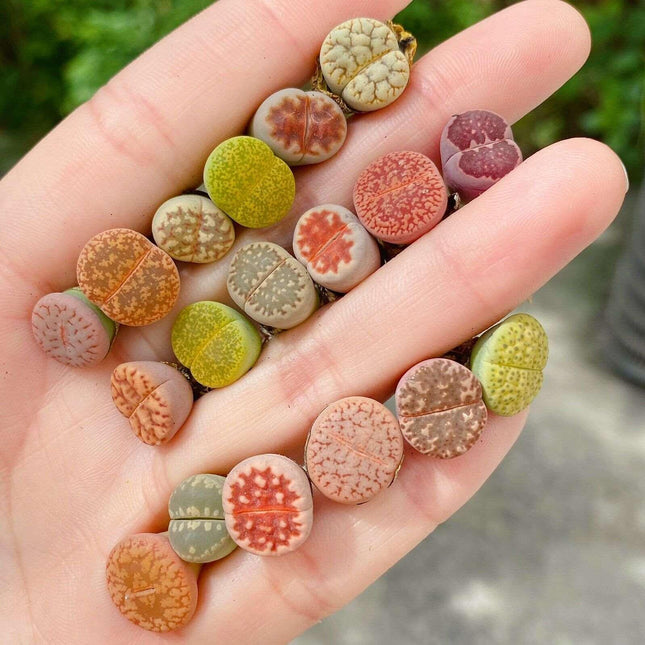

10 LIVE Lithops Living Stones Rare Succulents
Live Lithops Rare Succulents Plants Lithops is a genus of succulent plants in the ice plant family, Aizoaceae. Members of the genus are native to southern Africa. The name is derived from the ancient greek words λίθος (líthos), meaning "Stone," and ὄψ (óps), meaning "Face," referring to the stone-like appearance of the plants. Lithops also referred to as pebble plants, are succulents that grow extremely slowly and rarely get more than 1-inch above the soil. They usually only have a pair of leaves, which look more like stones than leaves with a fissure separating them (small gap) and epidermal windows (the small holes on top of the leaves) They avoid being eaten by blending in with surrounding rocks and are often known as pebble plants or living stones. The formation of the name from the ancient greek "-ops" means that even a single plant is called a lithops.” Quantity: 10 Lithops Living Stones Rare Succulents
$33.99
-


10 Loquat Tree Seeds
Loquat Tree Seeds | Fast Growing | Japanese Edible Sweet Fruit Loquat trees are bushy and dense in appearance. They are easily spotted and easy to pick and can be eaten fresh off of the tree and can be used to make detoxifying yellow loquat juice. As an added bonus, the leaves are gorgeous year-round and the showy white flowers lend curb appeal to these bountiful trees. It's not a wonder why they are so popular in landscapes and front/backyards! Start yours with fresh seeds this year. Subtropical and exotic Loquat trees grow rapidly. On average, a whopping 3 feet of growth per year! Fruits from spring to summer. These self-pollinating winners produce a huge amount of fruits that appear February-March and start falling from the trees in April. While only one tree is needed to set fruit, it is best to plant two if you can..for even more fruit (like in the picture). Other Names: Eriobotrya japonica Grow Zones: 7,8,9,10 How to Care for Loquat Trees These trees can withstand a freeze to 10 degrees however the flowers and fruits cannot withstand an under 30-degree freeze without a cotton sheet or some plastic cover over them. Be sure to protect young trees from temperature lows. Grows in both acidic and alkaline soils. Fertilize loquat trees 3 times per year (general-purpose lawn fertilizer works fine). Germination Procedure: Soak seeds for 48 hours in a glass of water. Sow seeds 1/2 an inch into moist soil. Keep seeds and soil moist throughout the germination phase. Seeds germinate in temperatures over 70 degrees. Germination time: 30 days.
$19.99 $17.59
-


10 Luna Pink Swirl Hibiscus Seeds
These hibiscus have huge dinner plate-sized flowers that measure 6” across. The plants begin blooming while they are still small in size, & bloom heavily all the way up until frost. Bees & butterflies just love them! The luna hibiscus is hardy all the way to zone 5. Add a touch of the tropics to your landscape! Name: Luna Pink Swirl HibiscusScientific Name: Hibiscus "Luna Pink Swirl"Color: White & Pink SwirlsPlant Seeds: Indoors Weeks Before Last Frost / Outdoors After Danger of FrostBloom Time: Summer - FrostHardiness Zone: 5 - 9Plant Height: 36 - 48"Plant Spacing: 36"Light Requirements: SunSoil & Water Preferences: Average
$15.99
-


10 Luna Red Hibiscus Seeds
Luna Red Hardy Hibiscus Moscheutos Flower Small Bush These Hibiscus have HUGE dinner-plate-sized flowers that measure 6” across. The plants begin blooming while they are still small in size, & bloom heavily all the way up until frost. Bees & butterflies just love them! The Luna Hibiscus is hardy all the way to zone 5. Add a touch of the tropics to your landscape! Flower SpecificationsSeason: PerennialUSDA Zones: 5 - 9Height: 24 - 36 inchesBloom Season: Early summer to late summerBloom Color: RedEnvironment: Full sunSoil Type: Moist, well-drained, pH 5.8 - 6.8 Planting DirectionsTemperature: 70FAverage Germ Time: 14 - 21 daysLight Required: YesDepth: Cover lightly, seed should be visibleSowing Rate: 1 - 2 seeds per plantMoisture: Keep seed moist until germinationPlant Spacing: 24 - 36 inches Quantity: 10 Luna Red Hibiscus Seeds
$16.00
-


10 Maverick White Geranium Seeds
Maverick White Geranium Maverick White for its pure white snowball-like clusters of shatter-resistant flowers held above pretty green foliage. This variety of geranium is a very heat tolerant plant and is an excellent performer in both the landscape and containers. The bright white flowers will light up any window box! Flower SpecificationsSeason: AnnualUSDA Zones: 3 - 8Height: 12 - 14 inchesBloom Season: Summer and fallBloom Color: WhiteEnvironment: Full sunSoil Type: Evenly moist, loamy, pH 6.1 - 7.0Deer Resistant: NoOften House Plant: YesLatin Name: Pelargonium Zonale Planting DirectionsTemperature: 75FAverage Germ Time: 5 - 7 daysLight Required: NoDepth: 1/8 inchSowing Rate: 2 - 3 seeds per plantMoisture: Keep seed moist until germinationPlant Spacing: 8 - 12 inches Quantity: 12 Maverick White Geranium Seeds
$19.99
-


Shipped from Lincolnton, North Carolina, USA 10 Mayan Gold Heliconia Seeds – Heliconia champneiana
Bring a touch of the tropics to your garden with the Mayan Gold Heliconia (Heliconia champneiana). Known for its vibrant golden-yellow bracts and striking tropical appearance, this exotic ornamental plant is a showstopper in any landscape. Often called “Lobster Claws” for its unique flower shape, Heliconia adds dramatic flair to gardens, patios, and indoor spaces. With lush green foliage and dazzling blooms, Mayan Gold Heliconia is perfect for creating a tropical oasis. Its flowers attract hummingbirds and butterflies, making it not only beautiful but also beneficial to your garden ecosystem. 🌟 Key Features: Exotic Tropical Beauty – Stunning golden bracts with unique “lobster claw” shape. Wildlife Friendly – Attracts hummingbirds, butterflies, and pollinators. Versatile Planting – Great for tropical landscapes, patios, or indoor containers. Low Maintenance – Hardy and easy to care for with the right conditions. Long-Lasting Blooms – Adds bold color for months during the growing season. 🌱 Why Grow Mayan Gold Heliconia Seeds? Add striking tropical elegance to your garden or home. Enjoy a pollinator-friendly plant that attracts wildlife. Perfect for exotic landscaping or bold indoor décor. 🌿 Growing Tips Soil: Rich, well-draining soil with organic matter Light: Prefers full sun to partial shade Watering: Keep soil consistently moist, but avoid waterlogging Temperature: Thrives in warm, frost-free climates Germination: Seeds may take 4–6 weeks; soak seeds before sowing for best results Placement: Great for borders, containers, or tropical-style gardens ❓ Frequently Asked Questions (FAQ) How tall does Mayan Gold Heliconia grow?Plants typically reach 4–6 feet tall with proper care. Can I grow Heliconia indoors?Yes! They thrive in large pots with bright, indirect light and high humidity. How long does it take to flower?Heliconias may take 12–24 months to produce their first blooms, but the wait is worth it. Are these seeds non-GMO?Yes, all our seeds are fresh, heirloom, and non-GMO. Where to Buy Mayan Gold Heliconia Seeds for Sale?At Seeds World, we offer fresh Heliconia champneiana seeds with fast U.S. shipping, so you can start growing your own exotic tropical paradise today.
$19.95
-


10 Mediterranean Spurge Seeds
A unique evergreen plant with an architectural shape and striking chartreuse blooms. Mediterranean Spurge (Euphorbia characias) thrives in hot, dry conditions and delivers bold texture to any landscape. Perfect as a focal point or accent in rock gardens, xeriscapes, or Mediterranean-style borders. Why Grow Mediterranean Spurge? 🌿 Evergreen & sculptural – adds year-round interest 🔥 Heat and drought tolerant – thrives in arid climates 🌞 Full sun lover – perfect for dry, exposed spots 🌼 Blooms in early spring with long-lasting chartreuse flowers What’s in the Pack? This pack contains 10 Mediterranean Spurge seeds – ideal for starting a dramatic and low-maintenance garden feature. Each seed is selected for viability and packaged for freshness. Planting Instructions Best Time to Plant: Late winter to early spring Soil: Well-drained, gritty or sandy Light: Full sun Depth: Press lightly into soil without burying Watering: Water lightly until germination (2–4 weeks), then reduce FAQs Is Mediterranean Spurge cold-hardy? It is hardy in USDA Zones 7–10. In cooler climates, it can be grown in containers and brought indoors during winter. Is this Euphorbia deer-resistant? Yes. Euphorbia plants are typically unappealing to deer due to their milky sap. Does it need pruning? Minimal pruning is needed. You can remove spent flower stems in late summer to tidy up the plant. Where to buy Mediterranean Spurge seeds for sale? At Seeds World, we offer premium Mediterranean Spurge seeds with fast U.S. shipping and carefully packed quality. Ideal for Mediterranean and drought-tolerant gardens.
$16.99
-


Shipped from Houston, Texas, USA 10 Mexican Petunia Fresh Cuttings – Ruellia Brittoniana Live Plants
Mexican Petunia – Effortless Color That Butterflies & Hummingbirds Can't Resist Plant these Mexican Petunia (Ruellia brittoniana) cuttings and watch your garden transform into a pollinator paradise. With almost no effort, these vigorous perennials produce a continuous flush of vivid purple tubular blooms from spring through fall — attracting Malachite and Buckeye butterflies, hummingbirds, and bees all season long. Tough, adaptable, and fast-spreading, Mexican Petunia thrives where many other plants struggle. Product Specifications Common Name: Mexican Petunia, Wild Petunia Latin Name: Ruellia brittoniana (syn. Ruellia simplex) Type: Perennial (grown as annual in cold climates) Flower Color: Purple (tubular, petunia-like blooms) Mature Height: Up to 3 feet (90 cm) Light: Full Sun to Partial Shade Water: Drought-tolerant and wet-tolerant; very adaptable Soil: Tolerates most soil types; prefers fertile, moist, well-drained soil Wildlife: Attracts butterflies (Malachite, Buckeye) and hummingbirds Propagation: Cuttings or seed; self-sows aggressively in warm climates Quantity: 10 Healthy Fresh Cuttings Ships From: Houston, Texas, USA Why Gardeners Love Mexican Petunia Blooms prolifically with minimal care — thrives in almost any soil type Exceptionally tough: tolerates both drought and wet, waterlogged conditions A magnet for butterflies and hummingbirds — ideal for pollinator gardens Spreads quickly to fill beds and borders with lush, colorful coverage Perennial in warm climates (zones 8–11); easily grown as an annual elsewhere Fast-rooting cuttings establish quickly for near-instant garden impact Planting & Care Instructions Planting: Plant cuttings in moist, well-draining soil. Space 18–24 inches apart to allow for spreading. Light: Full sun in cooler or northern climates; partial shade in hot, humid regions (e.g., Florida, Gulf Coast). Watering: Water regularly until established. Once rooted, Mexican Petunia is highly drought-tolerant but also handles wet conditions well. Fertilizing: Apply a balanced fertilizer in spring to encourage vigorous growth and blooming. Cold Climates: In zones below 8, treat as an annual or bring containers indoors before first frost. Spreading: Self-sows aggressively in warm climates — deadhead spent flowers if you want to limit spread. Frequently Asked Questions What do I receive — seeds or live plants? You receive 10 fresh, healthy live cuttings — not seeds. These are rooted or unrooted stem cuttings taken from established plants, ready to plant directly into your garden or pots. They establish quickly and begin blooming much sooner than seed-grown plants. How do I root the cuttings after they arrive? Place cuttings in moist potting mix or a glass of water until roots develop (typically 1–2 weeks). Keep in a warm, bright spot out of direct harsh sun until rooted, then transplant to your garden or a larger container. Will Mexican Petunia come back every year? In USDA zones 8–11, yes — it's a true perennial that returns reliably each spring and often self-sows to spread naturally. In colder zones (below 8), it is killed by frost and should be treated as an annual or overwintered indoors. Does it spread aggressively? Yes, in warm climates Mexican Petunia can spread vigorously by self-seeding and underground rhizomes. This makes it excellent for filling large beds quickly, but you may want to deadhead flowers or use edging to control spread in smaller gardens. Is Mexican Petunia good for attracting pollinators? Absolutely. It is one of the best plants for attracting butterflies (especially Malachite and Buckeye species) and hummingbirds. The tubular purple flowers are perfectly shaped for hummingbird feeding and provide nectar throughout the long bloom season.
$43.23
-


10 Mimosa Seeds (Albizia Julibrissin) Persian Pink Silk Tree
Mimosa Tree Seeds (Albizia Julibrissin) "Persian Silk Tree" Native to Asia and in the Fabaceae family, this mimosa is named after nobleman Filippo degli albizzi who introduced it to europe in the mid~eighteenth century.The albizia is a fast-growing, small to medium-sized deciduous tree that will typically grow in a vase shape from 20' to 40' tall with an umbrella crown."The flowers are fragrant & attract bees. At night, the sensitive leaflets will close, or upon being touched anytime throughout the day."Mimosa EnergeticsIt calms disturbed Shen (anxiety, insomnia, bad dreams) and is an incredibly effective mood elevator. Mimosa is also used for irritability, depression, mood swings, poor memory, and excessive anger."They make some of the Most Beautiful Bonsai."Bloom Time: June to JulyZones: 6 to 9Light: Full Sun to Partly Shady, although the best Blooms will be achieved with Full Sun.Mimosa Germination:1) Lightly sand the hard shells.2) Bring water to a boil, pour it into a container placing the seeds in. Allow the seeds to cool with the water, and soak for 24 to 36 hrs.3) Sow appx. 1/8" deep in well-drained soil and keep moist for optimal germination.
$14.99
-


10 Mini-Me Cucumber Seeds | Non-GMO | Heirloom | Compact Garden Veggies
Grow your own fresh, crisp cucumbers with Mini-Me Cucumber Seeds! Perfect for small-space gardens, patios, and containers, this compact heirloom variety produces bite-sized cucumbers that are flavorful, crunchy, and fast-growing. Ideal for salads, pickling, or snacking straight from the garden, Mini-Me Cucumbers thrive in full sun with well-draining soil. Non-GMO and easy to cultivate, these seeds bring the joy of homegrown cucumbers to every gardener, even in tight spaces. 🌱 Why Grow Mini-Me Cucumber Seeds: Compact, space-saving vines perfect for containers and small gardens Produces tender, flavorful, snack-sized cucumbers Non-GMO, heirloom variety ensures true-to-type fruits Quick-growing and easy to care for, ideal for beginner gardeners 🌿 Growing Tips: Start indoors 4–6 weeks before the last frost or direct sow after frost danger passes Plant ¼–½ inch deep in nutrient-rich, well-draining soil Keep soil moist and ensure full sun for best growth Thin seedlings to 12–18 inches apart for optimal airflow and productivity Harvest cucumbers regularly to encourage continuous fruiting ❓ Frequently Asked Questions (FAQ's) How long until germination?Typically 7–14 days under optimal conditions. What is the expected plant size?Vines remain compact, about 3–4 feet long, perfect for containers. Can they be grown indoors?Yes, in sunny windows or under grow lights until transplanting outdoors. Where to Buy Mini-Me Cucumber Seeds?At Seed World, we offer fresh, high-quality Mini-Me Cucumber seeds with fast U.S. shipping. Perfect for small-space gardening, raised beds, or containers.
$18.99


You have seen 120 out of 1983 products