
Sale
-


Shipped from San Francisco, California, USA Cordyline Australis Purpurea Seeds – 25 Seeds
Grow Cordyline australis ‘Purpurea’, an architectural ornamental plant known for its dramatic purple-bronze foliage and palm-like appearance. Its upright form and bold color make it an excellent choice for containers, patios, borders, and subtropical-style landscapes. Why Choose These Seeds Striking purple to bronze sword-shaped foliage Architectural, palm-like appearance Excellent for containers, patios, borders, and statement planting Evergreen in mild climates Adds year-round color and height to ornamental landscapes At a Glance Plant Cordyline australis ‘Purpurea’ Order contents 25 seeds Plant type Evergreen ornamental perennial / small tree Best for Containers, patios, borders, tropical-style gardens Light Full sun to partial shade Mature height Can eventually reach 10–20+ ft in favorable climates Foliage Purple to bronze-purple Success starts with Warm temperatures, consistent moisture, and well-drained seed mix How to Start Soak the seeds in lukewarm water for approximately 24 hours before sowing. Fill pots or seed trays with a clean, well-draining seed-starting mix. Sow seeds approximately 1/4 inch deep and lightly cover with growing medium. Keep the soil consistently moist, but avoid waterlogging. Maintain warm conditions around 68–77°F (20–25°C). Germination may take several weeks, so keep the medium moist and allow adequate time. Once seedlings are large enough to handle, transplant them carefully into individual pots. Set expectations: Germination speed and percentage can vary depending on seed freshness, temperature, moisture, and growing conditions. Plants grown from seed may also vary in foliage color, intensity, size, and growth habit, and not every seedling will necessarily display identical deep-purple coloration. Frequently Asked Questions What exactly will I receive?One order contains 25 Cordyline australis ‘Purpurea’ seeds. How long do Cordyline australis seeds take to germinate?Germination commonly takes around 4–12 weeks, although some seeds may take longer depending on temperature, moisture, and seed freshness. Do these seeds need cold stratification?Cold stratification is generally not required. Warm temperatures and consistent moisture are more important for successful germination. Will every plant have deep purple foliage?Not necessarily. Plants grown from seed can show natural variation in foliage color, and individual seedlings may range from green-purple to deeper bronze or purple shades. Can Cordyline australis Purpurea be grown in containers?Yes. It performs well in large containers, especially while young. Use a well-draining potting mix and provide plenty of light.
$24.99 $23.57
-


Shipped from Russell, Iowa, United States Rose Helleborus Christmas Rose Seeds – 15 Seeds
Grow Christmas Rose (Helleborus niger), a classic winter- to early-spring-flowering perennial known for elegant white blooms that may gradually develop soft pink or green tones as they mature. It is especially well suited to shaded borders, woodland-style gardens, and cool-season ornamental plantings. Why Choose These Seeds Beautiful white winter and early-spring flowers Excellent for shaded and woodland-style gardens Long-lived perennial in suitable climates Attractive evergreen to semi-evergreen foliage Adds valuable color when few other garden plants are blooming At a Glance Plant Christmas Rose – Helleborus niger Order contents 15 seeds Plant type Perennial flowering plant Best for Shade gardens, borders, woodland gardens, containers Light Partial shade to dappled shade Mature height Approximately 9–15 inches Flower color White, sometimes aging to pink or green Success starts with Fresh seed, warm-to-cold stratification, moisture, and patience How to Start Sow the seeds in a clean, well-draining seed-starting mix. Cover lightly with approximately 1/4 inch of soil or compost. Keep the medium evenly moist but never waterlogged. Hellebore seeds often benefit from a warm period followed by a cold period to break dormancy. Allow approximately 6–8 weeks of warm conditions, followed by 8–12 weeks of cold stratification. After stratification, move the pots to a cool, bright location and continue keeping the soil moist. Transplant seedlings carefully once they are well established. Set expectations: Christmas Rose seeds can be naturally slow and irregular to germinate. Some may sprout after several months, while others may take considerably longer. Plants grown from seed can also vary in flower color, markings, form, and growth habit. Frequently Asked Questions What exactly will I receive?One order contains 15 Christmas Rose (Helleborus niger) seeds. How long do Christmas Rose seeds take to germinate?Germination can take several months, especially because the seeds often require both warm and cold periods before sprouting. Some seeds may take longer and germinate in a later season. Do Helleborus seeds need cold stratification?Yes. Christmas Rose seeds generally benefit from a warm period followed by approximately 8–12 weeks of cold stratification to help break dormancy. Where should I plant Christmas Rose?Choose a site with partial or dappled shade and rich, well-drained soil. They work especially well beneath deciduous shrubs or in woodland-style borders. Will seed-grown plants look exactly like the photos?Not always. Hellebores grown from seed can naturally vary in flower color, markings, size, and form. Product photos should be considered representative of the species.
$21.00 $19.12
-


Ship from Fallbrook, California, United States Assorted Succulent Cuttings - 10 Cuttings
Start or expand your succulent collection with 10 assorted succulent cuttings/clippings, selected in a mix of shapes, textures, and colors. These unrooted cuttings are ideal for propagation, container gardens, succulent arrangements, terrariums, and DIY plant projects. Why Choose These Cuttings Includes 10 assorted succulent cuttings Great for propagation and growing new plants Mix of different shapes, textures, and colors Ideal for pots, dish gardens, and succulent arrangements Beginner-friendly with simple rooting care At a Glance Product Assorted Succulent Cuttings / Clippings Order contents 10 assorted cuttings Plant type Live unrooted succulent cuttings Best for Propagation, containers, arrangements, terrariums, DIY projects Light Bright indirect light while rooting Rooting time Often several weeks, depending on variety and conditions Water needs Low; avoid overwatering Success starts with Allowing cut ends to callus, well-drained soil, and careful watering How to Start Remove the cuttings from the package and inspect them for any damaged leaves. Allow freshly cut ends to dry and callus for a few days before planting if needed. Place the cut end into a dry, well-draining cactus or succulent potting mix. Keep the cuttings in bright, indirect light while roots develop. Avoid heavy watering at first. Once roots begin forming, water lightly when the soil is completely dry. After the cuttings are well rooted, gradually introduce them to stronger light according to the needs of each variety. Set expectations: Each assortment is different. The exact species, colors, sizes, and shapes will vary based on availability. Cuttings may arrive slightly wilted or lose a leaf during shipping, which is normal for succulent propagation. Rooting success depends on variety, temperature, moisture, light, and care. Frequently Asked Questions What exactly will I receive?One order contains 10 assorted succulent cuttings/clippings. These are cuttings for propagation and may arrive without established roots. Will I receive the exact varieties shown in the photos?Not necessarily. Each assortment is selected based on current availability, so species, colors, shapes, and sizes may vary. How long do succulent cuttings take to root?Many succulent cuttings begin developing roots within approximately 2–6 weeks, although some varieties may take longer. Should I water the cuttings immediately?Usually, no. Allow the cut end to callus first and plant it in well-drained soil. Water sparingly after rooting begins to reduce the risk of rot. Can I grow these indoors?Yes. Succulent cuttings can be grown indoors when provided with bright light, good airflow, and well-draining soil.
$25.00 $21.77
-


Ships from: Dunnellon, FL 1 Alocasia Silver Dragon Live Plant | Rare Alocasia Corms Houseplants
Grow Alocasia ‘Silver Dragon’, a striking tropical houseplant prized for its silvery-green, heavily textured leaves and dark contrasting veins. Its compact size and dramatic foliage make it a standout choice for indoor plant collections, shelves, plant cabinets, and tropical displays. Why Choose This Plant Distinctive silver-green foliage with bold dark veining Compact growth habit ideal for indoor spaces Excellent choice for rare and tropical houseplant collections Can be grown from a live plant or propagated from corms Adds strong texture and contrast to indoor plant displays At a Glance Plant Alocasia ‘Silver Dragon’ Product type Live plant / corms, depending on selected option Plant type Tropical perennial houseplant Best for Indoor collections, plant cabinets, shelves, tropical displays Light Bright, indirect light Water needs Moderate; allow the top layer of soil to dry slightly Humidity Prefers moderate to high humidity Success starts with Warmth, bright indirect light, humidity, and well-draining soil How to Grow Place your Alocasia in bright, indirect light and avoid prolonged harsh direct sun. Use a loose, well-draining potting mix suitable for tropical houseplants. Water when the top layer of soil begins to dry, keeping the mix lightly moist but never waterlogged. Keep the plant in warm conditions, ideally around 65–85°F (18–29°C). Provide moderate to high humidity for best foliage development. If growing from a corm, place it in lightly moist sphagnum moss, perlite, or another airy propagation medium and keep it warm until roots and new growth appear. Set expectations: Live plants and corms naturally vary in size, leaf count, color, and stage of growth. Minor cosmetic damage, leaf loss, or temporary wilting can occur during shipping. Corms may take time to sprout, and growth speed depends on warmth, moisture, humidity, and light. Frequently Asked Questions What exactly will I receive?You will receive 1 Alocasia Silver Dragon Live Plant, depending on the option selected in the listing. How much light does Alocasia Silver Dragon need?It grows best in bright, indirect light. Too much direct sunlight may scorch the leaves, while very low light can slow growth. How often should I water it?Water when the top layer of the potting mix feels slightly dry. Avoid keeping the soil constantly wet, as Alocasias can be sensitive to root rot. How long do Alocasia corms take to sprout?Corms may begin sprouting in several weeks, although timing varies depending on temperature, humidity, moisture, and corm maturity. Is Alocasia Silver Dragon easy to grow indoors?Yes, provided it receives warm temperatures, bright indirect light, humidity, and well-draining soil. Consistent care is especially important for young plants and corms.
$40.00 $37.99
-


Shipped from Deltona, Florida, USA Showy Milkweed Seeds – 150 Native Pollinator Seeds
Grow Showy Milkweed (Asclepias speciosa), a native North American perennial known for its large clusters of pink to rosy-purple flowers and important role in pollinator gardens. Its nectar-rich blooms attract butterflies, bees, and other beneficial insects, while its foliage serves as a host plant for monarch caterpillars in areas where the species is native. Why Choose These Seeds Produces large, fragrant pink to rosy-purple flower clusters Important host plant for monarch butterfly caterpillars Attracts butterflies, bees, and other pollinators Excellent for native gardens, meadows, and wildlife landscapes Drought-tolerant once established At a Glance Plant Showy Milkweed – Asclepias speciosa Order contents 150 seeds Plant type Native perennial wildflower Best for Pollinator gardens, native landscapes, meadows, wildlife gardens Light Full sun Mature height Approximately 2–5 ft Flower color Pink to rosy-purple Success starts with Cold stratification, full sun, and well-drained soil How to Start For spring planting, cold-stratify the seeds in a slightly moist medium in the refrigerator for approximately 30 days. Sow seeds about 1/4 inch deep in a well-draining seed-starting mix or directly outdoors after stratification. Keep the soil consistently moist during germination, but avoid waterlogging. Provide plenty of light and warm conditions after the cold treatment. Germination commonly begins within 1–3 weeks after proper stratification and sowing. Once seedlings are established, transplant them carefully into a sunny location with good drainage. Set expectations: Germination and growth can vary depending on seed freshness, stratification, soil temperature, moisture, and local conditions. Showy Milkweed is a spreading perennial and may expand through underground rhizomes once established. Frequently Asked Questions What exactly will I receive?One order contains 150 Showy Milkweed (Asclepias speciosa) seeds. Do Showy Milkweed seeds need cold stratification?Yes. A cold, moist stratification period of around 30 days is commonly recommended before spring sowing to improve germination. How long do Showy Milkweed seeds take to germinate?After proper stratification, seeds often germinate in approximately 1–3 weeks under suitable warm and moist conditions. Is Showy Milkweed good for monarch butterflies?Yes. Showy Milkweed is one of the milkweed species used as a host plant by monarch caterpillars, and its flowers also provide nectar for adult butterflies and other pollinators. Where should I plant Showy Milkweed?Plant it in full sun with well-drained soil. It works especially well in native plant gardens, pollinator beds, meadow-style landscapes, and naturalized areas.
$14.99 $12.39
-


Ships from Saint Augustine, Florida, United States Verbena Hybrids - Nana Compacta Rose Seeds - 40 Seeds
Grow Verbena Nana Compacta Rose, a compact flowering verbena known for its clusters of bright rose-pink blooms and low, spreading habit. It is an excellent choice for borders, containers, edging, window boxes, and pollinator-friendly gardens where long-lasting summer color is desired. Why Choose These Seeds Produces clusters of vivid rose-pink flowers Compact, low-growing habit ideal for small spaces Excellent for borders, containers, edging, and window boxes Attracts butterflies and other pollinators Long blooming season under suitable growing conditions At a Glance Plant Verbena Nana Compacta Rose Order contents 40 seeds Plant type Flowering annual / tender perennial Best for Borders, containers, edging, window boxes, pollinator gardens Light Full sun Mature height Approximately 6–12 inches Flower color Rose pink Success starts with Warmth, bright light, good drainage, and steady moisture How to Start Fill seed trays or small pots with a clean, well-draining seed-starting mix. Sow the seeds shallowly and cover them lightly with a thin layer of growing medium. Keep the soil consistently moist but not waterlogged. Maintain temperatures around 65–75°F (18–24°C) during germination. Germination commonly takes around 2–4 weeks, although some seeds may take longer. Once seedlings are established, provide plenty of bright light. Transplant outdoors after the danger of frost has passed, spacing plants to allow good airflow. Set expectations: Verbena germination can sometimes be uneven, so allow extra time before discarding unsprouted seeds. Growth and flowering depend on temperature, light, moisture, soil conditions, and overall care. Plants grown from seed may show slight natural variation in flower shade and growth habit. Frequently Asked Questions What exactly will I receive?One order contains 40 Verbena Nana Compacta Rose seeds. How long do Verbena seeds take to germinate?Germination typically takes around 2–4 weeks under suitable conditions, although some seeds may germinate later. Do Verbena seeds need cold stratification?Cold stratification is generally not required, but germination may improve when seeds experience consistent moisture and moderate temperatures. Is Nana Compacta Rose good for containers?Yes. Its naturally compact growth habit makes it an excellent choice for pots, window boxes, hanging displays, and small garden spaces. Does Verbena attract pollinators?Yes. Verbena flowers are attractive to butterflies and other beneficial pollinating insects.
$14.99 $12.82
-


Shipped from Russell, Iowa, United States Horsetail Plant Cuttings to Grow – 10 Cuttings
Grow Horsetail (Equisetum spp.), a distinctive perennial plant known for its upright, jointed green stems and prehistoric appearance. Horsetail thrives in consistently moist conditions and is especially useful for pond edges, bog gardens, water features, and containers where its spreading growth can be controlled. Why Choose These Cuttings Includes 10 Horsetail plant cuttings for propagation Unique upright stems create a bold architectural look Excellent for pond margins, bog gardens, and water features Thrives in consistently moist or wet soil Easy to grow in containers where spreading can be managed At a Glance Plant Horsetail – Equisetum spp. Order contents 10 cuttings Plant type Perennial moisture-loving plant Best for Pond edges, bog gardens, wet areas, containers Light Full sun to partial shade Water needs High; prefers consistently moist soil Growing habit Upright and spreading Success starts with Moist soil, shallow planting, and consistent hydration How to Start Plant the Horsetail cuttings as soon as possible after arrival. Use rich, moisture-retentive soil in a pot, bog garden, or consistently damp planting area. Position the rooted or lower stem section just below the soil surface and firm the soil gently around it. Water thoroughly and keep the soil consistently moist to wet while the cuttings establish. Place in full sun to partial shade. New shoots may begin appearing as the underground rhizomes establish. Consider growing Horsetail in a container or contained planting area, as it can spread vigorously through underground rhizomes. Set expectations: Cuttings may vary in length, thickness, and appearance. Some stems may show temporary yellowing or cosmetic damage during shipping. Establishment speed depends on moisture, temperature, cutting condition, and growing environment. Frequently Asked Questions What exactly will I receive?One order contains 10 Horsetail plant cuttings for propagation and growing. How long do Horsetail cuttings take to establish?New roots and shoots may begin developing within a few weeks, although establishment time varies depending on temperature, moisture, and the condition of each cutting. Does Horsetail need a lot of water?Yes. Horsetail naturally prefers consistently moist to wet soil and is especially well suited to pond edges, bog gardens, and other damp areas. Can Horsetail be grown in containers?Yes. Container growing is often a practical option because Horsetail can spread aggressively through underground rhizomes. Is Horsetail invasive?Horsetail can be very vigorous and difficult to contain once established. Growing it in pots or contained beds is recommended where unwanted spreading could be a concern.
$34.99 $29.79
-


Ships from Laveen, AZ, USA Pee Gee Hydrangea Seeds – White Blooms Hardy Perennial Flower – 10 Seeds
Grow **Pee Gee Hydrangea (Hydrangea paniculata ‘Grandiflora’)**, a hardy flowering shrub known for its large cone-shaped clusters of creamy white blooms that can gradually develop soft pink tones as they mature. This classic hydrangea is a beautiful choice for borders, hedges, foundation plantings, and specimen gardens. Why Choose These Seeds Produces large, showy white flower clusters Hardy perennial shrub for long-term garden interest Excellent for borders, hedges, and specimen planting Blooms may age from creamy white to soft pink Attractive upright growth habit with strong ornamental value At a Glance Plant Pee Gee Hydrangea – Hydrangea paniculata ‘Grandiflora’ Order contents 10 seeds Plant type Hardy deciduous flowering shrub Best for Borders, hedges, foundation planting, specimen gardens Light Full sun to partial shade Mature height Approximately 8–15 ft, depending on pruning and conditions Flower color Creamy white, often aging to pink Success starts with Moist, well-drained soil, light, and patience How to Start Fill seed trays or small pots with a clean, fine-textured, well-draining seed-starting mix. Surface sow the seeds and press them gently into the growing medium. Do not bury deeply, as hydrangea seeds are very small and benefit from light during germination. Mist gently and keep the medium consistently moist but not waterlogged. Keep the trays in a bright location with indirect light and moderate warmth. Germination may take several weeks, so maintain steady moisture and avoid disturbing the seeds. Once seedlings are large enough to handle, transplant them carefully into individual pots. Set expectations: Hydrangeas grown from seed can vary naturally in flower size, color, growth habit, and other characteristics. Seed-grown plants may not come completely true to a named cultivar, so exact Pee Gee characteristics cannot be guaranteed for every seedling. Flowering from seed can also take several years. Frequently Asked Questions What exactly will I receive?One order contains 10 Pee Gee Hydrangea seeds for growing. How long do Pee Gee Hydrangea seeds take to germinate?Germination may take approximately 2–6 weeks under suitable moisture, light, and temperature conditions, although some seeds may take longer. Do Hydrangea seeds need cold stratification?Cold stratification is generally not required for many hydrangea seeds. They can usually be surface sown in a moist seed-starting mix and kept under bright indirect light. How long before seed-grown Hydrangeas flower?Hydrangeas grown from seed may take around 2–4 years or longer to reach flowering maturity, depending on climate, care, and growing conditions. Will every plant produce the exact same white Pee Gee flowers?Not necessarily. Plants grown from seed can show natural variation, especially when associated with a named cultivar. Flower color, size, and growth habit may differ from the parent plant.
$19.99 $17.65
-


Shipped from Venice, Florida, United States Musa Itinerans – Burmese Blue Banana Seeds – 10 Seeds
Grow Burmese Blue Banana (Musa itinerans), a striking ornamental banana known for its lush tropical foliage and unusual blue-green to bluish fruit coloration. This vigorous species is an eye-catching choice for tropical gardens, large containers, conservatories, and exotic landscape displays. Why Choose These Seeds Bold tropical foliage with a dramatic architectural look Known for distinctive blue-green to bluish fruit Fast-growing under warm, humid conditions Excellent for tropical gardens, patios, and large containers Adds height and exotic appeal to landscape plantings At a Glance Plant Burmese Blue Banana – Musa itinerans Order contents 10 seeds Plant type Tropical perennial banana Best for Tropical gardens, large containers, conservatories, exotic landscapes Light Full sun to partial shade Mature height Approximately 10–20+ ft under favorable conditions Foliage Large green tropical leaves Success starts with Scarification, soaking, warmth, moisture, and patience How to Start Lightly scarify the hard seed coat with fine sandpaper or a nail file, taking care not to damage the inner seed. Soak the seeds in warm water for approximately 24–48 hours before sowing. Sow seeds about 1/2 inch deep in a moist, well-draining seed-starting mix. Keep the growing medium consistently moist but not waterlogged. Maintain warm temperatures around 75–90°F (24–32°C). Germination can be slow and irregular, often taking several weeks to several months. Once seedlings are well established, transplant them carefully into larger pots or a warm outdoor location. Set expectations: Banana seeds can be naturally slow and unpredictable to germinate. Individual seeds may sprout at different times, and some may require an extended warm period. Growth rate depends heavily on temperature, humidity, moisture, and light. Frequently Asked Questions What exactly will I receive?One order contains 10 Burmese Blue Banana (Musa itinerans) seeds. How long do Burmese Blue Banana seeds take to germinate?Germination may take approximately 4–12 weeks or longer, depending on seed freshness, temperature, moisture, and preparation. Do the seeds need scarification or soaking?Yes. Light scarification followed by a 24–48 hour warm-water soak can help moisture penetrate the hard seed coat and support germination. Can Musa itinerans be grown in containers?Yes. Young plants can be grown successfully in large containers, although they may eventually require substantial space as they mature. Is Burmese Blue Banana mainly ornamental?Yes. It is widely grown for its tropical foliage and unusual appearance. Fruit quality and characteristics may vary, so it is best treated primarily as an ornamental species.
$16.99 $15.61
-


Shipped from Red Lion, Pennsylvania, United States Luna Pink Swirl Hibiscus Seeds – 10 Hardy Flower Seeds
Grow Luna Pink Swirl Hibiscus, a hardy perennial hibiscus known for its large, showy pink-and-white blooms with a dramatic tropical look. Its compact, bushy habit makes it a beautiful choice for sunny borders, patio containers, pollinator gardens, and statement plantings. Why Choose These Seeds Produces large pink-and-white hibiscus blooms Hardy perennial with a bold tropical appearance Compact growth habit compared with many hibiscus varieties Excellent for sunny borders, containers, and focal plantings Attracts butterflies, hummingbirds, and other pollinators At a Glance Plant Luna Pink Swirl Hibiscus Order contents 10 seeds Plant type Hardy flowering perennial Best for Borders, containers, pollinator gardens, statement planting Light Full sun Mature height Approximately 2–3 ft Flower color Pink and white swirl Success starts with Scarification, warm temperatures, moisture, and bright light How to Start Lightly nick or scarify the seed coat with fine sandpaper or a nail file. Soak the seeds in warm water for approximately 12–24 hours before sowing. Sow seeds about 1/4 inch deep in a clean, well-draining seed-starting mix. Keep the medium evenly moist but not waterlogged. Maintain temperatures around 70–80°F (21–27°C). Germination may begin in approximately 1–3 weeks under suitable conditions. Once seedlings are established, provide strong light and transplant after the risk of frost has passed. Set expectations: Hibiscus grown from seed may show natural variation in flower color, pattern, size, and growth habit. Seed-grown plants may not come completely true to a named cultivar, so the exact Pink Swirl pattern cannot be guaranteed for every seedling. Frequently Asked Questions What exactly will I receive?One order contains 10 Luna Pink Swirl Hibiscus seeds. How long do the seeds take to germinate?Under warm, moist conditions, germination may occur in approximately 1–3 weeks, although some seeds can take longer. Do the seeds need scarification?Yes. Lightly scarifying the hard seed coat and soaking the seeds before planting can help improve water absorption and germination. Will every plant have the same pink-and-white swirl?Not necessarily. Plants grown from seed can vary naturally in flower color, pattern, size, and form, especially when associated with a named cultivar. Is Luna Pink Swirl Hibiscus good for containers?Yes. Its relatively compact habit makes it suitable for large containers and patio planters, provided it receives full sun and regular moisture.
$15.99 $13.29
-
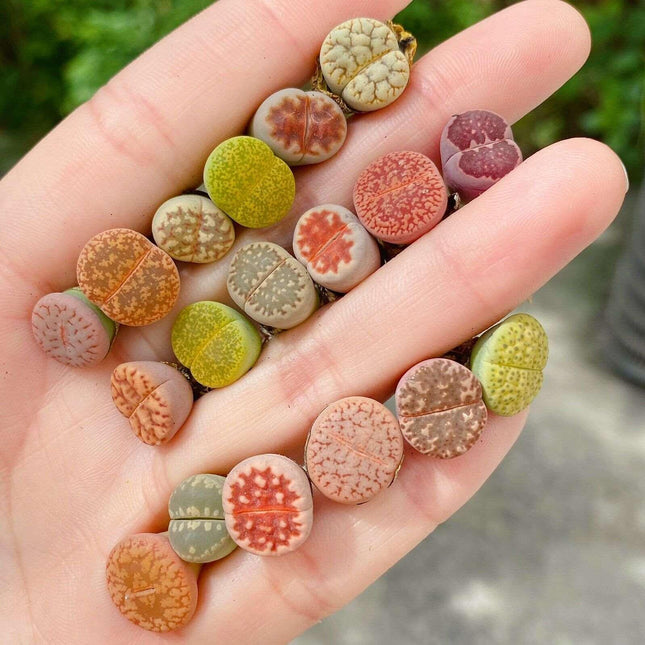

Ships from: Farmington, CT 5 Live Lithops Plants – Beginner Friendly Living Stones – 0.4"–0.6"
Add something truly unique to your succulent collection with Live Lithops, also known as Living Stones. These fascinating succulents are prized for their stone-like appearance, compact size, and colorful patterns. This listing includes 5 mature Lithops plants, approximately 1.5–2.5 years old, shipped bare root without soil or pots. Why Choose These Plants Includes 5 live Lithops plants Mature plants approximately 1.5–2.5 years old Compact size, around 0.4"–0.6" Random assortment with an effort to provide mixed colors Beginner friendly when proper watering habits are followed Excellent for succulent collections, small pots, and windowsill displays At a Glance Plant Lithops – Living Stones Order contents 5 live plants Plant size Approximately 0.4"–0.6" Plant age Approximately 1.5–2.5 years old Shipping Bare root, without soil or pot Selection Random assortment; mixed colors when available Light Bright light to full sun, introduced gradually Water needs Very low Best for Succulent collections, small pots, windowsills, specialty displays How to Plant & Care When your Lithops arrive, plant them in a dry, gritty, fast-draining succulent or cactus mix. Do not water immediately after planting. Allow the plants to settle for approximately one week before the first watering. For the first watering, bottom-water lightly by allowing the pot to absorb moisture from below. Gradually introduce the plants to stronger sunlight to help prevent sunburn. After the plants have been established for about a month, water only when needed. A small amount approximately every other week may be suitable during active growth, but always check that the soil is completely dry first. Reduce or stop watering during natural dormancy or when the plant is replacing its old leaves. Important: Do not overwater. Lithops store water in their thick leaves and are highly susceptible to rot when kept too wet. Watering frequency should always be adjusted according to season, temperature, humidity, and the condition of the plant rather than following a strict schedule. Frequently Asked Questions What exactly will I receive?You will receive 5 live Lithops plants, approximately 0.4"–0.6" in size and 1.5–2.5 years old. Plants are shipped bare root without soil or pots. Will I receive different colors?Plants are selected at random, but we will try to provide a mixture of different colors and patterns whenever available. Exact varieties and colors cannot be guaranteed. Should I water the Lithops immediately after arrival?No. Plant them in dry, well-draining soil first and allow them to settle for about one week before watering. How often should Lithops be watered?Lithops need very little water. Once established, water only when the soil is completely dry and the plant shows that it needs moisture. Avoid frequent watering, especially during dormancy or leaf replacement. How much sunlight do Lithops need?Lithops prefer very bright light and plenty of sun, but newly received plants should be introduced to stronger sunlight gradually to prevent scorching.
$34.99 $29.53
-


Ship from Old Town, Florida, United States Trinidad Perfume Pepper Seeds – 10 Seeds
Grow Trinidad Perfume Pepper, a tropical chile pepper prized for its strong fruity, floral aroma and relatively mild heat compared with many other Capsicum chinense varieties. Its bright yellow pods are excellent for adding Caribbean-style pepper flavor to sauces, salsas, marinades, and cooked dishes without overwhelming heat. Why Choose These Seeds Fruity, floral aroma with classic Caribbean pepper flavor Much milder than many habanero-type peppers Attractive bright yellow mature pods Excellent for sauces, salsas, marinades, and fresh cooking Productive warm-season pepper for gardens and containers At a Glance Plant Trinidad Perfume Pepper Order contents 10 seeds Plant type Warm-season pepper Species Capsicum chinense Best for Containers, raised beds, vegetable gardens Light Full sun Fruit color Yellow when mature Flavor Fruity, floral, aromatic Heat level Mild to low heat Success starts with Warm soil, strong light, steady moisture, and patience How to Start Sow seeds indoors about 8–10 weeks before the last expected frost. Plant seeds about 1/4 inch deep in a clean, well-draining seed-starting mix. Keep the soil evenly moist but not waterlogged. Maintain warm temperatures around 75–85°F (24–29°C) for best germination. Germination may take approximately 1–3 weeks, though some seeds can take longer. Provide strong light as soon as seedlings emerge. Transplant outdoors after frost danger has passed and nighttime temperatures remain consistently warm. Set expectations: Pepper germination can vary depending on seed freshness, temperature, moisture, and growing conditions. Capsicum chinense varieties often germinate more slowly than common sweet peppers, so consistent warmth and patience are important. Frequently Asked Questions What exactly will I receive?One order contains 10 Trinidad Perfume Pepper seeds. How hot are Trinidad Perfume Peppers?They are generally considered mild compared with habaneros and many other Capsicum chinense peppers, making them popular for their aroma and flavor rather than intense heat. How long do the seeds take to germinate?Seeds commonly germinate in approximately 1–3 weeks under warm conditions, although some may take longer. Can Trinidad Perfume Peppers be grown in containers?Yes. They grow well in containers when given full sun, good drainage, regular watering, and enough root space. When are the peppers ready to harvest?The fruits are typically ready when they develop their mature bright yellow color and full fruity aroma.
$16.99 $14.36
-


Shipped from Spring City, Tennessee, United States Giant Exhibition Palisandra Coleus Seeds – 25 Seeds
Grow Giant Exhibition Palisandra Coleus, a bold ornamental foliage plant prized for its large, deeply colored leaves in rich burgundy to near-black tones. Its dramatic size and strong color make it an excellent choice for containers, shaded borders, patio displays, and statement plantings. Why Choose These Seeds Large, showy foliage with deep burgundy to nearly black color Excellent for containers, borders, and shaded garden displays Strong visual contrast in mixed planters Fast-growing under warm conditions Ideal for ornamental and exhibition-style plantings At a Glance Plant Giant Exhibition Palisandra Coleus Order contents 25 seeds Plant type Tender perennial, often grown as an annual Best for Containers, borders, patios, mixed planters, shade gardens Light Partial shade to bright indirect light Mature height Approximately 18–30 inches Foliage color Deep burgundy to nearly black Success starts with Warmth, light surface sowing, steady moisture, and good drainage How to Start Fill seed trays or small pots with a clean, fine-textured seed-starting mix. Surface sow the seeds and gently press them onto the growing medium. Do not bury deeply, as Coleus seeds benefit from light during germination. Mist gently and keep the soil consistently moist but not waterlogged. Maintain temperatures around 70–75°F (21–24°C). Germination commonly occurs in approximately 7–14 days under suitable conditions. Once seedlings are established, provide bright light and transplant carefully into individual pots. Set expectations: Coleus grown from seed may show natural variation in foliage size, shade, shape, and growth habit. Strong light can help intensify foliage color, while harsh direct sun may scorch leaves in hot climates. Frequently Asked Questions What exactly will I receive?One order contains 25 Giant Exhibition Palisandra Coleus seeds. How long do Coleus seeds take to germinate?Seeds typically germinate in approximately 7–14 days when kept warm, moist, and exposed to light. Do Coleus seeds need cold stratification?No. Cold stratification is generally not required. Warm temperatures and consistent moisture are more important. Can Giant Exhibition Palisandra Coleus be grown in containers?Yes. It is an excellent choice for large pots, patio containers, mixed planters, and decorative displays. Will every plant have very dark foliage?Seed-grown plants may vary slightly, but Palisandra types are selected for dark burgundy to nearly black foliage. Light levels and growing conditions can influence color intensity.
$16.99 $14.48
-


Tall Nasturtium Trailing Mix Seeds – 100 Seeds
Grow Tall Nasturtium Trailing Mix, a colorful annual flowering plant known for its round green leaves and bright blooms in shades of red, orange, yellow, and cream. Its long, trailing stems make it an excellent choice for hanging baskets, containers, window boxes, fences, trellises, and garden borders. Why Choose These Seeds Colorful mix of red, orange, yellow, and cream-toned flowers Long trailing growth ideal for baskets and containers Excellent for fences, trellises, borders, and cascading displays Attracts bees, butterflies, and other pollinators Fast-growing annual with a long flowering season At a Glance Plant Tall Nasturtium Trailing Mix Order contents 100 seeds Plant type Flowering annual Best for Hanging baskets, containers, trellises, fences, borders Light Full sun to partial shade Growth habit Trailing / climbing Flower colors Mixed red, orange, yellow, and cream tones Success starts with Direct sowing, good drainage, and moderate watering How to Start Sow seeds directly outdoors after the danger of frost has passed, or start indoors a few weeks earlier. Plant seeds about 1/2–1 inch deep in loose, well-draining soil. Keep the soil lightly moist until germination begins. Maintain temperatures around 60–70°F (16–21°C) for good germination. Seeds commonly germinate in approximately 7–14 days. Provide support if you want the plants to climb, or allow the stems to trail naturally from baskets and containers. Avoid overly rich soil, as excessive fertilizer can encourage foliage growth at the expense of flowers. Set expectations: Flower color, trailing length, and plant vigor may vary naturally within a mixed seed blend. Growing conditions such as temperature, sunlight, soil fertility, and moisture can also affect flowering and plant size. Frequently Asked Questions What exactly will I receive?One order contains 100 Tall Nasturtium Trailing Mix seeds. How long do Nasturtium seeds take to germinate?Seeds commonly germinate in approximately 7–14 days under suitable temperature and moisture conditions. Should I direct sow Nasturtium seeds?Yes. Nasturtiums are often easiest to direct sow outdoors because they grow quickly and generally do not require a long indoor starting period. Can Tall Nasturtiums be grown in hanging baskets?Yes. Their trailing stems make them especially suitable for hanging baskets, window boxes, elevated containers, and cascading displays. Does Tall Nasturtium attract pollinators?Yes. The bright flowers can attract bees, butterflies, and other beneficial pollinating insects.
$19.99 $18.49
-


Shipped From Staten Island, New York, United States Red Bee Balm – Monarda didyma Seeds – 500 Seeds
Grow Red Bee Balm (Monarda didyma), a showy perennial wildflower known for its bright red, tubular flower clusters and aromatic foliage. It is an excellent choice for pollinator gardens, cottage borders, native-style plantings, and perennial beds where bold summer color is desired. Why Choose These Seeds Produces vivid red flower clusters Attracts hummingbirds, bees, butterflies, and other pollinators Fragrant foliage adds extra garden interest Excellent for cottage gardens, perennial borders, and wildlife plantings Hardy perennial that can return year after year in suitable climates At a Glance Plant Red Bee Balm – Monarda didyma Order contents 500 seeds Plant type Hardy flowering perennial Best for Pollinator gardens, cottage gardens, perennial borders Light Full sun to partial shade Mature height Approximately 2–4 ft Flower color Bright red Success starts with Light sowing, steady moisture, good airflow, and patience How to Start Fill seed trays or pots with a clean, well-draining seed-starting mix. Surface sow the seeds and gently press them into the growing medium. Cover very lightly, as the small seeds should not be buried deeply. Keep the soil evenly moist but not waterlogged. Maintain temperatures around 65–75°F (18–24°C). Germination commonly occurs in approximately 1–3 weeks under suitable conditions. Once seedlings are established, transplant them into a sunny or partially shaded garden location with good airflow. Set expectations: Germination and growth can vary depending on seed freshness, temperature, moisture, and light. Bee Balm can spread over time through underground growth, so allow adequate space or divide established plants as needed. Frequently Asked Questions What exactly will I receive?One order contains 500 Red Bee Balm (Monarda didyma) seeds. How long do Bee Balm seeds take to germinate?Seeds commonly germinate in approximately 1–3 weeks under suitable temperature and moisture conditions. Do Bee Balm seeds need cold stratification?Cold stratification is generally not essential, although a short cool period can sometimes help improve germination consistency. Does Red Bee Balm attract pollinators?Yes. Its tubular red flowers are especially attractive to hummingbirds, bees, butterflies, and other beneficial pollinators. Where should I plant Red Bee Balm?Plant it in full sun to partial shade with moist, well-drained soil and good airflow. It works especially well in perennial borders and pollinator gardens.
$19.99 $15.99
-


Shipped from Spring City, Tennessee, USA Royal White Sweet Pea Seeds – 50 Seeds
Grow Royal White Sweet Pea, a graceful climbing annual prized for its elegant white blooms and sweet fragrance. This classic flowering vine is ideal for trellises, fences, arches, cottage gardens, and cutting gardens where soft color and fragrant flowers are desired. Why Choose These Seeds Produces elegant pure white flowers Fragrant blooms ideal for bouquets and cutting gardens Climbing habit perfect for trellises, fences, and arches Excellent for cottage-style and romantic garden displays Cool-season annual with strong ornamental appeal At a Glance Plant Royal White Sweet Pea Order contents 50 seeds Plant type Climbing flowering annual Best for Trellises, fences, arches, cottage gardens, cutting gardens Light Full sun to partial shade Mature height Approximately 5–8 ft with support Flower color White Success starts with Cool weather, soaking, good drainage, and climbing support How to Start Soak the seeds in room-temperature water for approximately 12–24 hours before sowing. Sow seeds about 1 inch deep in a well-draining seed-starting mix or directly into prepared garden soil. Keep the soil evenly moist but not waterlogged. Sweet Peas germinate best in cool conditions, ideally around 55–65°F (13–18°C). Germination commonly occurs in approximately 7–21 days. Provide a trellis, fence, or other support as seedlings begin to climb. Remove spent flowers regularly to help encourage continued blooming. Set expectations: Sweet Peas prefer cool growing conditions and may decline once temperatures become consistently hot. Germination, flower size, fragrance, and vine growth can vary depending on temperature, soil, moisture, and overall care. Frequently Asked Questions What exactly will I receive?One order contains 50 Royal White Sweet Pea seeds. How long do Sweet Pea seeds take to germinate?Seeds typically germinate in approximately 7–21 days under cool, consistently moist conditions. Should Sweet Pea seeds be soaked before planting?Yes. Soaking the seeds for 12–24 hours before sowing can help soften the seed coat and support more even germination. Do Royal White Sweet Peas need a trellis?Yes. They are climbing plants and perform best with a trellis, fence, arch, or similar support. Are Sweet Peas good for cut flowers?Yes. Their fragrant white blooms and long stems make them excellent for bouquets, wedding-style arrangements, and cutting gardens.
$14.99 $12.82
-


Ships from: Walterboro, SC Sango Kaku Japanese Maple (Acer palmatum) Pink Stem – 5 Seeds
Grow Sango Kaku Japanese Maple, a highly ornamental Japanese maple prized for its elegant foliage and distinctive coral-pink to red young stems, especially noticeable during the cooler months. This graceful tree makes an excellent specimen for Japanese-style gardens, patios, woodland edges, and refined landscape plantings. Why Choose These Seeds Beautiful coral-pink to red young stems Elegant Japanese maple foliage with seasonal color Excellent as a specimen tree or focal point Suitable for Japanese-style gardens and woodland settings Can be grown in large containers while young At a Glance Plant Sango Kaku Japanese Maple – Acer palmatum Order contents 5 seeds Plant type Deciduous ornamental tree Best for Japanese gardens, specimen planting, patios, woodland gardens Light Partial shade to morning sun Mature height Approximately 15–25 ft under suitable conditions Stem color Coral-pink to red on young growth Success starts with Proper stratification, moisture, patience, and protected growing conditions How to Start Soak the seeds in room-temperature water for approximately 24 hours. Place the seeds in a slightly moist medium such as peat, vermiculite, or a seed-starting mix. Cold-stratify in the refrigerator for approximately 90–120 days. After stratification, sow seeds about 1/4–1/2 inch deep in a well-draining seed-starting mix. Keep the medium evenly moist but not waterlogged. Place in bright, indirect light with moderate temperatures. Germination may be slow and uneven, so allow extra time before discarding unsprouted seeds. Set expectations: Japanese maples grown from seed can vary significantly from the parent plant. Stem color, leaf shape, fall color, mature size, and growth habit may differ, so exact Sango Kaku characteristics cannot be guaranteed in every seedling. Frequently Asked Questions What exactly will I receive?One order contains 5 Sango Kaku Japanese Maple (Acer palmatum) seeds. Do Japanese Maple seeds need cold stratification?Yes. A cold, moist stratification period of around 90–120 days is commonly recommended to help break dormancy. How long do the seeds take to germinate?After proper stratification, germination may take several weeks or longer, and individual seeds may sprout at different times. Will every seedling develop the same pink or coral stems?Not necessarily. Seed-grown Japanese maples can show natural genetic variation, so the exact coral-pink stem color of the parent cultivar cannot be guaranteed. Can Sango Kaku Japanese Maple be grown in containers?Yes. Young trees can be grown in large containers with good drainage, though they may eventually need more root space as they mature.
$29.99 $27.09
-


Shipped from Greenville, Michigan, United States Morning Glory Hummingbird Mix Dwarf Seeds – 30 Seeds
Grow Morning Glory Hummingbird Mix Dwarf, a compact flowering variety prized for its colorful trumpet-shaped blooms and tidy growth habit. This dwarf mix is a great choice for containers, borders, patio planters, and small garden spaces, while its bright flowers can help attract hummingbirds and other pollinators. Why Choose These Seeds Compact dwarf growth suitable for smaller spaces Colorful trumpet-shaped blooms in mixed shades Excellent for containers, borders, and patio planters Attractive to hummingbirds, bees, and butterflies Fast-growing annual for warm-season color At a Glance Plant Morning Glory Hummingbird Mix Dwarf Order contents 30 seeds Plant type Flowering annual Best for Containers, borders, patio planters, small gardens Light Full sun Growth habit Compact / dwarf Flower color Mixed colors Success starts with Scarification or soaking, warmth, full sun, and good drainage How to Start Lightly nick or scarify the hard seed coat with fine sandpaper or a nail file. Soak seeds in warm water for approximately 12–24 hours before sowing. Sow seeds about 1/2 inch deep in a loose, well-draining seed-starting mix or garden soil. Keep the soil evenly moist until germination begins. Maintain temperatures around 65–75°F (18–24°C). Germination commonly occurs in approximately 5–14 days. Once established, provide full sun and moderate watering. Set expectations: Because this is a mixed variety, flower color and pattern will vary from plant to plant. Plant size and flowering can also differ depending on temperature, sunlight, moisture, and growing conditions. Frequently Asked Questions What exactly will I receive?One order contains 30 Morning Glory Hummingbird Mix Dwarf seeds. How long do the seeds take to germinate?Seeds commonly germinate in approximately 5–14 days under warm, consistently moist conditions. Should the seeds be soaked before planting?Yes. Lightly scarifying and soaking the seeds for 12–24 hours can help soften the seed coat and encourage germination. Does this Morning Glory attract hummingbirds?Its bright trumpet-shaped flowers can help attract hummingbirds, butterflies, bees, and other pollinators. Is this variety suitable for containers?Yes. Its dwarf growth habit makes it a good choice for pots, patio containers, borders, and smaller garden spaces.
$11.99 $9.99
-


Shipped from Russell, Iowa, United States Blue Moon Crocus Mix – Vibrant Purple & Blue Blooms – 10 Large Bulbs
Grow Blue Moon Crocus Mix, a beautiful spring-flowering bulb collection featuring vibrant shades of purple, blue, lavender, and violet. These compact early-season bloomers are perfect for borders, rock gardens, containers, pathways, and naturalized planting areas. Why Choose These Bulbs Vibrant purple, blue, lavender, and violet-toned blooms Early-season flowers that bring color to the garden Excellent for borders, containers, rock gardens, and pathways Ideal for naturalizing in lawns and garden beds Compact growth makes them easy to plant in groups At a Glance Plant Blue Moon Crocus Mix Order contents 10 large bulbs Plant type Spring-flowering perennial bulb Best for Borders, rock gardens, containers, pathways, naturalized areas Light Full sun to partial shade Mature height Approximately 4–6 inches Flower color Purple, blue, lavender, and violet tones Planting season Fall Success starts with Cool winter conditions, good drainage, and proper planting depth How to Plant Plant the bulbs in fall before the ground freezes. Choose a location with full sun to partial shade and well-drained soil. Plant bulbs approximately 3–4 inches deep, with the pointed end facing upward. Space bulbs about 2–3 inches apart, or plant them in clusters for a fuller display. Water after planting to help settle the soil. Keep the soil moderately moist during active growth, but avoid waterlogged conditions. After flowering, allow the foliage to yellow and die back naturally before removing it. Set expectations: Flower shades, markings, and bloom timing may vary within the mix. Bulb performance depends on climate, winter chill, planting depth, drainage, and seasonal weather conditions. Frequently Asked Questions What exactly will I receive?One order contains 10 large Blue Moon Crocus Mix bulbs. When should Crocus bulbs be planted?Crocus bulbs are generally planted in fall, several weeks before the ground freezes, so they can establish before winter. How deep should I plant Crocus bulbs?Plant the bulbs approximately 3–4 inches deep with the pointed end facing upward. Will the flowers all be the same color?No. This is a mixed assortment, so blooms may appear in different shades of purple, blue, lavender, and violet. Can Crocus bulbs be grown in containers?Yes. Crocus bulbs grow well in containers with good drainage and can create attractive early-season patio and entryway displays.
$18.49 - $27.90


